Kids’ wardrobe upgrade

January tends to be the month around here when I get some DIY stuff done around the house. I’m usually on holidays with the kids, and Stephen has a bit of time off too.

This year I had a large list of tasks I wanted to work on, but for some reason I decided to pick something new instead. (Yep, isn’t that how we all do DIY?)

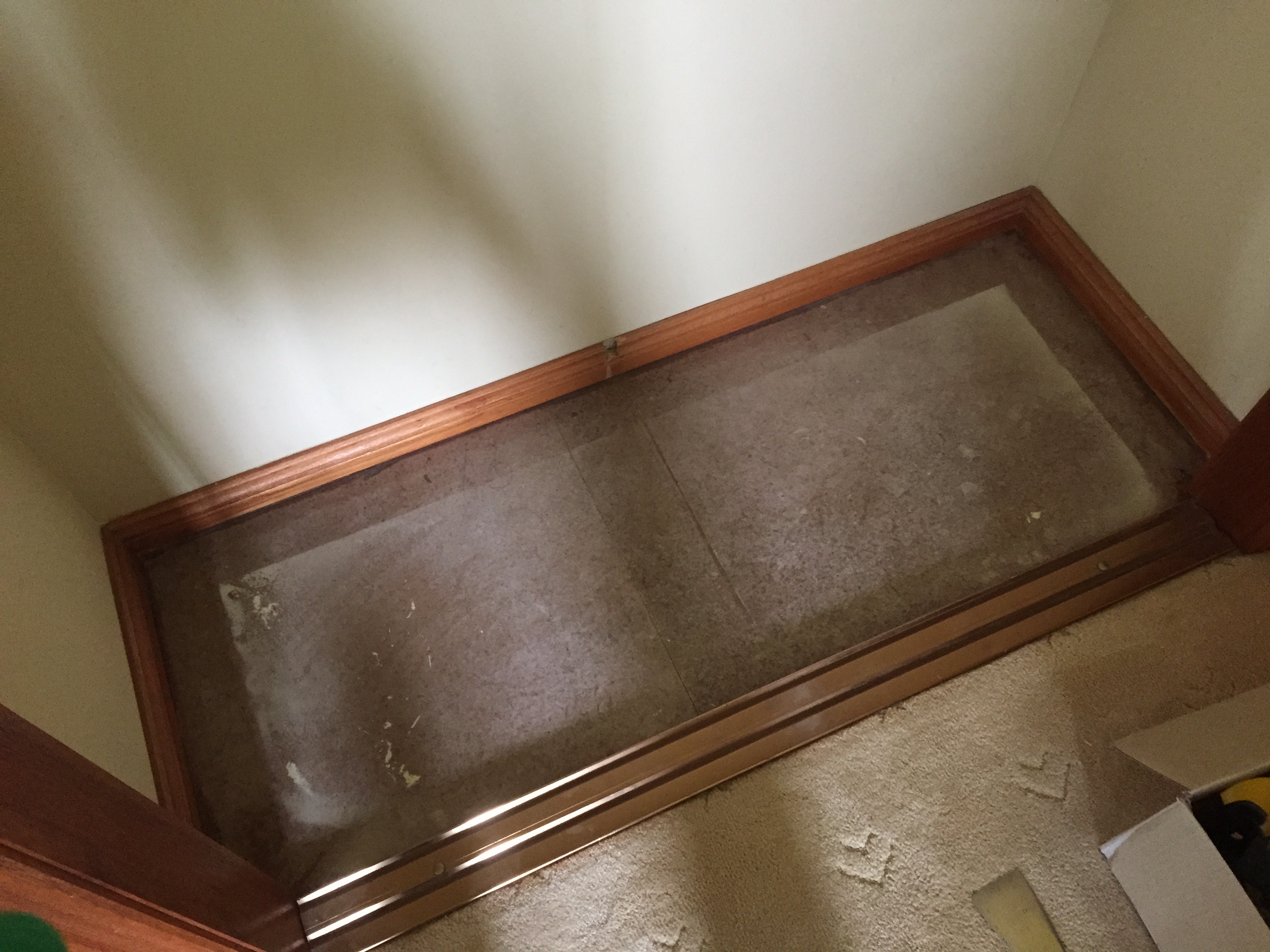
The kids have rather useless built-in wardrobes in their bedrooms. Each has a shelf just above head height, with a single rail for hanging clothes, and a rather annoying partition. (I’ve removed these in one picture above).

This might be okay for a grown-up with shirts and dresses to hang (although my own experience says “not!”), but the little kids can’t reach the rail, and the space is largely wasted.

I had enough of this wretched cupboard and decided to upgrade it at last! First I whipped out the shelf and hanging pole, leaving behind the shelf supports on the wall.

At this point, I discovered the carpet was cut up the middle, and didn’t look so good. It wasn’t attached to the floor at all, so I looked underneath.

Wardrobe floor

The floor is unfinished, and looks pretty shabby. Maybe a bit of paint would look good??

Removing staples

First I had to remove a few (did I say a few? MANY!) staples. I have no idea what the staples were for. Anyone in the building industry want to enlighten me? Bizarre.

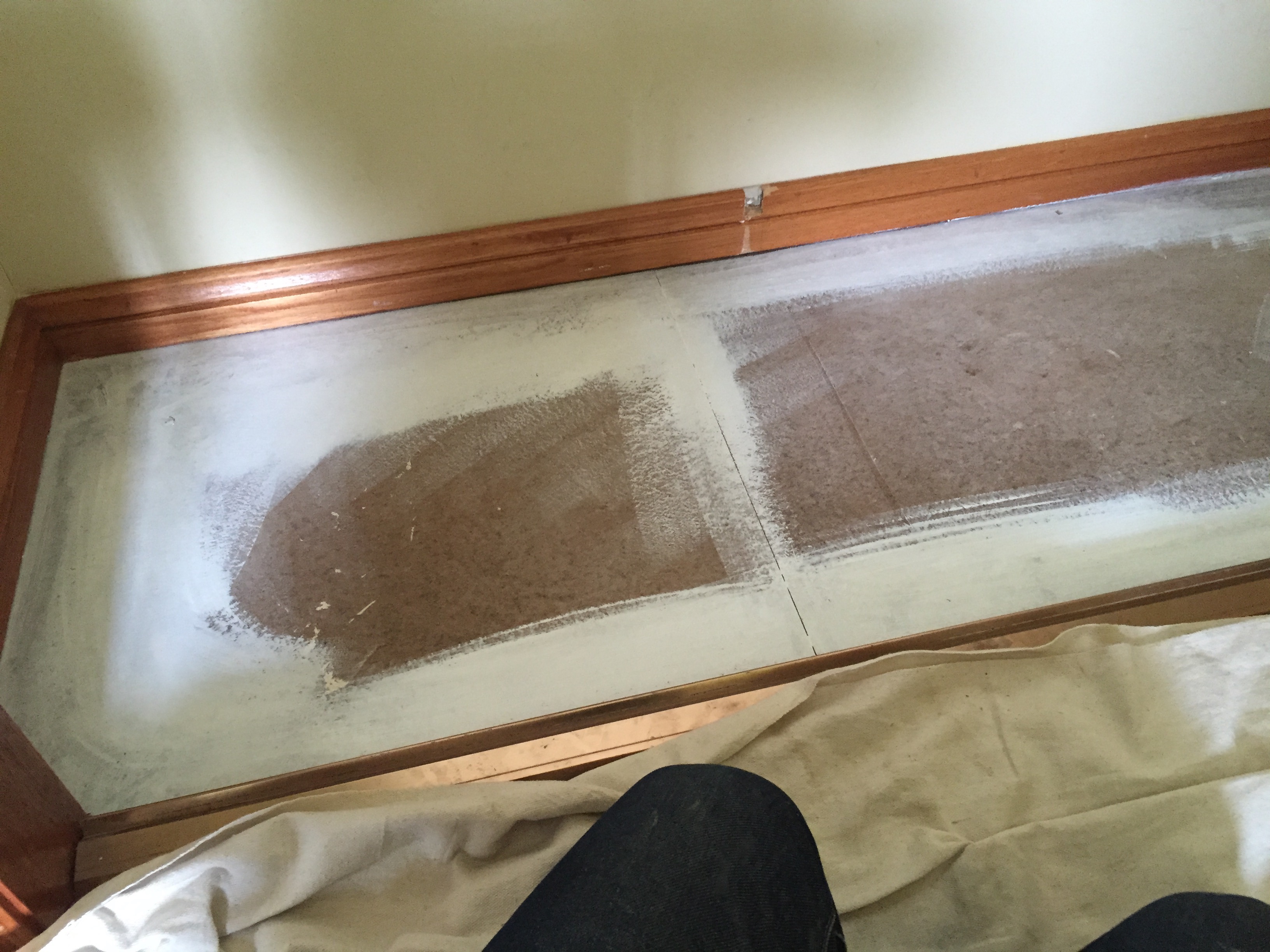
Primer going on

Then I slapped down a coat of water-based primer. I wanted it to be quick to dry and not smell to high heaven in my kids bedroom!

At the same time I patched some holes in the wall and put a dab of primer over them, and over the melamine shelf supports (so that the coloured paint would actually stick).

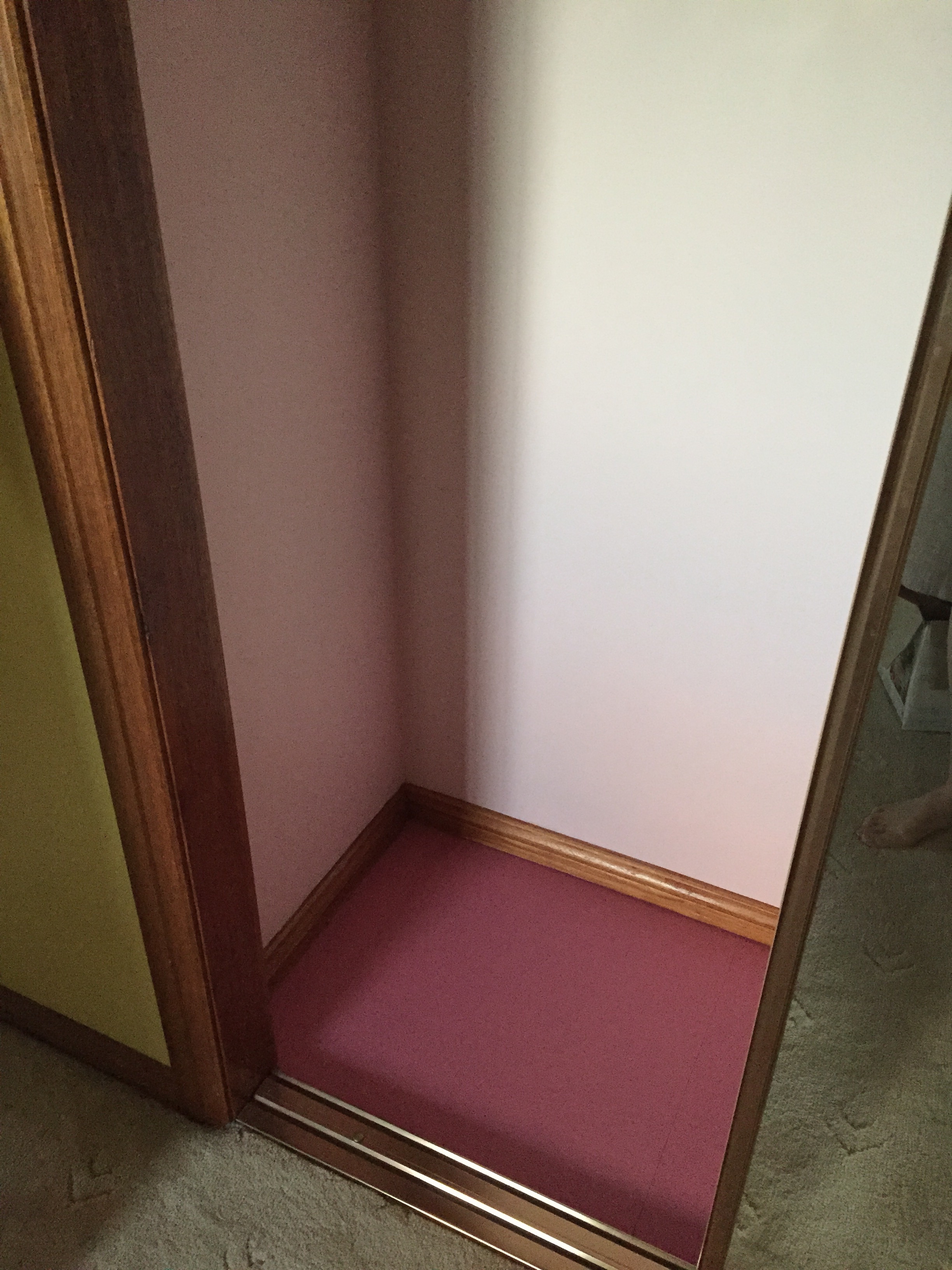
Then it was time for some leftover wall paint to go on:

Wardrobe with colour

I chose pink because Evie loooooves pink and had just moved into William’s blue-yellow room. Pink inside the wardrobe is a nice little touch to help it make it more “her room” too. I think the floor looks awesome!

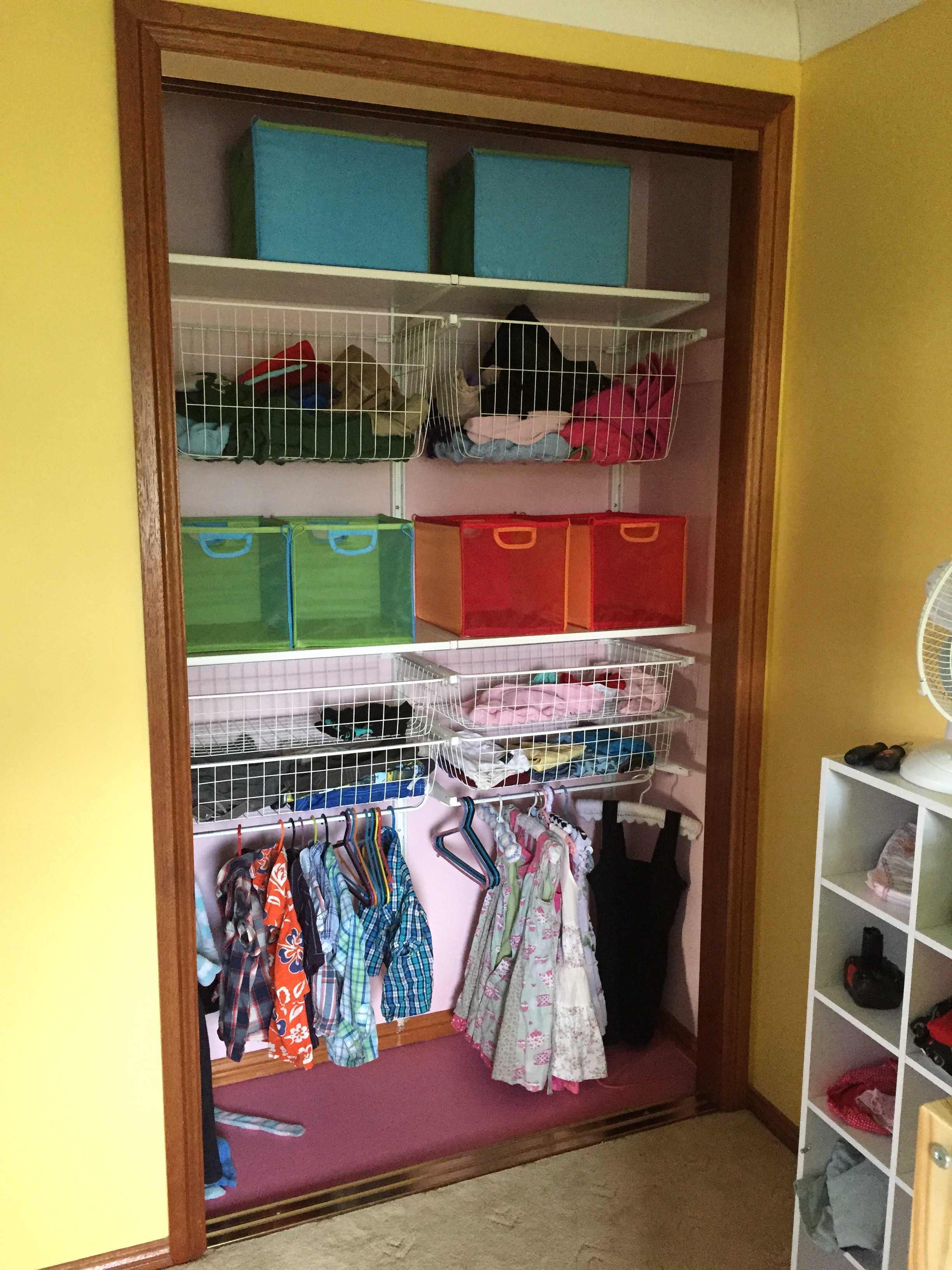
A few days later, Stephen and I installed some Ikea bits and pieces to replace the old shelf and rail. There was a wee bit of cursing for this bit, but we got there in the end. ;-P

Finished wardrobe

It’s so cheerful! Now the kids can get themselves dressed if they want (yeah right!) and there is plenty of space to store out of season clothes. I immediately made plans to do over Isobel’s wardrobe too, in a much more teenage colour …

Dum, dum dum!

Autumn moments

Soooo, it’s been awhile! 🙂

Since Christmas I’ve been insanely busy, juggling lots of work and my medieval re-enactment hobby, and raising children at the same time. Who’d a thunk it?

Today, however, I was tending my plants in the greenhouse and taking a moment to breathe in the warm earthy atmosphere, and I realised I have some time. Some actual time again!

Time to really drink in the moment.

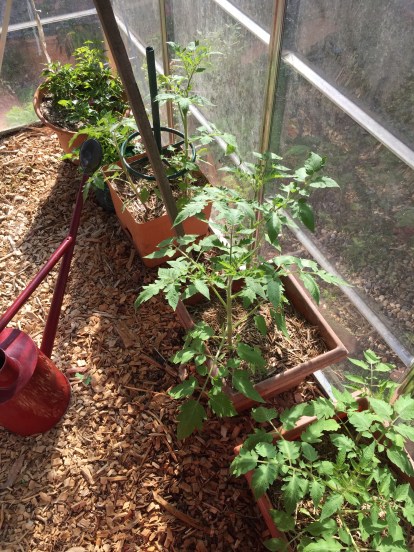
Greenhouse tomatoes

Like this!

It’s autumn now, and we’ve just dug over all our garden beds, ready to plant our winter crops. The tomatoes in the greenhouse are looking really good, as are our chilli plants.

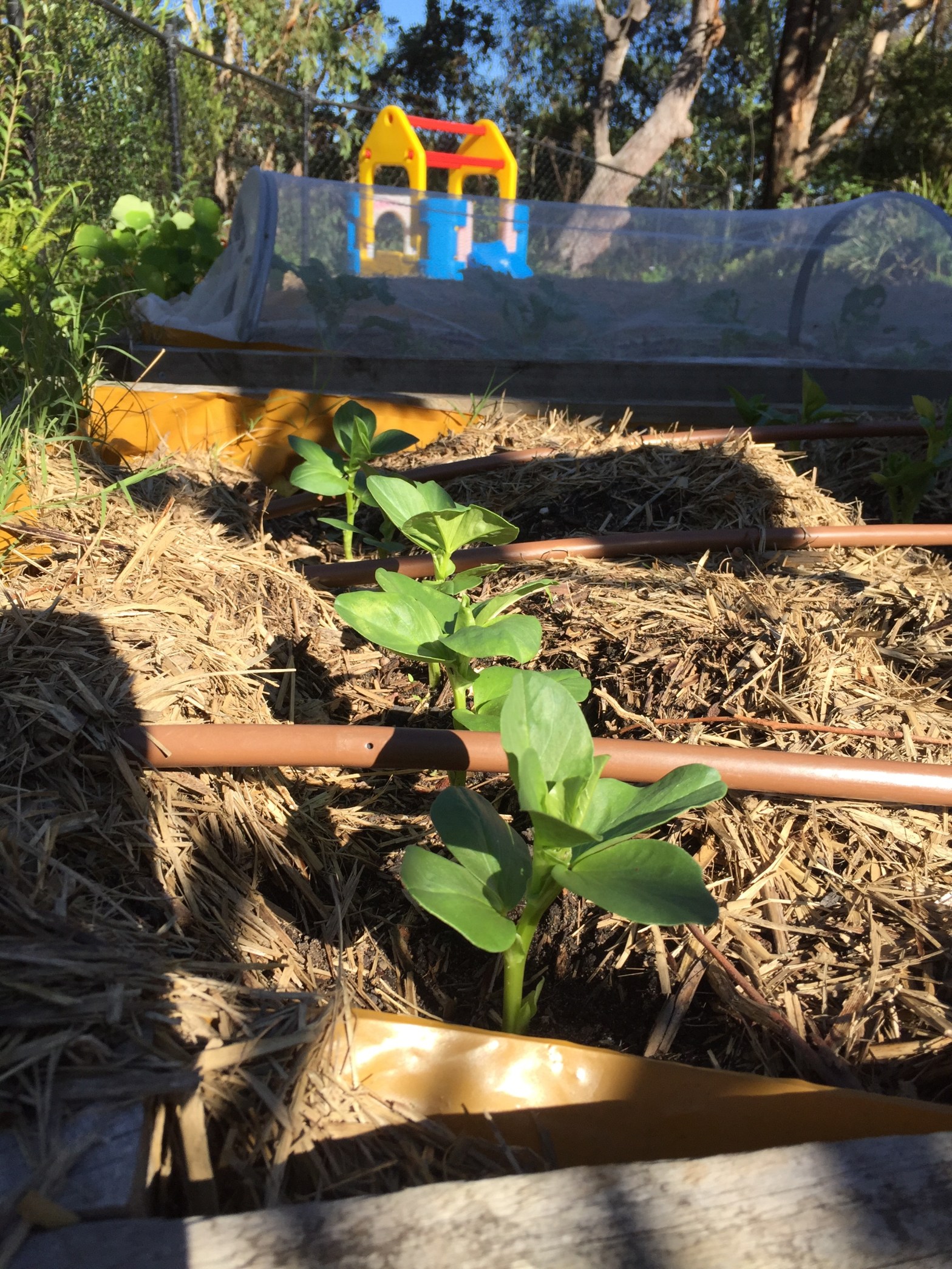
Broad beans all in a row

We also have some broad beans popping up in the garden. We’ve dug in all the weeds left over from the Summer crops (and there were many weeds this year). I think the soil has enjoyed being left fallow for a while.

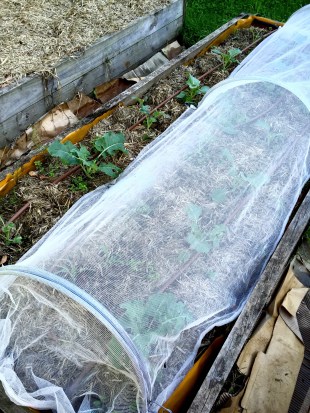
Netted broccoli

There is broccoli coming along, too. The Cabbage White Moth is still apparently active, so I’ve tried netting some of the plants in an effort to reduce the number of caterpillars we get munching down on the leaves. There are no brassica trap crops this year to distract the moth from its single minded Brassica-destroying purpose!

I had to squish all the little yellow eggs I found on the leaves before I covered them up. Last time I tried this, the caterpillars were already in place and netting them over just stopped natural predators from getting in and cleaning them up! Oops. Plus, it was a case of out-of-sight, out-of-mind. We grew some skeleton broccoli that year. I will remember to check these guys more frequently.

Ha! She says.

Quilted Christmas gift tags

Hi everyone!

I’ve been busy like a crazy caffeinated bee over the last two weeks. I wish I could show you all of my completed projects, but that will have to wait until after Christmas! 🙂

Today I wanted to share a tutorial for some re-usable Christmas gift tags.
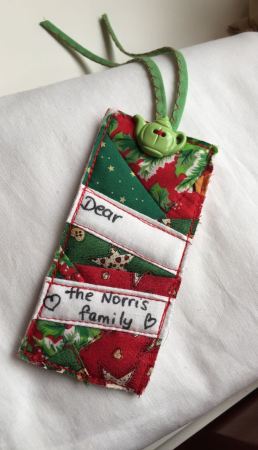
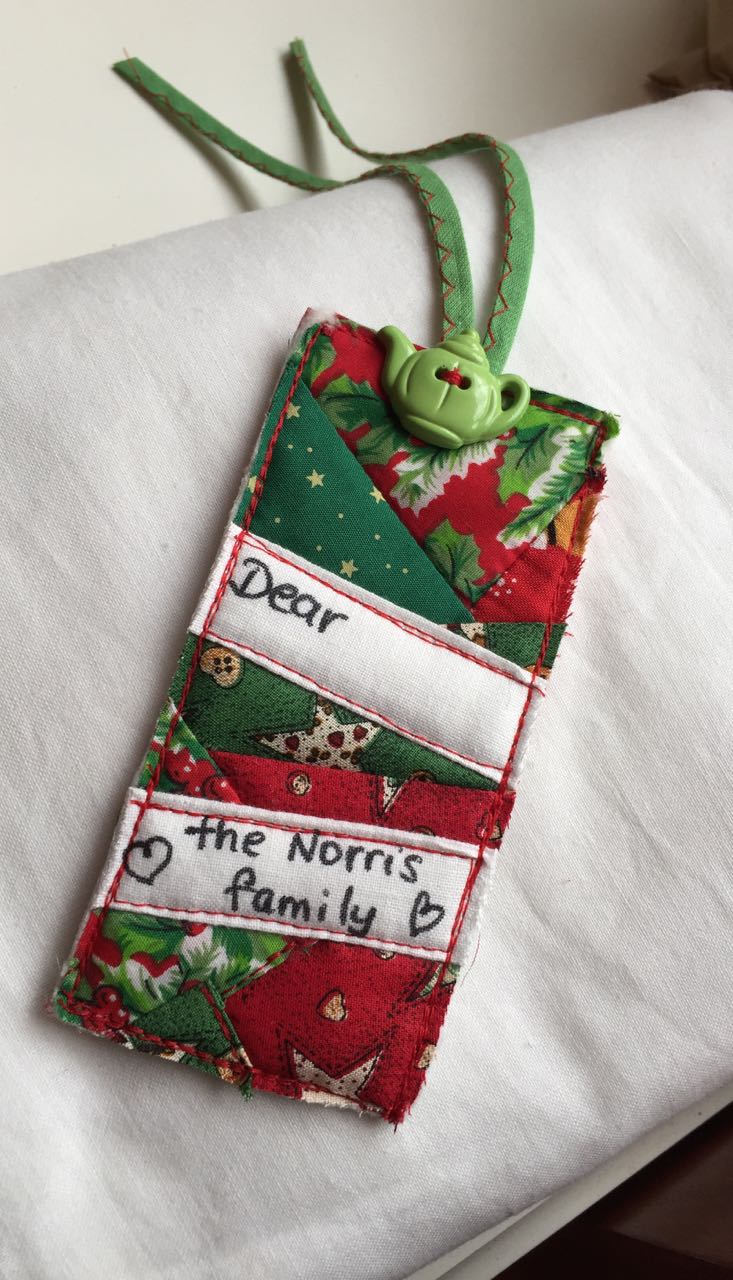
Finished tag

These are great because I can use the same tags every year without wasting any materials. Frugal! Environmentally friendly!

Plus, it removes a bunch of decisions from my crazy todo list in the insane pre-Christmas period: Saving. My. Sanity.

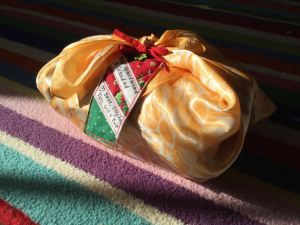
For the same reasons, I’m doing re-usable cloth gift wrap (Furoshiki). I think these gifts look really, really wonderful. I picked up the scarves at my local op-shop for 50c each. Perfectly splendid.
Furoshiki wrapped present

Okay, so how to make a quilted gift tag? Dig out your scrap basket, because we are going to do some Quilt As You Go (QAYG)!

You will need:

  • Batting (I used scrap from my other quilting projects — you could also use an old flannelette cot blanket or some terry towelling).
  • Scraps of suitable fabric — cottons are great.
  • A fabric marker to write the gift tag messages.
  • Something to use as the hanging tie (bias binding, ribbons, cord, whatever you have).
  • Buttons, if you want to make it looks extra spiffy! 🙂

Start off with a large scrap of fabric (the backing), and lay out some batting on top. I decided to make 6 tags at once, so I used a piece of batting that was a little bigger than 10 inches by 6 inches.

Next, choose a small piece of scrap fabric and place it on top of the batting, somewhere central. Sew this piece down around the edges, using a thread that will disappear on the backing side (ie. you don’t want the bobbin thread showing up garishly on the back).

I sewed my first piece down very close to the edges. You might find it helpful to stick the fabric to the batting with a glue stick, if your layers shift around.

Now you are going to do some QAYG:
QAYG Step 1

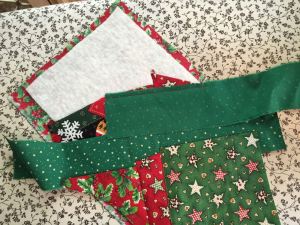
I’ve already done some quilting on this piece — can you see the green strip that is face down? I’ve just sewn this piece to the existing quilting so that when I flip the piece over …
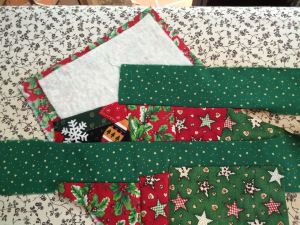
QAYG 1: flipped

I’ve just added more fabric to my scrappy quilt! I press the seam before and after the “flip” using a pressing cloth (to avoid ironing directly onto the batting).

Want to see it again?

I find this works best if I go round the starter fabric, adding slightly bigger pieces each time. A simple rule is to make sure you completely cover any existing fabric when you make each seam.

You may find that your scrap won’t cover all the way, like this:

QAYG folded piece

Here I am pointing at the problem edge: notice how I’ve made a fold before sewing the seam? Now when I flip the piece over, I have a tidy edge to sew down with some edge stitching:
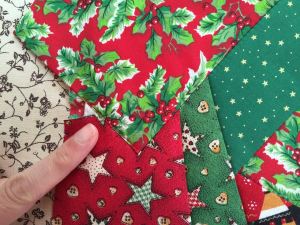
QAYG top stitching

Oh, oh! That piece didn’t quite cover the batting – I used an itty bitty scrap piece to cover this, and then I trimmed to size (10 inches by 6 inches):
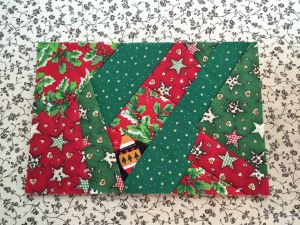
QAYG mini quilt

Looking good! Now slice up your mini quilt into gift tags (mine are 5 inches by 2 inches — maybe slightly wider).
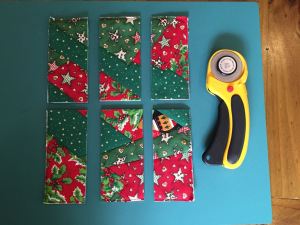
Sliced into tags

Some of the edges of your tags may be a little loose, so now you stitch each tag around all four sides.

What do they look like on the back?
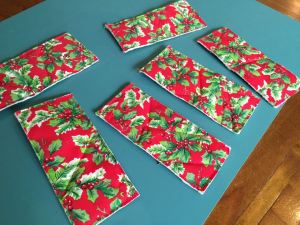
Tag backs

This is why I used a thread (red) that would disappear. You get lots of crazy little quilted tracks on the back, which adds to the charm. I didn’t bother tidily burying my threads, instead I did a bunch of back-stitching on my machine to secure the ends of each seam. I don’t think anyone will notice the rough stitching in the excitement of present opening time!
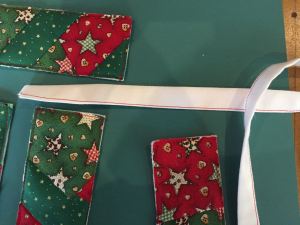
White label strip

To make a label, I created a strip of white fabric, quite like bias binding. The edges are folded to the centre, and then folded in half again. This makes a very sturdy, opaque, label that I can write on.

Stitch label and edges

Stitch the label pieces to the top of your tag, offsetting them at a crazy angle, or lining it up if you prefer. I stitched around each label piece (each tag has two). Then I went over the tag edges again, two more times, because I didn’t want the tag edges to unravel. This gives a nice thread-sketching kind of look, I think.

You could finish the edges with a zig-zag stitch, a blanket stitch, a serger, or you could go nuts and bind each tag (yeah, I don’t have time for that kind of crazy! :D)

Trim off the label edges and you are ready to write your messages!

Trimmed gift tag

I made my hanging strings out of old bias binding from the op-shop. I found that zig-zag stitching the bias binding in half worked really well. I especially like the Christmassy green and red on this finished tag!
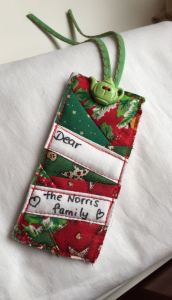
Finished tag

I had a bunch of novelty buttons on hand that I used to secure the hanging strings. I think they look super! Hopefully they will last for many years, and it’s one less thing to worry about next Christmas!

Linking up to Crazy Mom Quilts for a Friday Finish, because Oh Boy I’ve finished a lot lately, I’m a gonna link something! 😀

Spring to Summer

Let’s welcome Summer! But first, let’s remember Springtime, 2014. 🙂

William’s “Wonky Cross” quilt

Pssst: This is my 100th post! 🙂

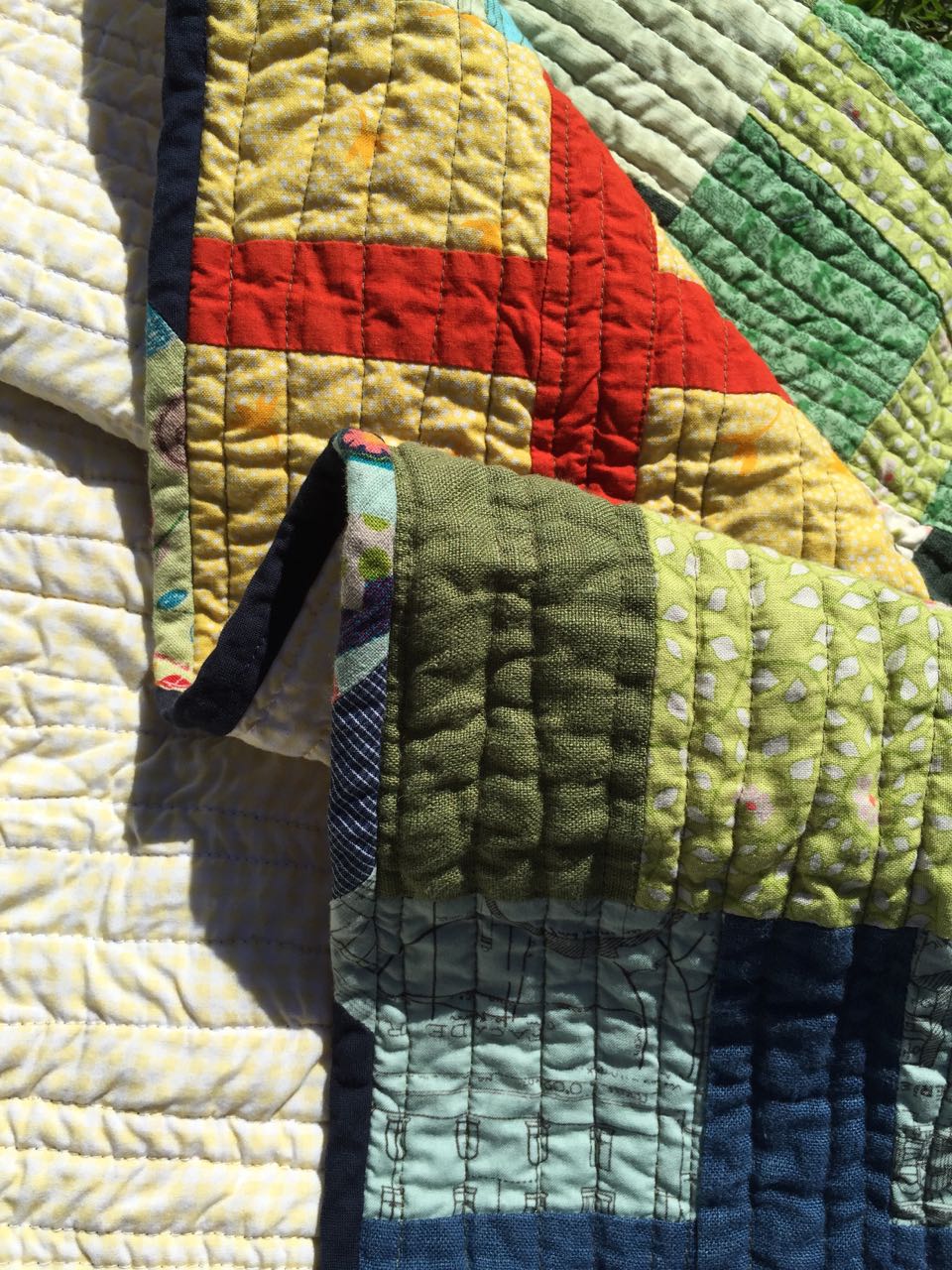
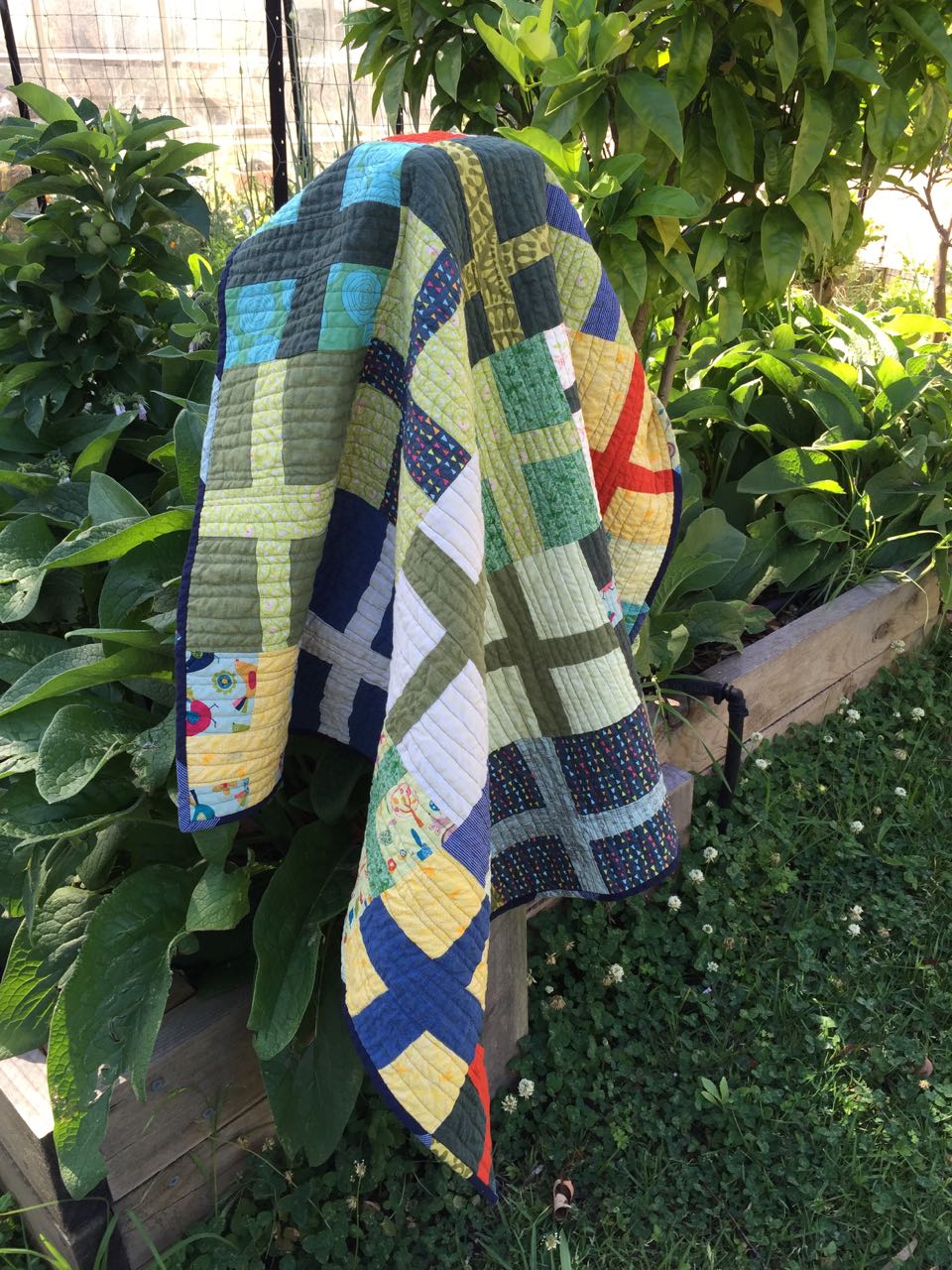
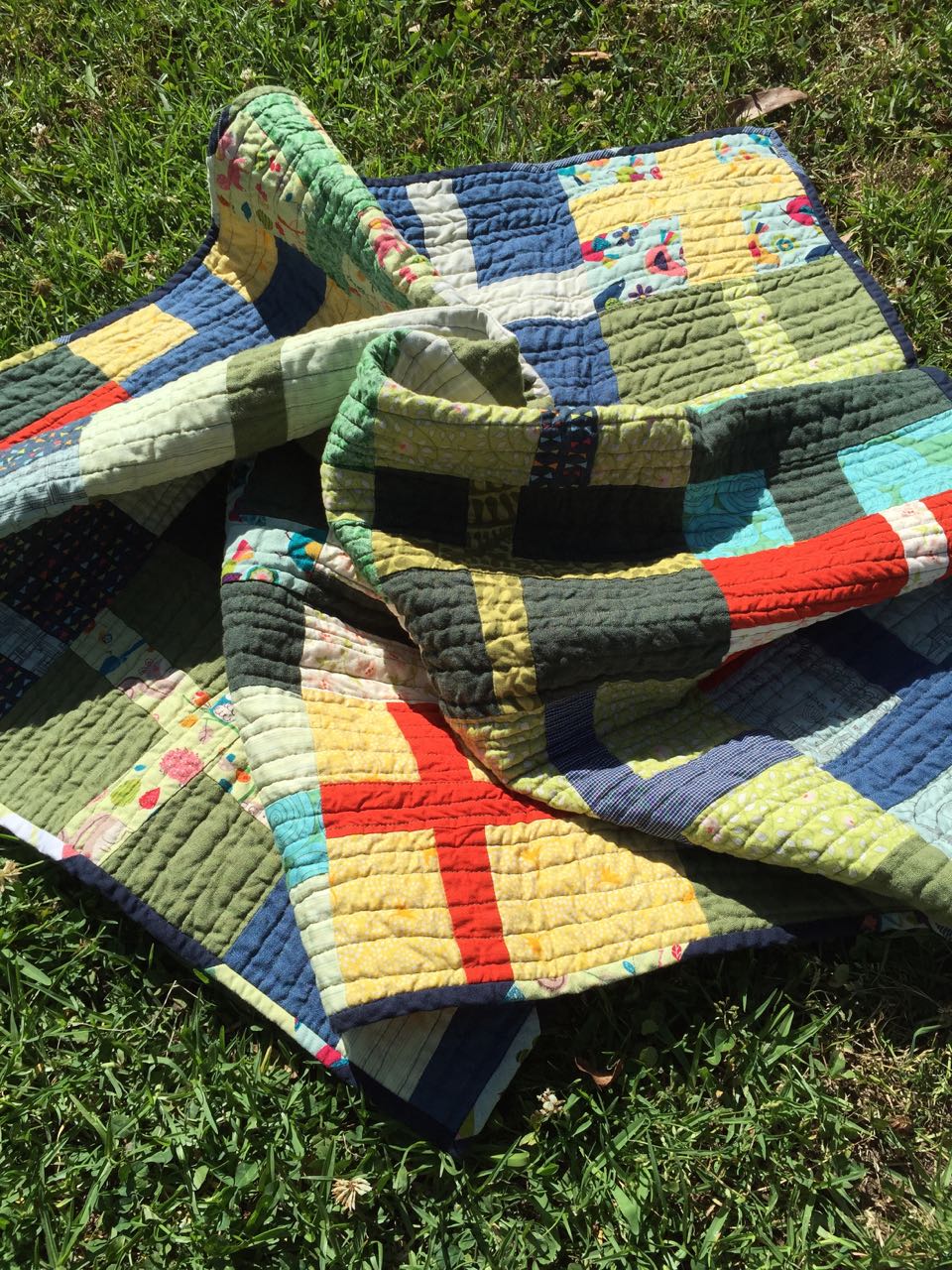
This is a busy time of year, and in the lead up to Christmas I’m making a bunch of hand made gifts! William’s birthday is just two days after Christmas Day, so this year I’ve made him a much-needed lap quilt:

I’ll show you a fancy gallery in a moment, but here are a few details of this quilt.

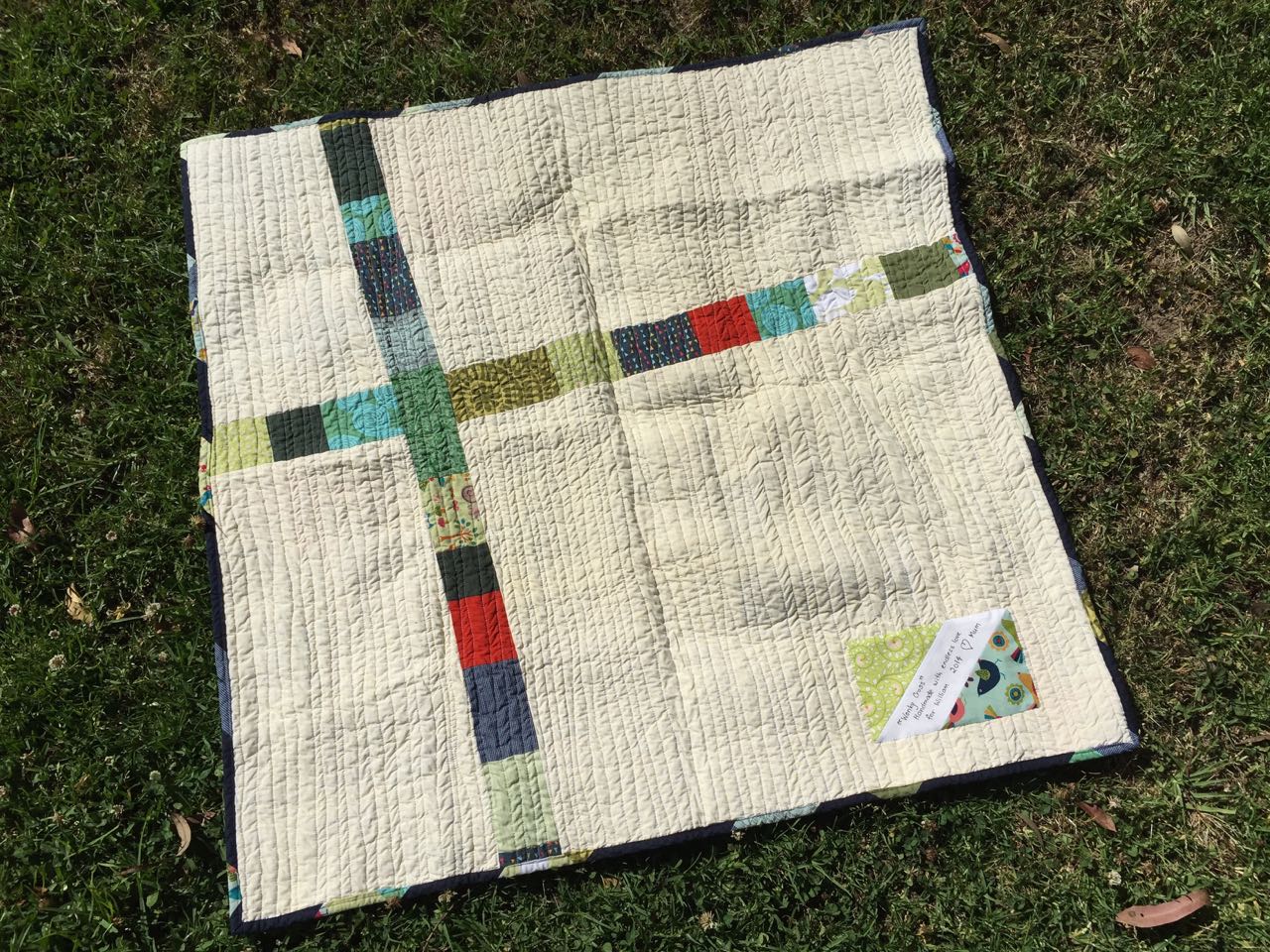
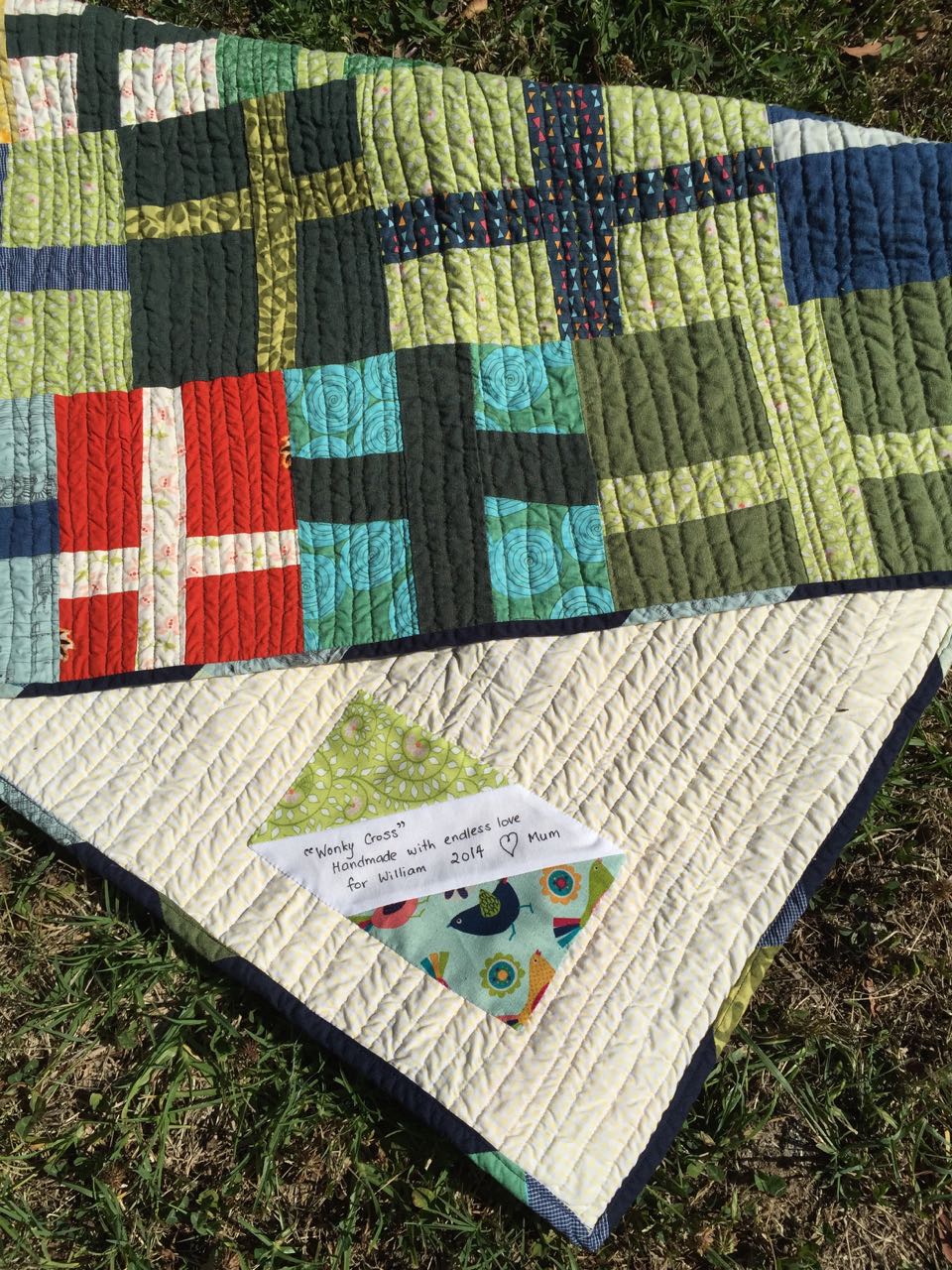
First up, the backing is just as lovely as the front (IMO), with another enormous wonky cross writ large in scrappy fabrics:

I wanted to pay homage to the front of the quilt by using a cross theme, but executed completely differently. I also wanted it to be quick and easy! So I pieced a long strip out of scraps to make the cross arms, taking care to put the orange “pops” of colour into a pleasant location.

The main backing fabric is a worn-out fitted bed sheet. 🙂

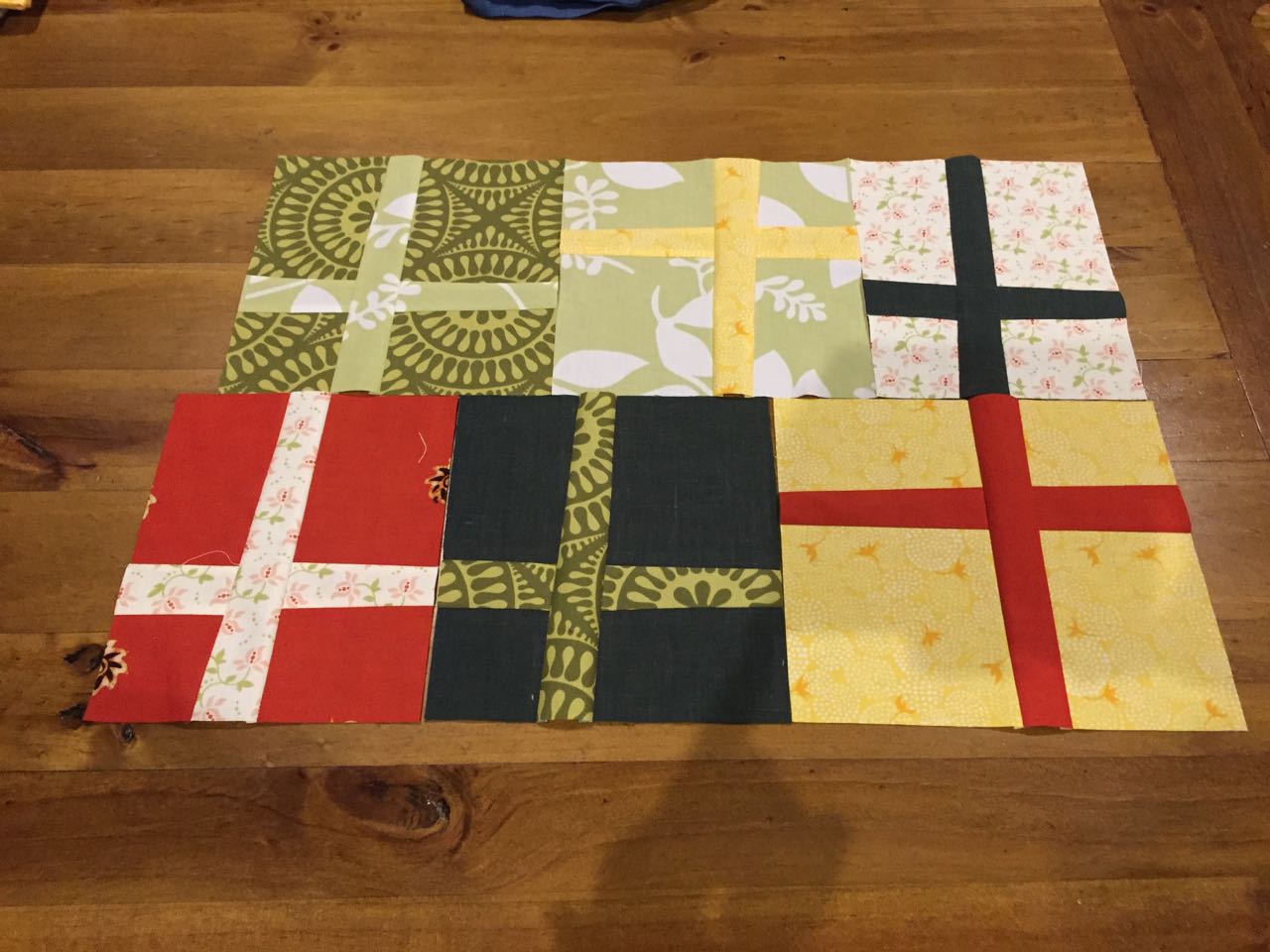
I pieced the blocks in groups.

I assembled the quilt top using inspiration from many different “wonky cross” examples. There are so many beautiful quilts of this type out there!

I particularly loved this one, this one, this one, and used this tutorial for piecing the wonky crosses.

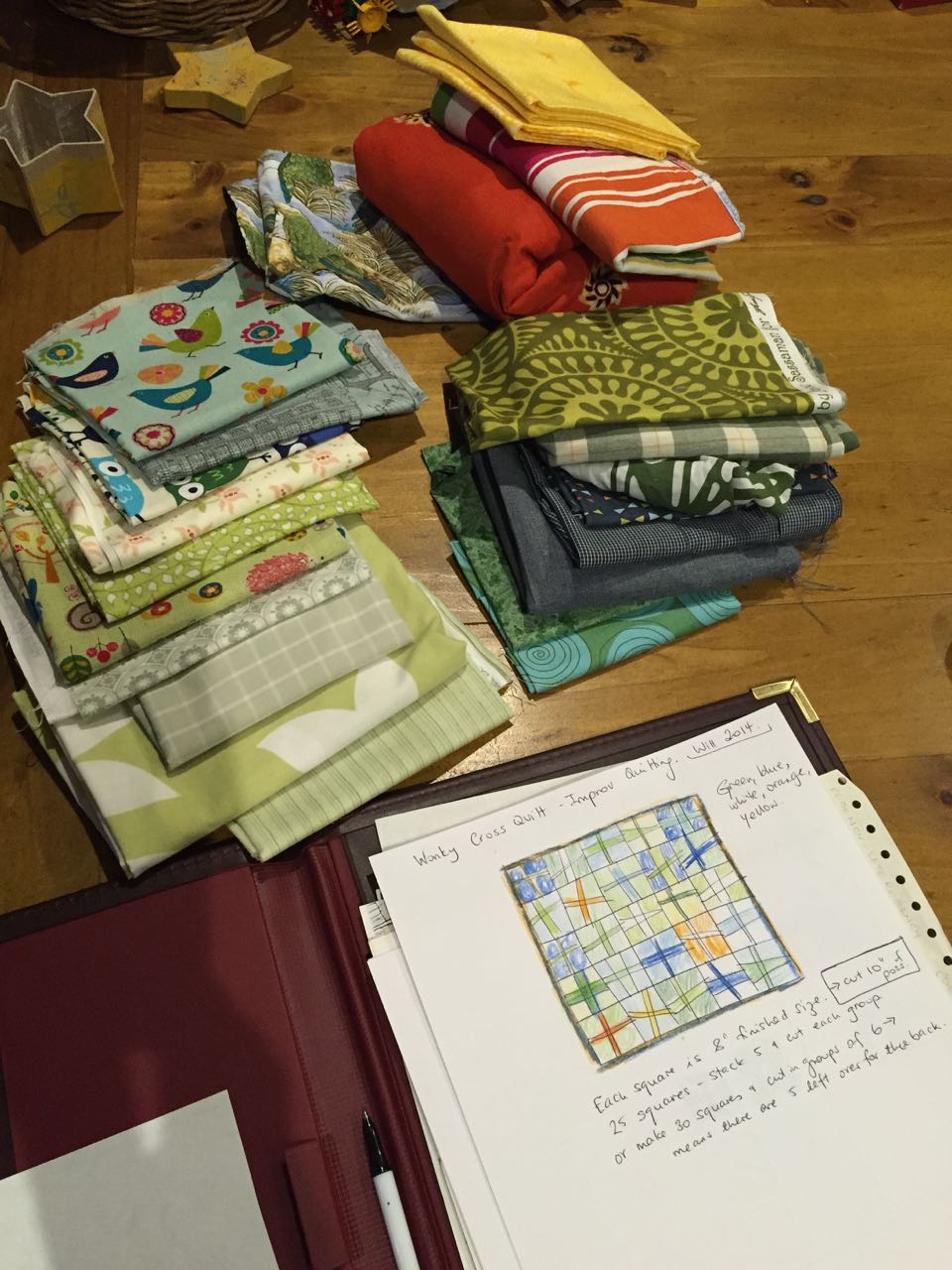
William loves green, blue and white, so my original design centred around those colours, but I decided to pull in some “pops of colour” in the form of a bright contrast, like the orange and yellow in the blocks above.

This shows my original concept of what the quilt would be like. I ended up going with a more improv layout, with each block being the same height, but different widths to the blocks around them.

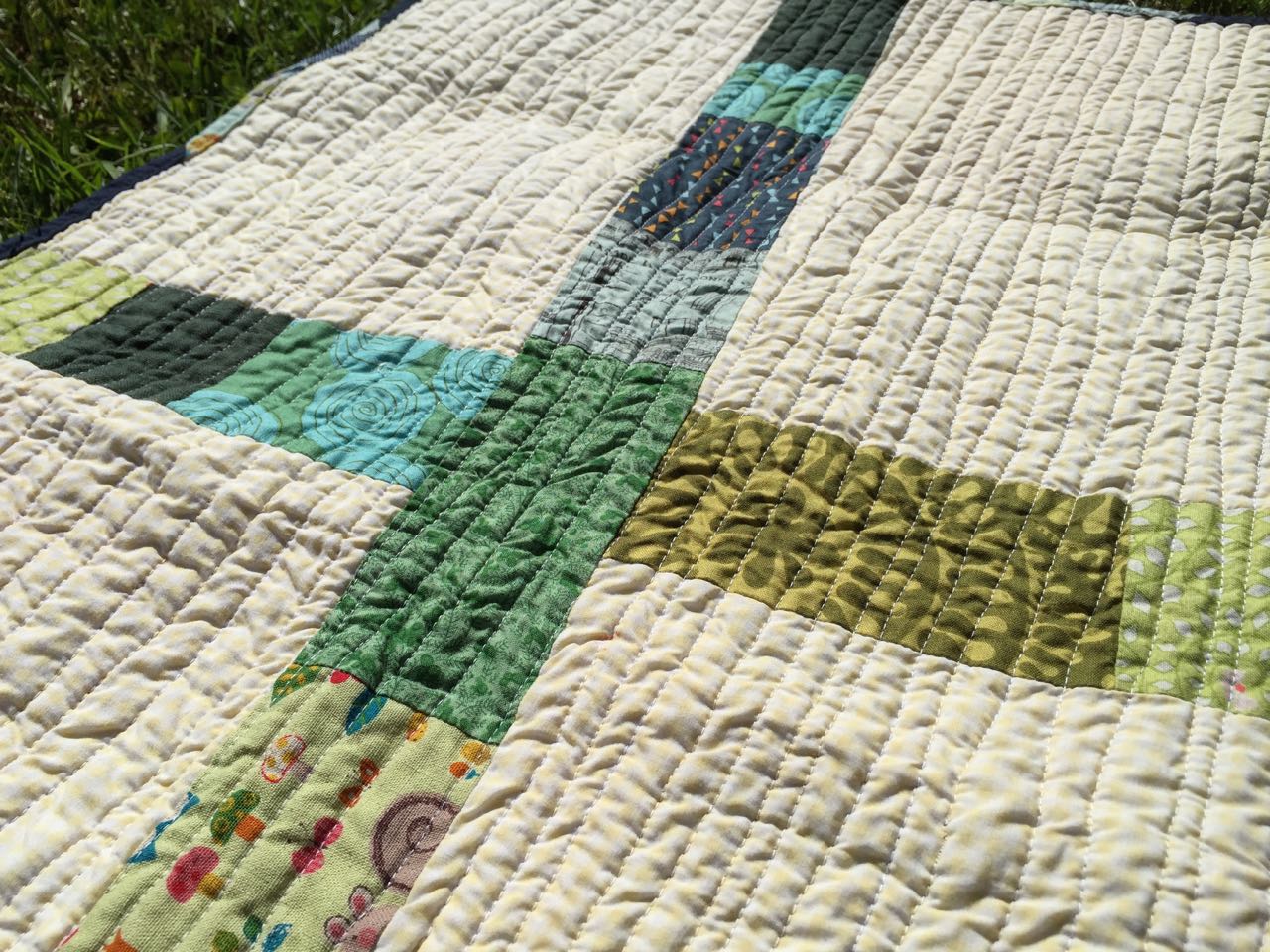
The quilting is white thread on the back, and green on the front. Simple parallel(ish) lines have given this quilt a hugely squishy feel. I ran the quilting up and down using my machine so that there are tiny directional pulls along each line. I really love how this texture has turned out — I think my favourite quilting so far!

The scrappy binding I showed you previously has worked out really well. I was concerned it would be too navy, but the dark is alleviated by the scrappy colours, and I think it looks fun!

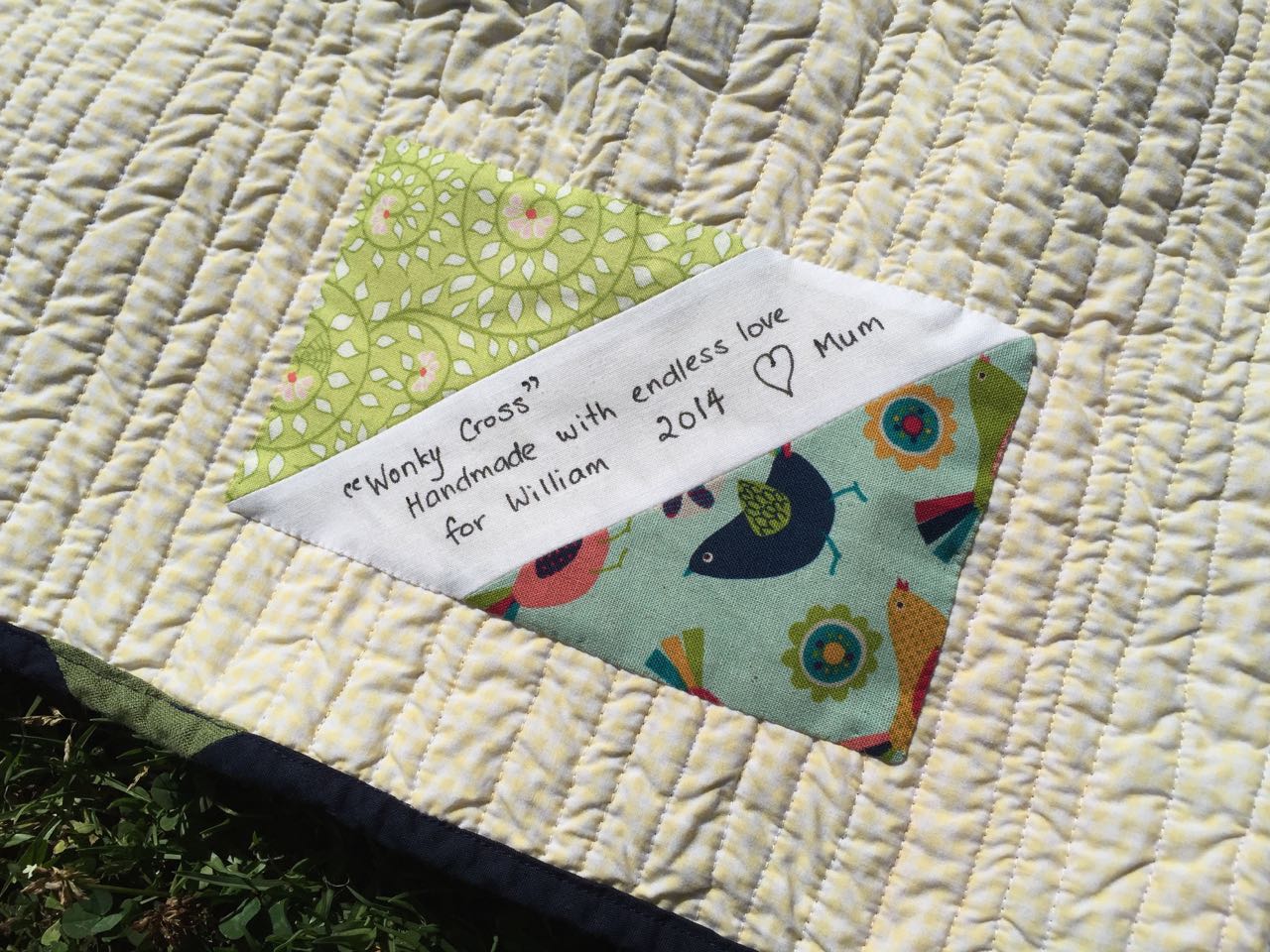
I think the only thing I would do differently with this quilt is to put the label onto the backing before quilting, as the quilting texture was so wonderful! I decided to put the label on by hand, but I bound the quilt with the machine. Hopefully the label will stand up to repeated washings!

And now, some eye-candy quilt-in-garden shots! 🙂

Linking up with Crazy Mom Quilts, and TGIFF! 🙂

Tips for cutting linen

Hey everyone! I’ve been working lately with linen, which is a wonderful and sometimes frustrating experience. Linen feels lovely. It’s rumply, and soft, and is very comfortable to wear.

Linen is not what I’d call a “beginner” fabric, though.

Why? Linen is a little slippery to cut and sew.

If you mainly sew with medium-weight cotton (or polycotton) then you may find it is easy to sew without any pins: you stick your seam together, maybe you press it, and you can sew along without the fabric shifting around too much.

That’s not always the case with linen!

I wanted to show you a simple trick to help you cut long, straight, lines in a piece of linen. If you do any quilting, this is invaluable!

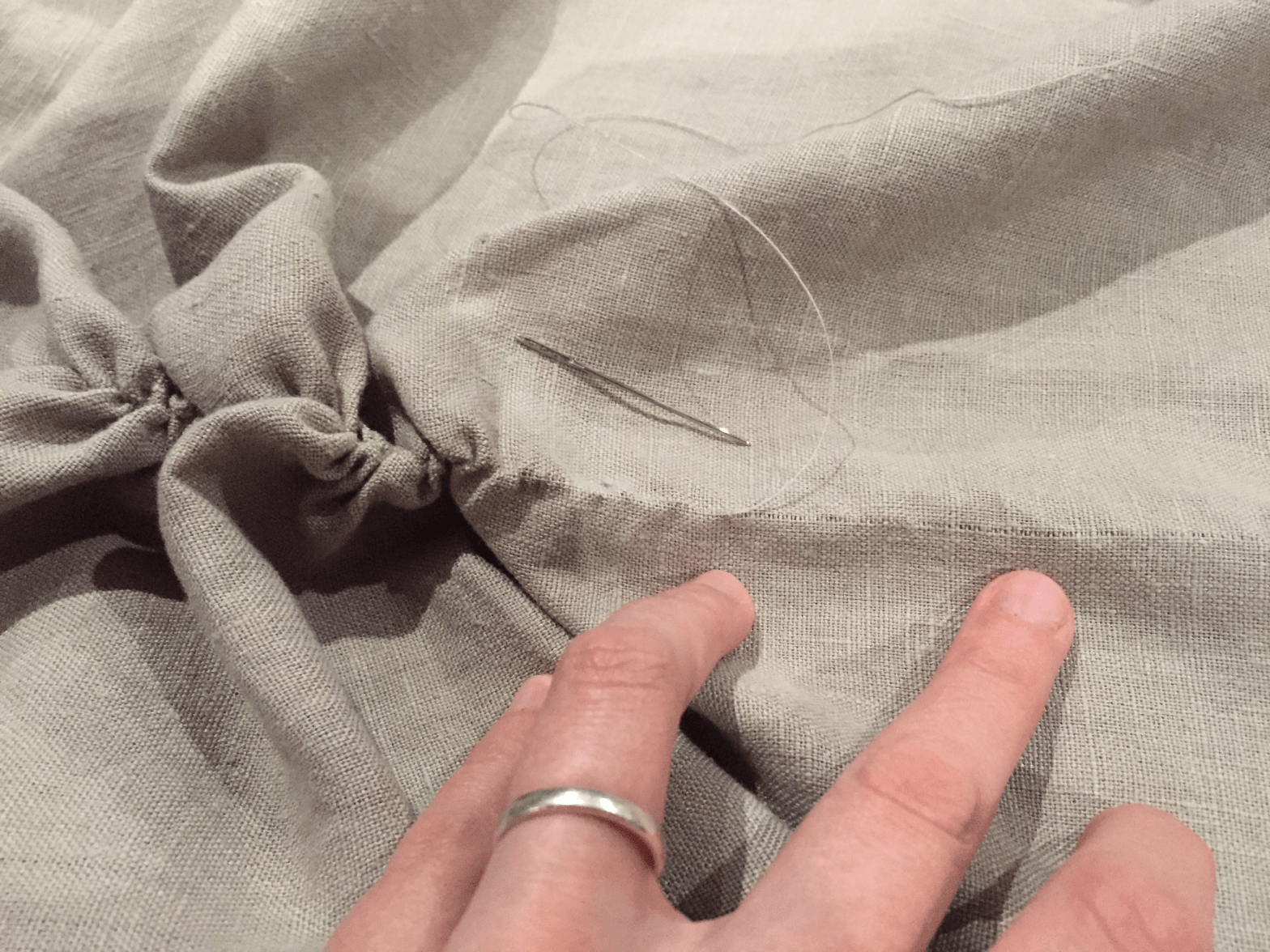
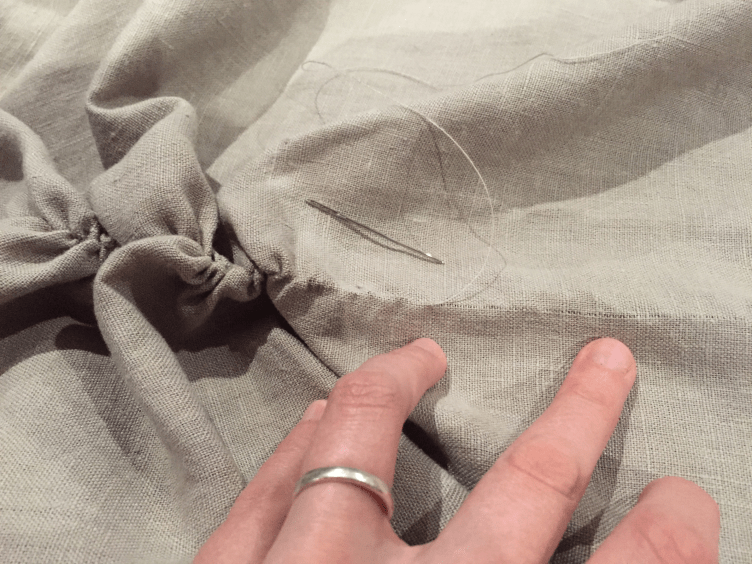
Have you ever pulled a thread in an item of clothing? This is exactly what you want to do with your piece of linen. Use a tapestry or other blunt nosed needle to pick up a single thread, and gently pull it up.

It’s fiddly, I’m not going to lie!

Individual linen threads are not terribly strong, and will snap. When this happens, don’t let the gathers unravel, just hunt about with your needle for the taut part of the thread and pull it up again.

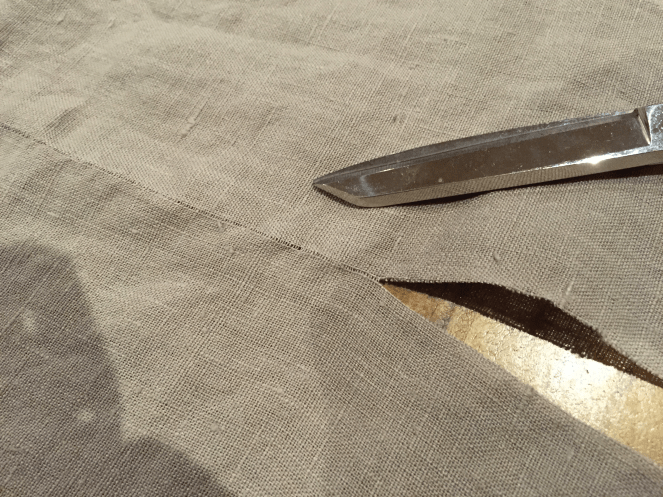
Once your thread is removed, you have a perfectly straight line to cut along.

This is also a great way to square up your fabric to find the straight grain. This is important if you are sewing garments! If you cut your patterns pieces at an angle to the grain of the fabric, your seams can twist after a few washes. I think most of my husband’s t-shirts do this down the side seams, for example!

I find that pulling the thread is fiddly, but not as annoying as the alternatives I’ve tried:

  • cutting with the rotary cutter, one section at a time (involves a lot of adjusting the linen fabric, and though the cut is straight, it doesn’t follow the grain line!)
  • folding the fabric on top of itself and doing one rotary cut (very inaccurate and thus not really a viable alternative at all)
  • drawing a line with chalk and cutting along that (again, involves adjusting the fabric, and you don’t cut as straight OR along the grain line!)

Cutting curvy lines in linen is a different matter altogether. I haven’t yet got any really useful tips for this, apart from using fabric weights to stop the fabric shifting around. My insights extend to:

  • Tins of food work fine!
  • Use a lot.

🙂

A bumper garlic crop

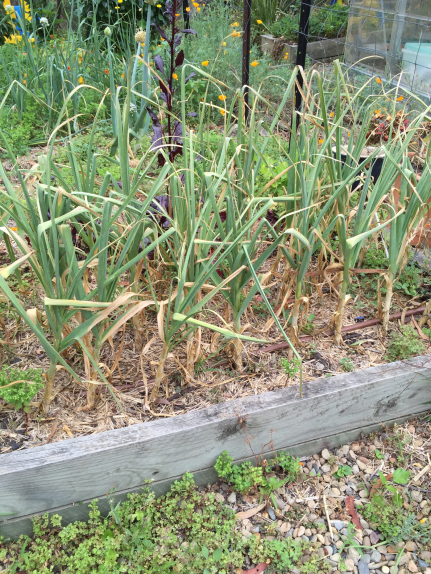
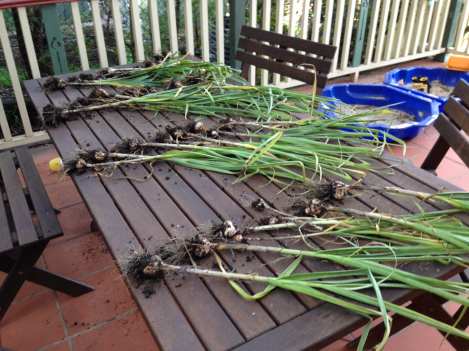
I went out into the garden, today, to catch up on how things are growing. I looked at my garlic patch and thought to myself: “These look like they are just about ready!”

See how the bottom of the stalks are looking dry and brown? The tops are still green, but starting to show signs of drying out.

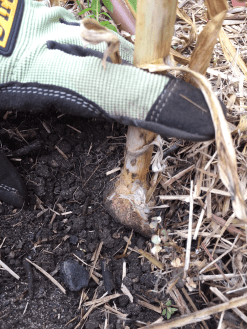
Let’s have a little poke around the base of one of these bulbs, and see what we have.

Holy moly, that’s the best garlic I think we’ve grown! I’d say the whole patch is ready!

Dry soil, papery dry bulb and lower stalk


Today was a good day to pull up the garlic, because the soil was very dry, and there looks like there might be rain coming. It’s best to avoid wet soil at the time you lift garlic (and other alliums) because it’s faster to dry out the skins, and you’re more likely to avoid rot.

Epic. Garlic. Is. Epic.

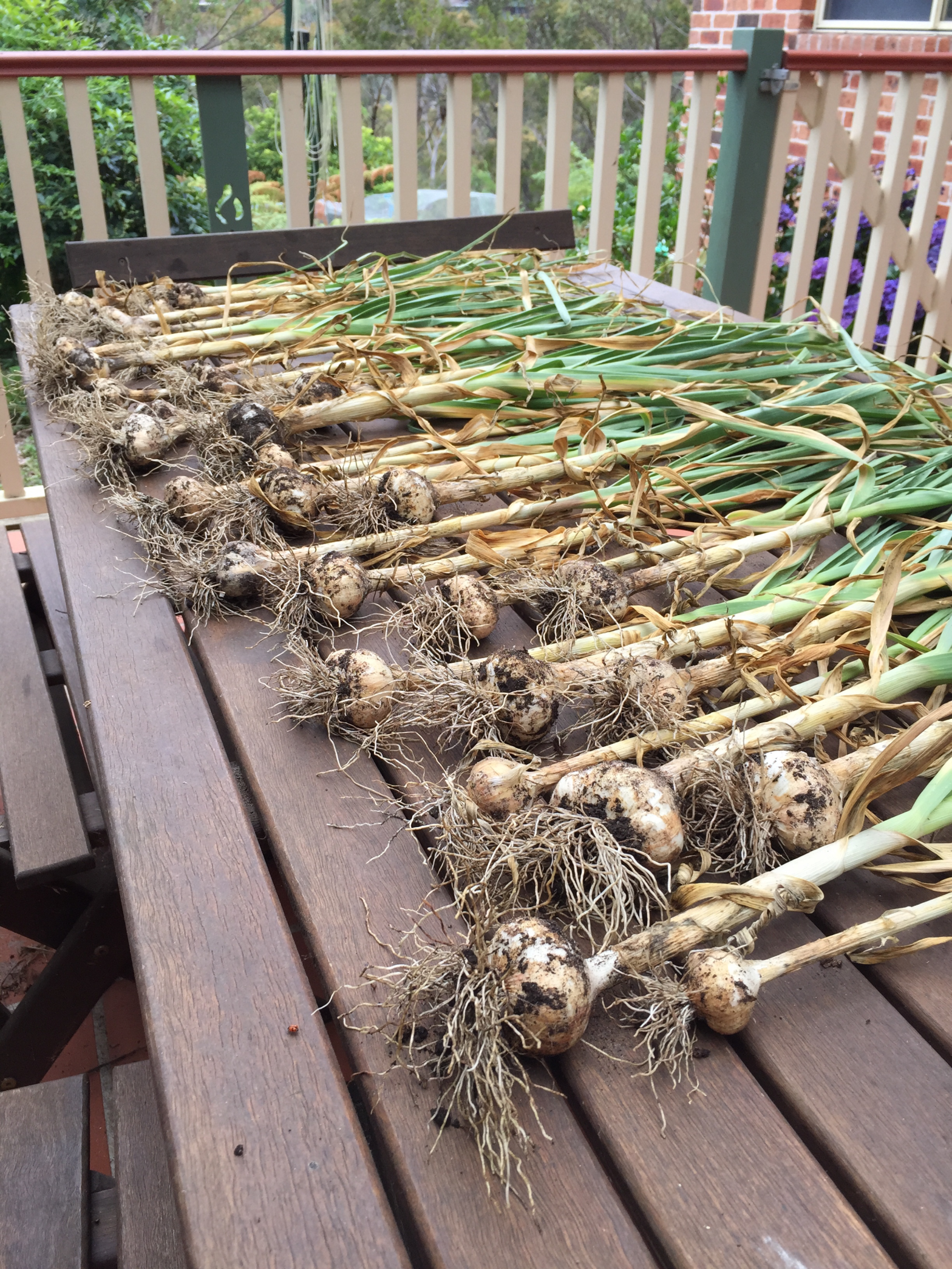
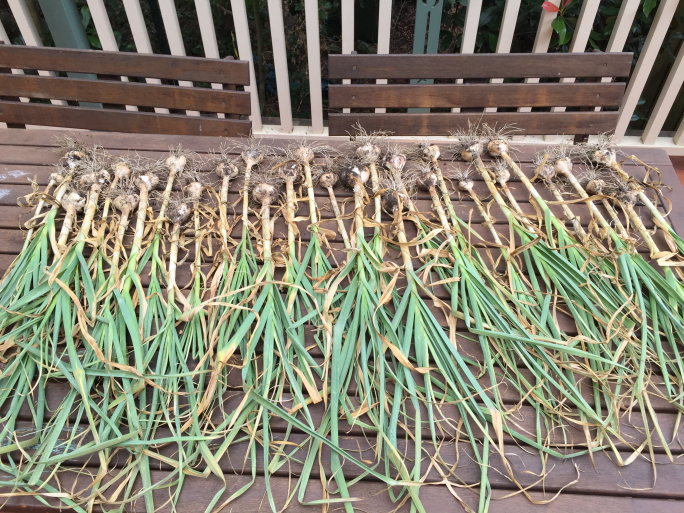
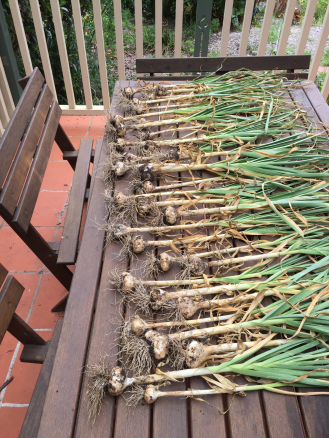
I’ve laid all thirty-one bulbs out on the patio table, under cover and separated to give them lots of airing room. Over the next week or so, they will dry out. Then I can brush away the dirty skin layer and store them.

The picture above is of last year’s garlic crop. There are only a few (about 8) large bulbs from that crop, but we must have had a similar number of bulbs in total. Notice how quite a lot of these stalks are thin and spindly? They match up with small bulbs with only a couple of cloves.

This year I didn’t see any spindly stalks. Maybe we’ve had a better season, or maybe we just prepared our garden bed better? This year we added well-rotted cow and chicken manure, and dug through some blood and bone. Then a week later we planted out the best five or six bulbs from last year’s crop.

They sure made beautiful bulbs this year!

We ate up all the remaining garlic over the year, and needed to buy just two extra bulbs. Almost self-sufficient! Very exciting. 🙂

Hello, shiny new look!

How are you liking the new look and feel? 🙂

I decided to change up the look of the website, and switch to a theme that would load much faster on the main page. I think this looks really great: on the web, tablet and phone!

Here’s hoping it will be faster and more pleasant for you to read. Please leave some feedback if there’s something you like or miss, or just want to say hi. 😀
Stripey scrappy quilt binding

I have almost finished William’s birthday quilt! The other night I made some scrappy quilt binding, for the first time ever, and I wanted to show you how I did it.

Finished binding

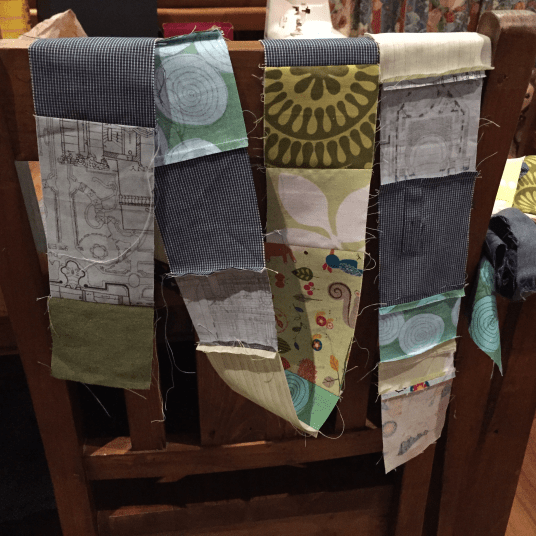
The idea with this binding was to use up some of the scraps from William’s quilt top and backing. I had some leftover scrappy strips that I had use to make a “wonky cross” on the back of William’s quilt:

I added more pieces to this, until I felt I had “enough” (very scientific, I know). Then I cut up a plain piece of navy fabric (an old kitchen curtain that I saved) and interleaved the scrap strip to make a bigger piece of fabric:

I pressed all of my seams open, because I knew the binding might get pretty bulky by the time I had folded it in half.
Notice how I have a navy piece on the left, and a scrappy piece on the right? This is important because when I start making the binding, I end up sewing these two edges together. I didn’t want to have two navy pieces, or two scrappy pieces, side-by-side.

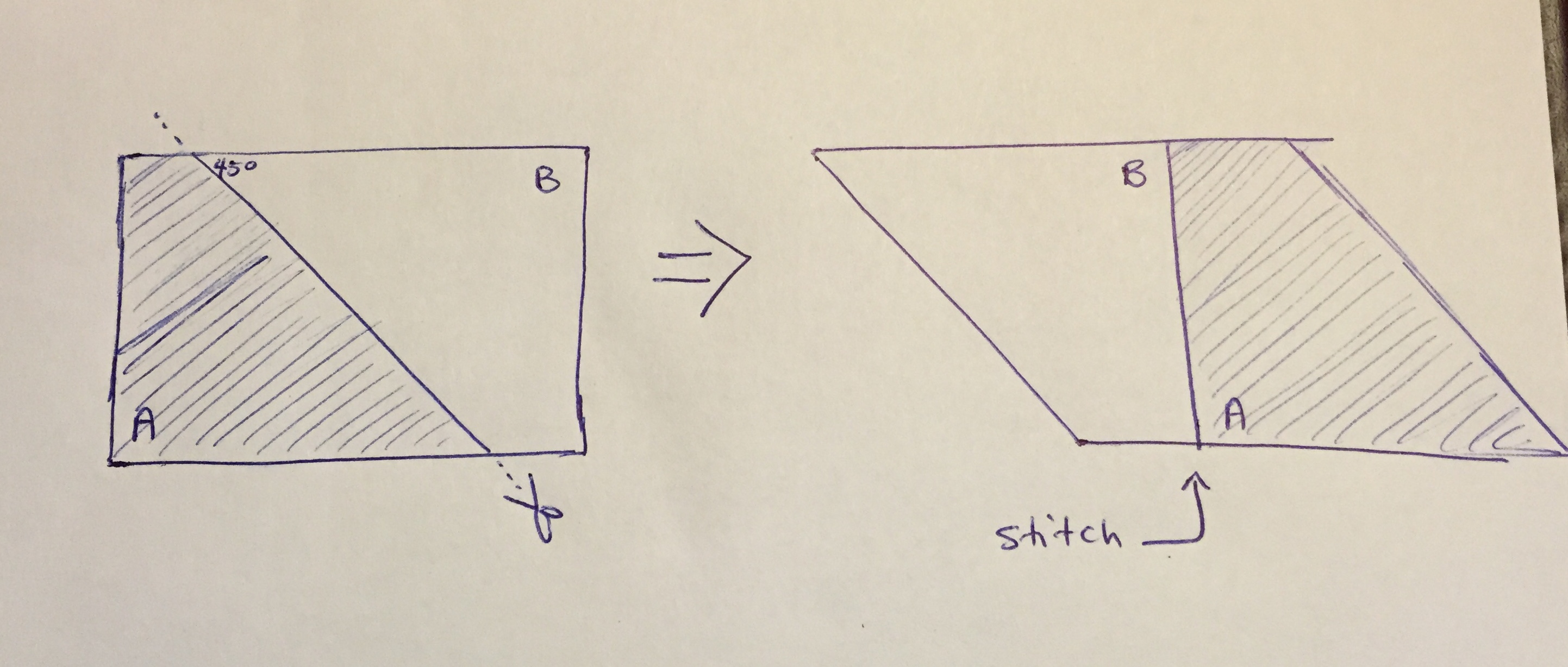
“Ha!” You say. “Sure. Right.” I think I’d better show you a diagram:

Bias diagram

Clear as mud, right?

To make this cut I first ruled a chalk line at 45° from top to bottom. As luck would have it, I placed this line very well: a bit offset from the top left, near one of the joins between the scrappy and navy fabrics.

Once you do the cut-and-shift manouevre and sew that seam, you end up with a lovely parallelogram with 45° angles at the pointy corners. Yay.

Parallelogram

Almost there, really. It’s becoming a bit more obvious that this is bias binding.

I ruled a bunch more white chalk lines onto the fabric, each line being 2¼ inches apart (which is the width of binding I like to use).

I mark the lines before cutting because my cutting mat is not big enough to do a single stroke. This way I can shift the fabric for the second cut without messing up! With bias cutting, this is important, because bias is stretchy.

First cut

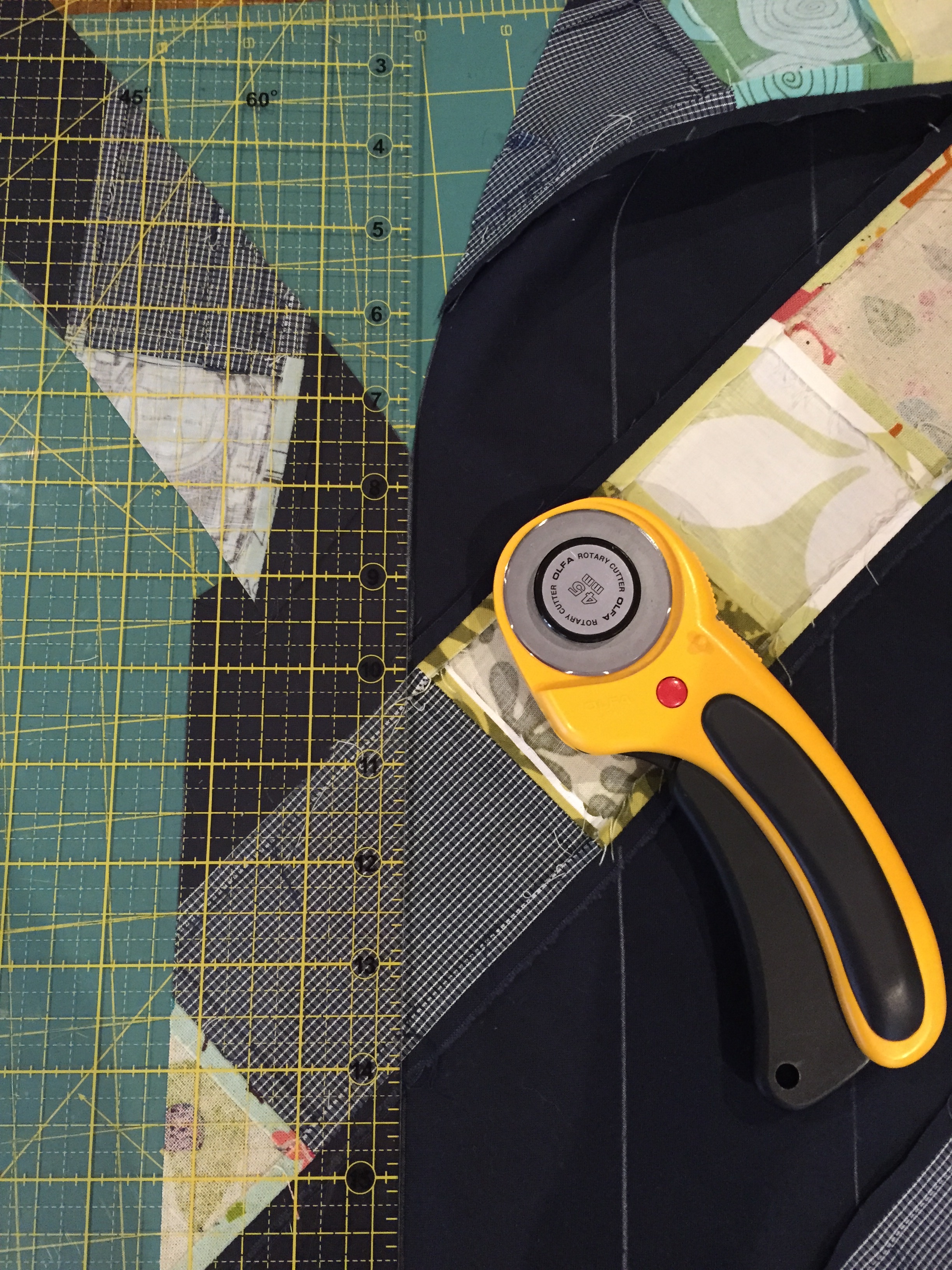
In the picture above, I have cut away two strips, and made the first cut on the next one. I start at the bottom and roll the rotary cutter up to the top of my ruler.

Then I shift the fabric up, and bend the two pieces apart.

Second cut

Like this! Then I can make the second cut without double-cutting the loose fabric at the top.

Putting together the bias binding is a pretty standard technique. I won’t go into detail of how to join up the strips, because there is an excellent tutorial series that I always refer to that does the job already. 🙂

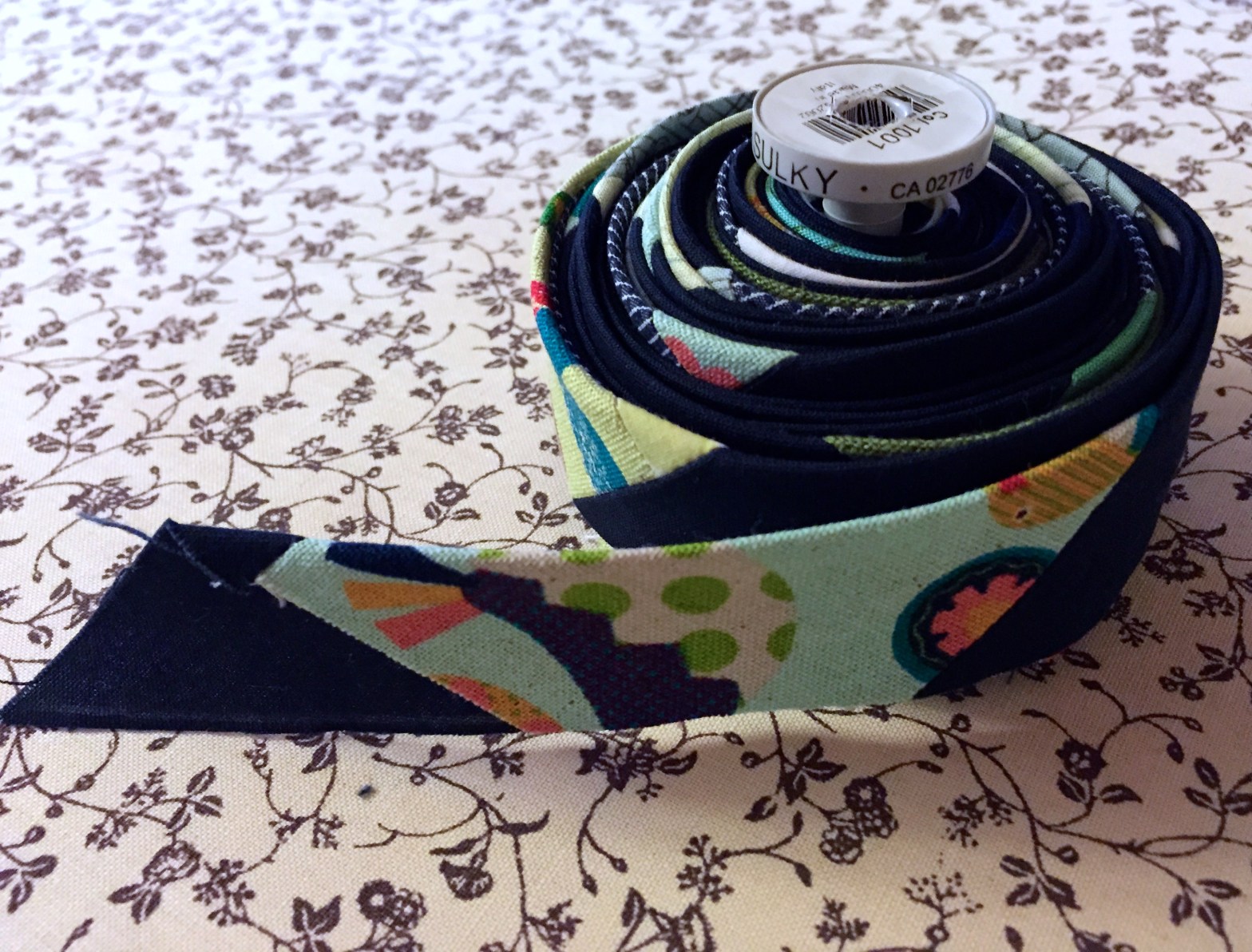
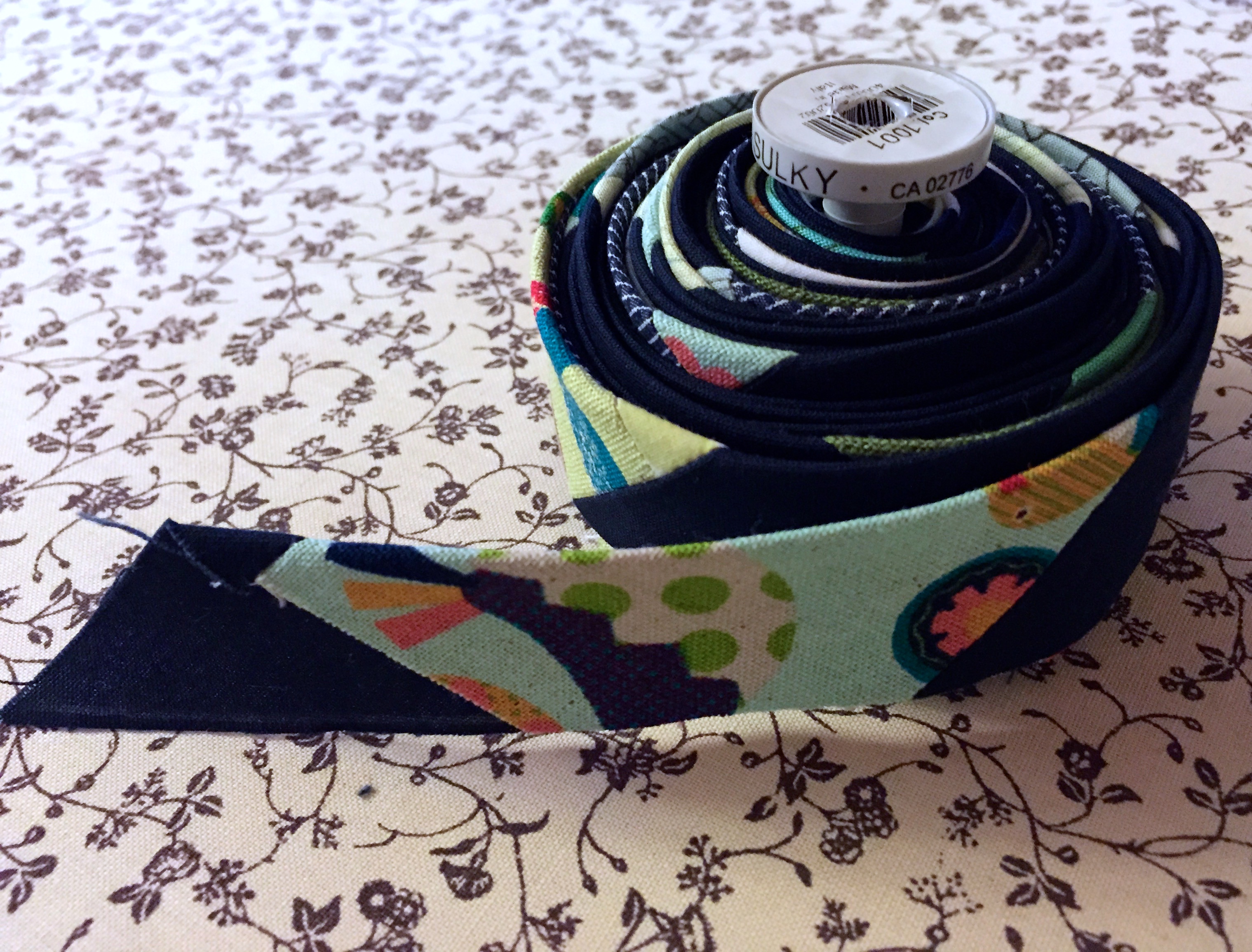
In short, you sew together the diagonal ends of each strip to make one enormously long piece. Then you press open those seams, and finally, press the long edges together. Like this:

Folded and pressed

Wow, my floor looks really dirty. Also, I just noticed my not-so-new ironing board cover needs a clean!

I use an old thread spool to roll up the binding as I go, so that it’s easy to put onto the quilt later, and it’s easy to manage as you press the edges together.

I’m hoping that this scrappy / stripey look will go really well with the quilt top I’ve put together. Stay tuned for final pictures soon!


Broodies and berries

It’s hot today. Currently, it “feels like” 34 degrees Celsius, which is about 93 Fahrenheit — not impossibly hot, but it’s quite uncomfortable if you are a chicken!

Especially if you are a chicken who has decided to raise a nest of little chicks!

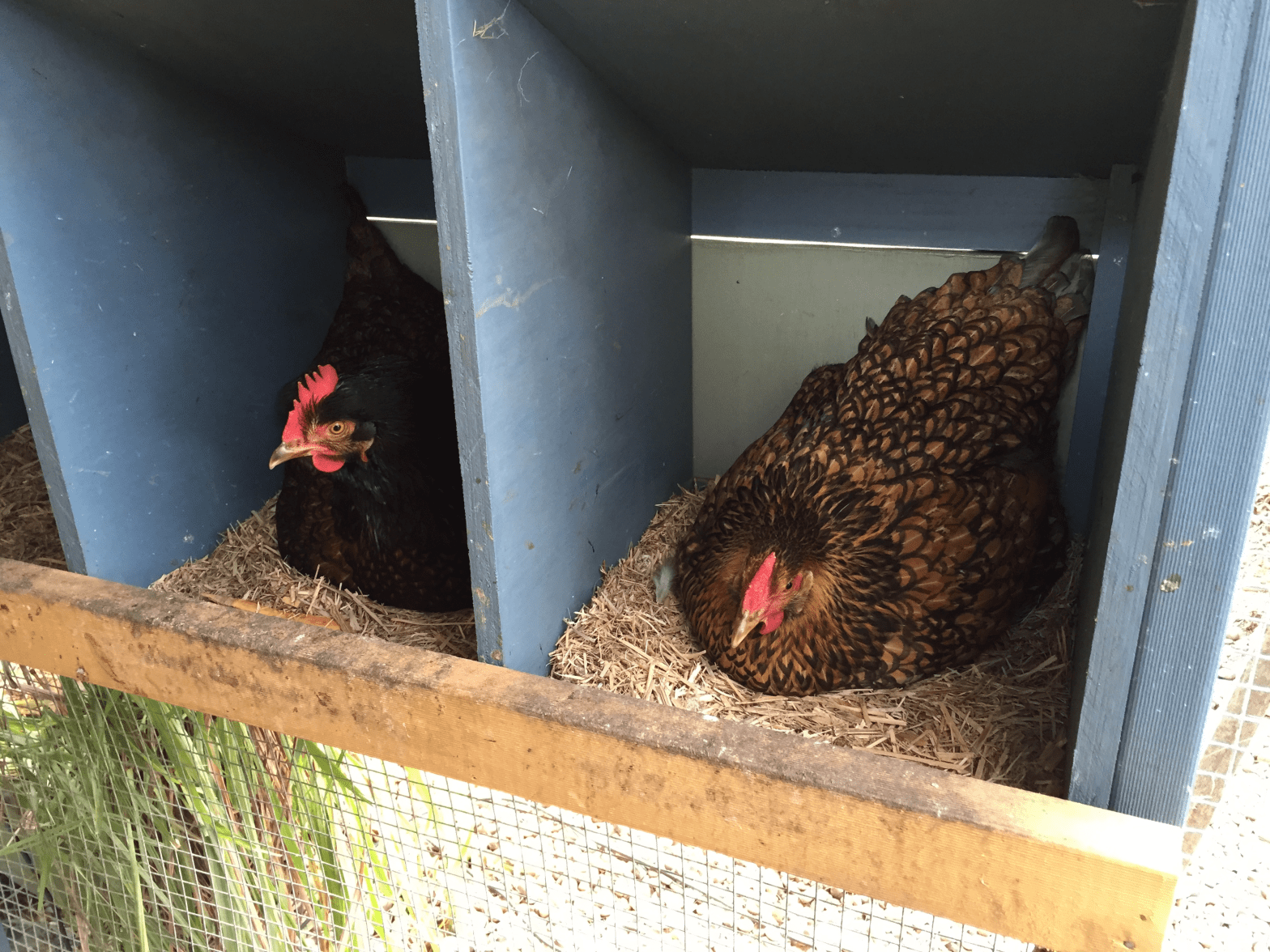
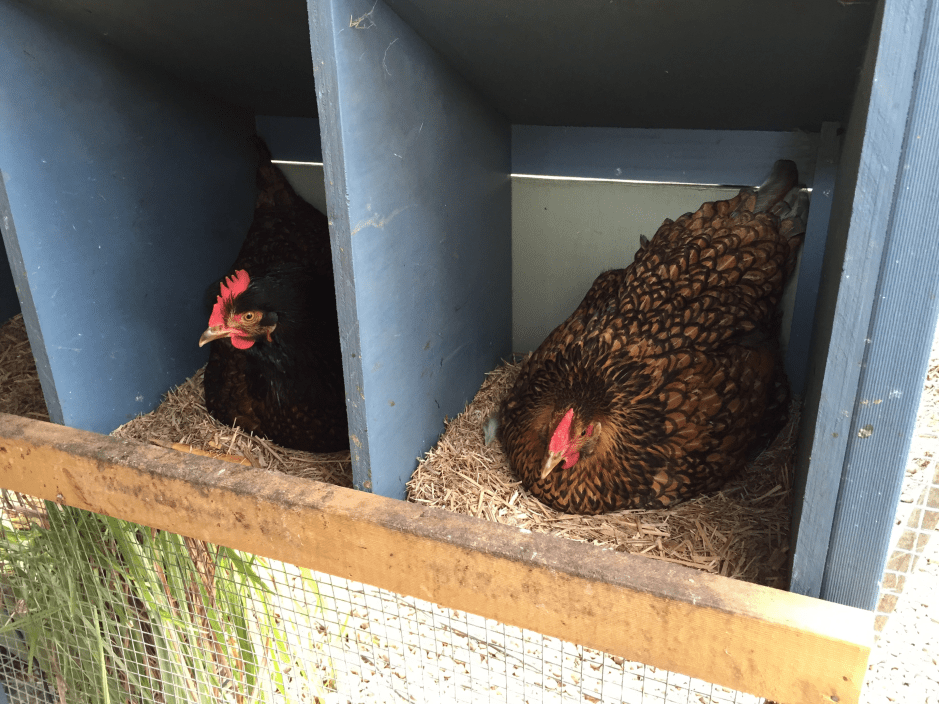
These two (Harriet and Cricket) are both broody at the same time. That means they won’t shift themselves off their nest for any enticement, not even snails! Not even Kale. Maybe for sunflower seeds. 🙂


Today I’ve covered their nest box with shade cloth, because I don’t want them to cook themselves to death. The door is open to let air flow in, and to discourage them from sitting in there (they like it dark).

The sun can still get in, so the shadecloth may give them a little more protection. At least until I can turf them off the nest.

Again!

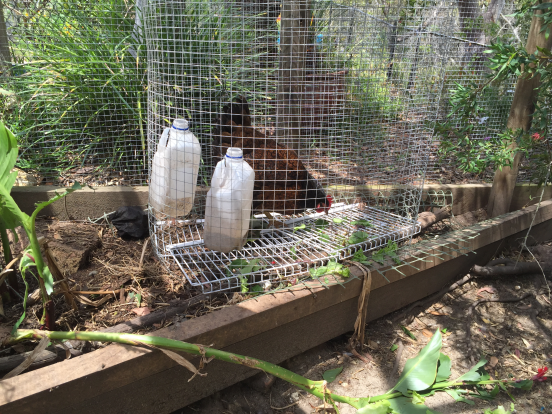
Normally when a chicken goes broody, we put her into “the broody cage”:

Harriet had a turn the other day, but I didn’t have the heart to leave her there for long enough, as the weather has been too hot!
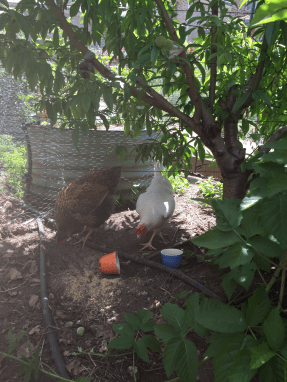
When in the broody cage, she has access to food and water, and some treats. The other chickens hang about to visit, so she doesn’t lose her place in the chicken pecking order.

The wire on the bottom is meant to allow air flow under her belly, to trick her out of her nesting instinct. This does work, but it’s hard on me watching a chicken be caged up like this for a few days.

This is more like it! The shade cloth trick deterred Cricket from nesting, and she came out into the sun for a dirt bath (crazy, crazy chicken).

In the meantime, I filled a few ceramic bowls with grain and water, to entice them into the shadier areas of the yard. Predictably, Cricket knocked the grain bowl over in her hurry to stuff her face (when broody, they don’t take time to eat very often: when she eats, she eats fast!)

Over the next few hours, as it gets hotter, I will go out and check that they aren’t sitting in the sun, and pop some ice cubes into their water.

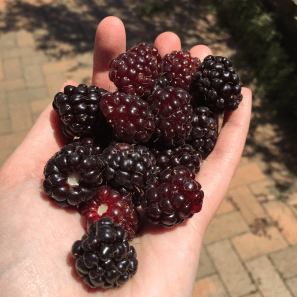
Whilst I was there in the orchard, I happened to notice that a few Boysenberries are ripe.

Ummmm, yum!

There are even a few berries left on the bush!