Upcycle a sweater into a nappy cover!

Here in Australia, we call them woolly “jumpers”. πŸ™‚ When they are too pilled and moth eaten to be of further use as clothing, you can re-purpose these useful items into wool nappy covers. If you’ve been using cloth nappies with PUL covers and want to try wool, don’t be afraid to give it a go! It’s much cheaper to make a wool cover from an old sweater than to buy a PUL cover. You can often get two or three covers from one sweater, if you are handy about what pattern shapes you choose!

The first step is to find a suitable wool sweater, and felt it. Not all sweaters are made of wool (a lot of them are acrylic, now) and not all wool sweaters will felt. Look for a wool mark symbol and wash instructions that say “hand wash in special wool detergent”. If it is an easy-care wool, it won’t shrink!

In the images above, I’ve shown the sweater I used before and after shrinking. Notice how much the wrinkles have flattened out? It also gets really thick and chunky. I like to felt it a fair bit, but it will still shrink, so be careful to wash your wool covers carefully once they are made up.

I shrink my sweater by using the washing machine, on a “Cotton” cycle, which is a vigorous wash with a fast spin. I did the cycle first at 40 degrees Celcius, but that didn’t shrink it enough, so next time I used 60 degrees Celcius, and used my home made soapy detergent, rather than wool wash. Perfect! The key to felting is: agitation, soap, large temperature changes. So, if you felt by hand, give it a good rub with soap flakes and plunge it into some hot or cold water to shock the wool.

The next step is to cut one (or more) wool covers from the shrunken sweater. There are a bunch of different patterns on the internet, and I’ve tried a couple of different types. A lot of them look very strange when they aren’t on a baby (the ones with the leg holes pointing up at you, for example), but they look great on a cute little baby bottom. Here are some good tutorials I’ve used in the past:

  • The Byron Life: wool shorts that are quite like little hot pants. Β These are pretty good, and I made my first one like this. I needed to make a dip on the front waistband, though, because a baby tummy tends to push over the top. Make sure you leave lots of room for a bulky nappy (make it bigger to start with and then sew it smaller if you need to!)
  • Bum Sweaters”: This is a diagonal pattern which looks bizarre, but I warmed to after I started using flat nappies. This is because I would fold the nappy into a triangle shape (the “Chinese” fold) and I figured this pattern would go over the bulky nappy with room in all the right places. I made most of my nappy covers like this, and they look great.
  • Longies: Oh boy, these covers are the most adorable thing I’ve ever seen. I really want to make some of these!Β Stripes! Yum. These use the arms of the sweater, so I’m going to see if I can get one out of the bits I have left over.

Having made a lot of Bum Sweaters, I knew I wanted that shaping, but to get more out of the sweater I have by changing the design. Cutting on the diagonal is not very efficient unless you can somehow use both parts of the diagonal cut. I tried doing this on a previous sweater by cutting up lots of smaller equilateral triangles and sewing four together, but they ended up getting holes on the seam lines due to weaknesses (I hand sewed them, to reduce the seam bulk).

This time I decided to pick out the best fitting cover from my stash, and use it as a pattern to get the right shape, but changing the seam lines.

20140124-150558.jpg
A good fitting cover

I started with the cover above. You can see the Bum Sweater seams which run from the leg holes up to the centre of the front waistband. The leg holes are created by leaving the bottom end of this seam open, and folding it back to make a cuff.

In order to “knock-off” this cover, I folded it in half and placed some A4 paper over the top. I used a marker to trace the outline of the waistband and leg holes. See below:

I did the same thing for the back, so I had two A4 sheets of paper, with a “front” and a “back” pattern. To make a full nappy cover pattern, I took two more pieces of A4 and traced each pattern again, in reverse. Then I stuck them all together using sticky tape, to look like this:

I hope you can see how the shapes are supposed to fit together. If you need to ask questions, go right ahead. πŸ™‚

The sweater I had was long enough to makeΒ just enough for one whole nappy cover on each side. The front of the sweater has a dip in the neck line, and I used that to make the front waistband of one nappy cover, as the shape was almost a match. If the sweater had been too short, I would have needed an extra seam between the front and back pattern pieces. If this happens to you, make sure you allow extra fabric for the seam allowance (I used 1 cm).

I cut around the front piece pretty closely, but I left the back piece square at the back, because my original nappy cover had an elasticised waist. If I had cut both front and back according to the original shape, I may not have had enough stretch in the waistband to get the cover over the fat nappy! The back waistband can be gathered in with elastic if it sags down when it’s on the baby.

Two nappy covers from one sweater

You can see that the seam lines for the nappy covers are a little inaccurate because I squared off the back piece. Luckily, the felted sweater is a very forgiving fabric! I just placed the waistband edges together at the top, and stretched the seam as I went so that it matched up at the bottom, too.
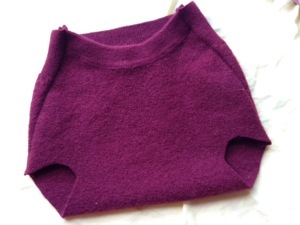
Side seams sewn with a bit of stretching.

That’s the side seams done. If I had been thinking properly, I would have put the inner soaker piece onΒ before I sewed up the side seams. The inner soaker is just a second piece of sweater that adds thickness to the crotch area and back “seat”. I used a contrasting grey piece of wool from another sweater, but you can use parts of the sleeves for this too. I was able to insert my soaker by hand with a running stitch (it doesn’t take a lot of stress) and on the second one, with a bit of wrestling, using the machine.Β Much easier to do this before sewing the side seams!

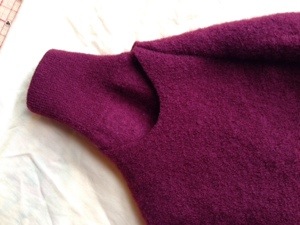
Once the side seams are done, you just need to finish the leg holes and waistband. For the leg holes I like to use the sleeve cuffs, since they are already “finished” along the cuff edge and don’t need hemming. If they didn’t shrink down too much, that is. I put my sleeves through the leg hole on the nappy cover to check whether they would be the right size:
20140124-160302.jpg
Sleeve cuff poking through the leg hole.

It was a perfect fit. πŸ™‚ So I snipped off each cuff and pinned them inside the nappy cover, like so:

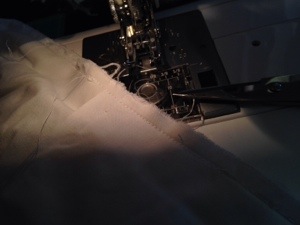
Sewing the leg holes by machine was only just possible. My leg holes came out about 8 inches in circumference, which is smaller than the barrel of my machine. I needed to stretch it over the machine and really help it along when I was sewing. I think the quilting “walking” foot really helped, here. If you can’t get your machine to do the work for you, hand-stitching will hold together just as well. My pink cover at the top of this post was done entirely by hand. You can get lovely flat-felled seams that way!
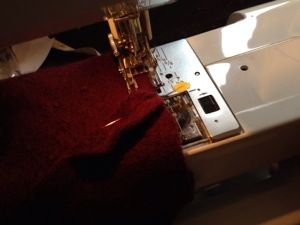
Stretching the leg seam over the machine was a tight fit!

If your sweater sleeve shrinks too much and won’t fit the hole in the cover, you will need to make your own cuff. Cut a rectangle of fabric that is as long as the shape of the leg hole, plus a bit for the seam. Sew the short edges of your rectangle together to make a round cuff. I used a wide zig-zag stitch to piece my cuffs (for the second nappy cover). That way when I pulled on the seam, I had a nice decorative ladder, and a flattish seam.

For the waistband, finish up any raw edges as best you can. I managed to get my waistbands to fall on the sweater waist cuff (mostly) so I only needed to finish the front piece on one of the covers. I just used a bit of cuff from another sweater and wrapped it over the raw edge. Since these fabric are pretty felted, I’m not too worried about them unravelling. But the waistband will get a fair amount of stress pulling it on and off, so having a finished and firmer edge works better, I think.

This is the cover with the finished top waistband edge. I just trimmed the piece close to my stitching. If it ravels, I will felt that edge by rubbing it vigorously with soap and my thumb. Note that the inside seams are also unfinished. If they ravel, I will felt them or zig-zag them. πŸ™‚

Cutest bottom ever!
Cutest bottom ever!

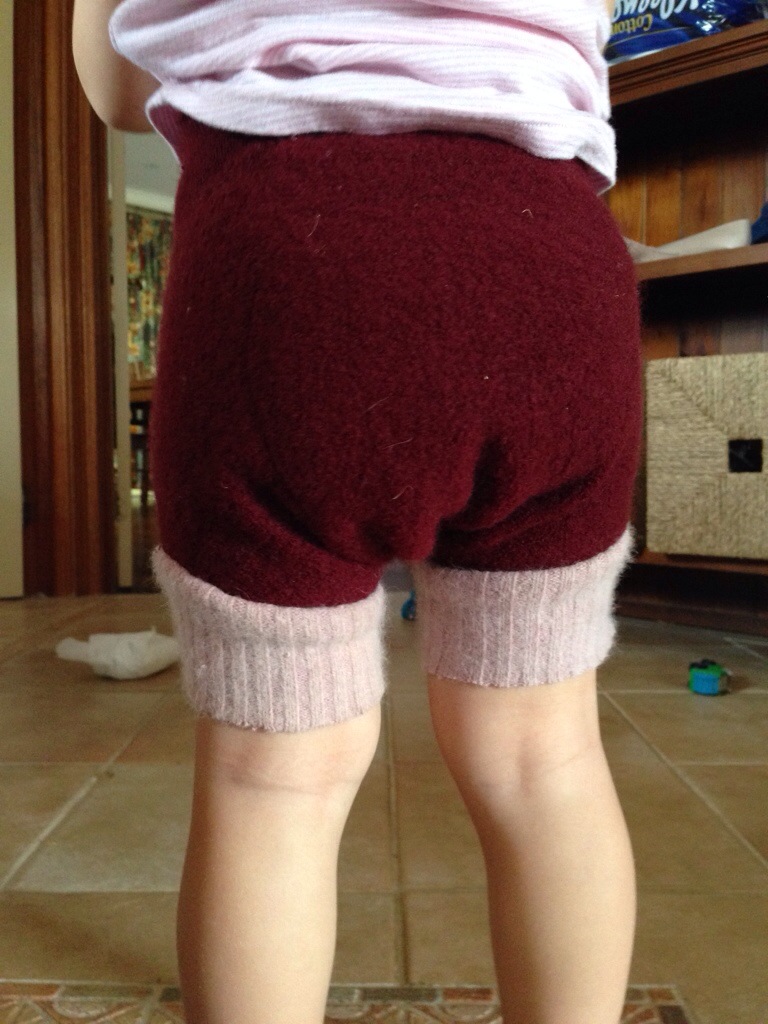
And … here it is, all finished up, and modelled by my (somewhat hefty) almost-two-year old. For reference, she weighs 13.3 kg and wears a size “5” disposable nappy (11 – 25 kg), mostly because of the width at her hips and tummy. This nappy cover had a rise of 20 inches (from back waistband, around the crotch and up to the front waistband). It is 12 inches wide across that square back piece. It’s shown over a cloth flat nappy, folded using the “Jo” fold. She is a tall girl and is wearing size 3 clothing already. I found that the cover stayed on by itself and didn’t need any elastic in the waistband [Edit: I’ve since added elastic to this cover, trying to solve a nappy leak]. Lucky I didn’t cut it narrower! πŸ™‚

I hope this is useful to those of you who have nappy covers and want to try making a wool version! This technique would also work for copying a PUL cover (the kind you velcro up like a disposable). I find that pull-on covers are much easier to put onto a larger baby than the snap or velcro ones. To use the cover, you will first need to lanolise it so that the moisture stays in the wool and doesn’t come out onto the pants or sheets. I’ll post on how to do this soon. πŸ™‚

Weaving a special gift

Last year my Mum had a special birthday, and I vowed to make something extra special to mark the occasion! Β At first I was thinking of making a quilt, inspired by the lovely wonky circles done by Mari of TheQuiltingEdge. I still think that is a great idea (hi Mum!) but I knew I wanted it to be extra specially special. My Mum is really into earthy colours and crafts, and I thought maybe I should try my hand at some weft-faced weaving.

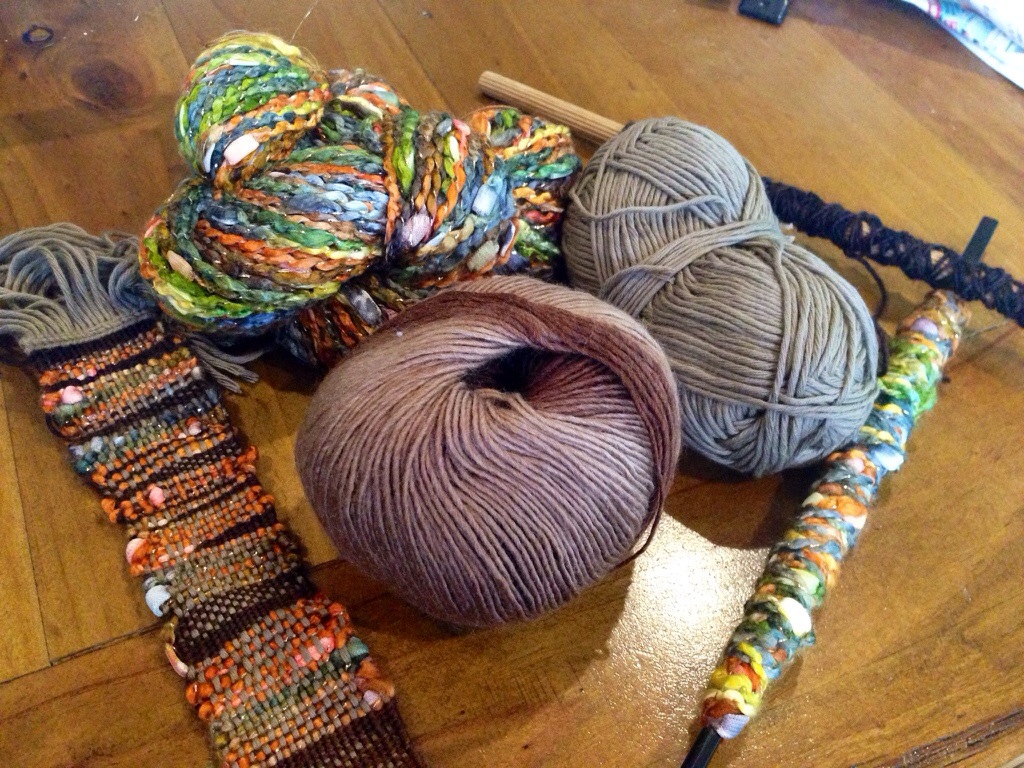
20140122-155546.jpgI assembled some materials that I thought would be just right for Mum: something really chunky and uneven to use as the weft, and then something nice and strong for the warp. I ended up with a simple neutral cotton for the warp, and added another ball of graduating colour yarn (I’ve forgotten what fibre this is! It’s awesome, though – single ply) to use between sections of the novelty yarn.

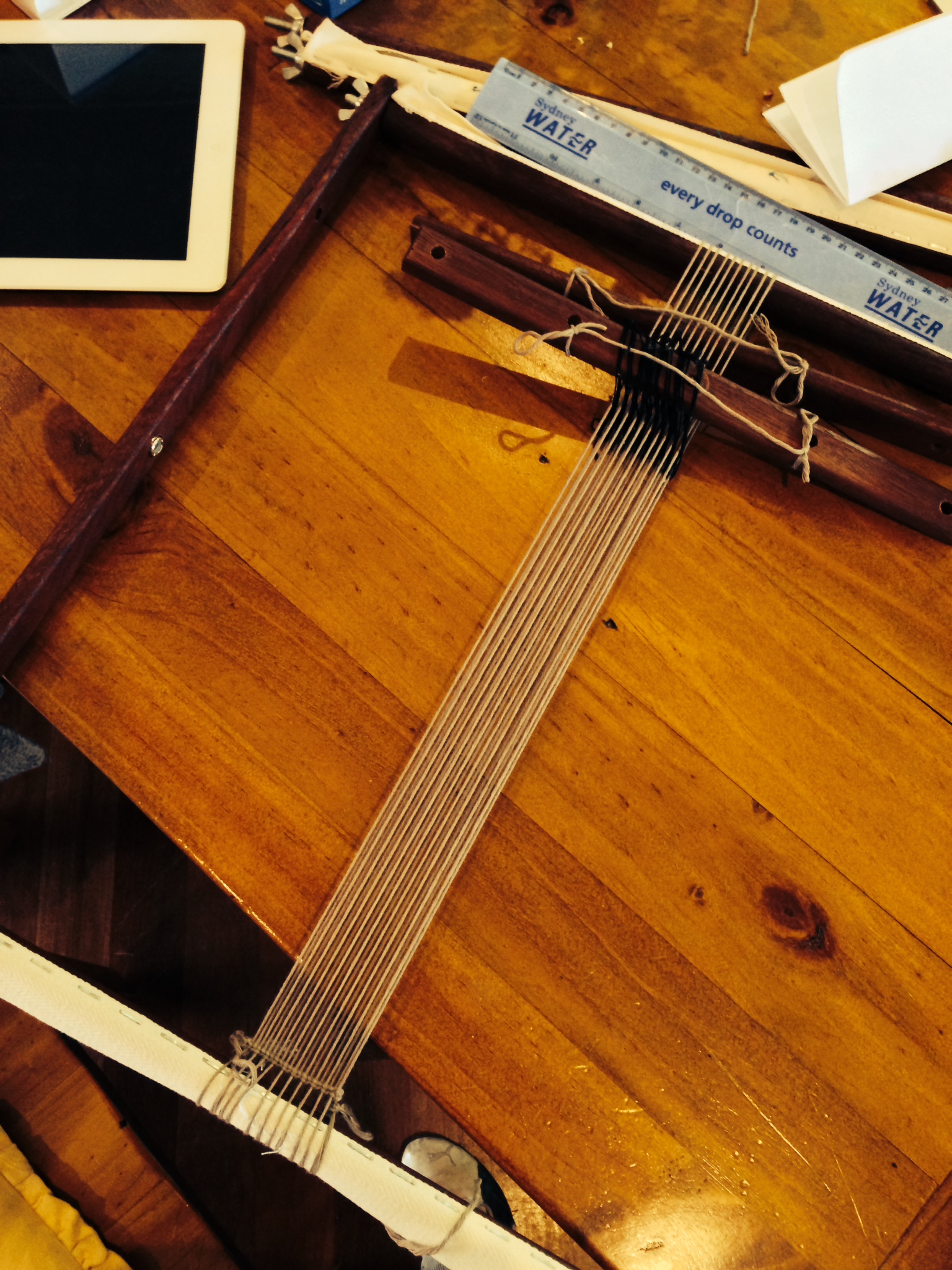
My plan was to try out some weft-faced weaving, as my only other weaving has been warp-faced (either on the inkle loom, or tablet-weaving). I haven’t got a loom, so I dug out my tapestry frame and set it up in the tallest configuration I could manage. Then I wound the warp around the upper and lower bars to get some basic tension going.

Warp on tapestry frame
Warp sample on the tapestry frame.

The sample looked pretty dwarfed by the width of the frame, but I figured that I might be able to use this set up for the full piece, which would use all the space available. You can see I’m re-using some shorter frame pieces as a heddle stick, and also as a shed stick. The ruler was to keep the shed open whilst I passed the weft (wound onto a bit of dowel, and a chopstick).

I’m using the same set up I’d use on a backstrap loom, except with a fixed tension warp. I was concerned my weaving would turn warp-faced if I tried it without an even, sturdy, tension.

Having warped the piece, I then started twining the first few rows, to make sure the warp stayed evenly spaced (since I don’t have a rigid heddle). I found the instructions on using a simple loom invaluable. These gave me confidence that my tapestry frame idea wasn’t a total bust! I also tried out the kitchen fork idea to tease the weft into place, and that worked like a charm on my narrow warp.

I started with some basic weft-faced weaving, to make sure I had the hang of it. Then I began playing about with how tightly I packed the weft down, revealing bits of warp here and there. Once I was sure I could create something pretty, I launched into the novelty yarn itself.

20140122-163338.jpg
Start of the sample, showing basic weft-faced weave, and then getting fancier.

It wasn’t long before I figured this was looking pretty good! The tapestry frame was awkward to use as a loom because it went on my lap, and I had to manipulate the sheds whilst juggling the frame as well. The tension also became quite tight as the weaving advanced, making it harder to get a nice shed.

I think if I tried to do a full width piece like this, I’d need to stabilise the tapestry frame to have both hands free to fiddle. I don’t think I will find it easy to wind on a long warp, even though the tapestry frame bars can be rolled and re-pegged. What I really need is something like a Cricket loom. Time for some DIY! πŸ™‚

Wild goose chase quilt

Well, I reallyΒ wanted to post about this yesterday, but as is always the way with quilting, it took longer than I thought!

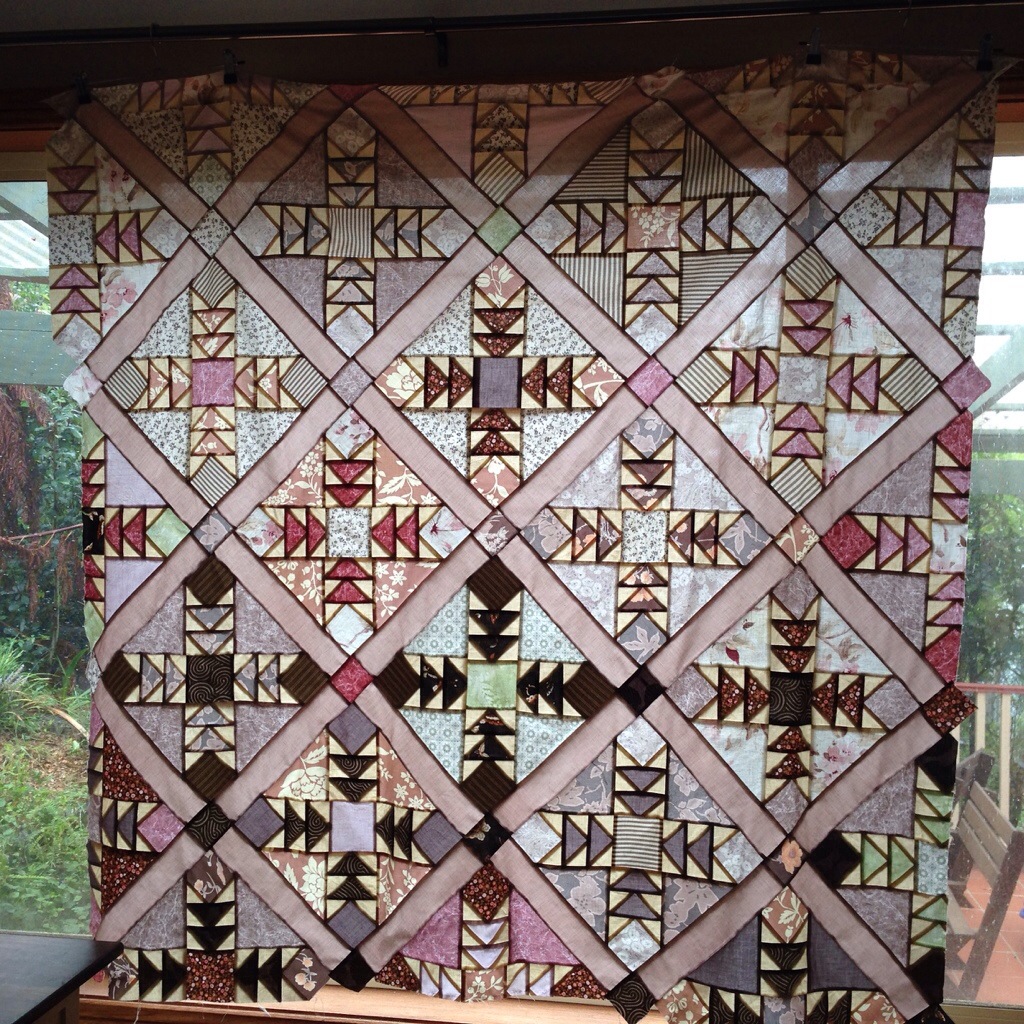
I have been working for months on an epic project: a wedding quilt for my sister! She was married last year in September, and I knew there was no way I was going to get it finished in time for the big day, because check out the design we ended up going with:

20140121-135540.jpg
Wild goose chase quilt top

When I embarked on this project, I had made exactly two quilts. Two! The first was in High School, and was my major project in my Year Ten Textiles course. So, just a little time has passed since then. Slightly more recently, I made a cot size quilt for my youngest niece. Both of these quilts were relatively simple pieced squares. My niece’s quilt was my first attempt at QAYG, so it’s not like I was entirely inside my comfort zone. So imagine what I was thinking when my sister picked out this design! (This design was heavily inspired by Jo Morton’s Wild Goose Chase Quilt)

That’s a lot of triangles! That’s a lot of pieces of fabric! It’s on point!

Okay, so that’s enough drama.

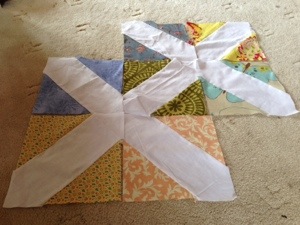
My original idea for my sister’s wedding was to do a signature quilt using this block:

Concept signature blocks

Guests could sign the blocks and I would sew them all up together into a quilt and that would be job done ™. But the colours I’d chosen to start with were too bright, and the brief became a dusky-pinks quilt, to match the theme of the wedding.Β On the back of the quilt I would create a tree quilt, with leaves that were signed by the guests. So, in effect, two quilts. Gulp.

No worries, I had some time. I began choosing fabrics that would fit into the “dusky pinks” category. Trickier than it sounds! I’m sure if I just spent several hours in the quilting fabric store this would have been easier, but small children and fabric stores do not mix. And I wanted to use recycled fabrics where I could. A few trips to the local thrift store netted me some stretch cotton stripy pants, a couple of floral blouses and skirts, and several usable pillow slips. I then took these off to the store to match some coordinating fabrics as best I could. I think I did pretty well, in the end!

Leftover fabric squares

I then started cutting and cutting and cutting. And some more cutting! I cut waaaay too many squares, thinking I would need a lot more blocks. The pile you see above are the large squares I have left after piecing the quilt top. I also have the same of medium squares and quite a few small ones left! Never mind, they will still come in handy when I add a border to both the front and back quilt tops.

I also made (I think!) about 70 appliquΓ© leaves from a couple of templates I drew free-hand. Each one has interfacing and then a basic running-stitch edge to stop the leaf from ravelling when it was being written on and transported. That was quite a number of swimming lessons profitably spent! I think the other people at the pool thought I was some kind of crazy person with all these hand sewn leaves!

Signed appliquΓ© leaves

The wedding came, and went. Look how beautifully the guests augmented the leaves! I can’t wait to see what the tree quilt side is going to look like! But I need to finish the front, first, so I have something to appliquΓ© them to. πŸ™‚

Feast your eyes upon the progress so far:

I still need to:

  • Trim the quilt top, then add a thicker border in the sashing colour
  • Add a pieced border using leftover fabric squares, probably using “coins”
  • Source and prepare the background fabric for the tree quilt top
  • Stitch a tree trunk and branches using thread art (learning how to do this as I go!)
  • Hand sew (probably) the leaves into place around the tree
  • Piece another border (probably also coins) for the tree quilt
  • Obtain some puffy batting and quilt the three layers together using hand sewn ties
  • Bind the quilt
  • Throw a quilt-is-finally-finished photography session andΒ party πŸ™‚

Phew!

Chicken coop upgrade

I mentioned briefly in my last post that Stephen had been working inside the chicken coop on the weekend, building a new garden bed. You might wonder what on earth we were trying to do! Anyone who keeps chickens will know that garden beds are an irresistible source of entertainment for animals that Love. To. Scratch!

The short answer is: chicken forage. πŸ™‚

Outside the coop we have some Queensland Arrowroot growing in a tub. It provides a good deal of summer protection from the North sun, and we have been experimenting with growing it inside the coop for the chickens to nibble on. We’ve had one plant “growing” inside the coop over the summer. I say “growing”, because this plant is just clinging to life. Every time it even thinks of sprouting a new leaf, it gets pounced on and savaged. Our chookies like their greens!

20140120-205126.jpg
Matilda and Rose at the new feeder.

Can you spot the Arrowroot plant there on the left of our two new chookies? It is a very spindly specimen!

We figured we would put in a whole row of plants, allowing each individual a chance to hide amongst the rest and to grow up above the pecking height of the chickens. With the removal of the bulky old feeder set up, a nice bit of space was revealed, and the idea of the garden bed was born.

20140119-122430.jpg
The girls “helping” in the new bed.

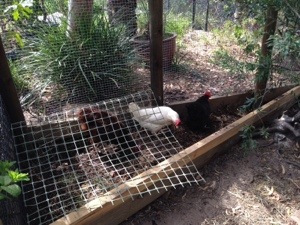
We didn’t need anything particularly fancy: just a place to stick some reasonable soil (the coop floor is very compacted, shallow, and sits on sandstone). It also needed to be covered in a chicken-scratch-proof net of some kind that would stop the chooks from digging it out. We decided that a diagonal shape was best, as the chickens love to dirt-bathe down the end of the run, and perch in the back corner. It would give us more space to plant up in the top of the run, and less space down the back where it gets pretty inaccessible.

20140120-204517.jpg
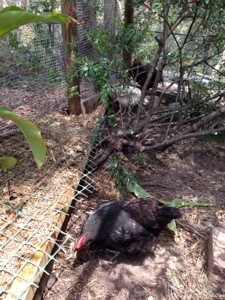
View to the back of the run.

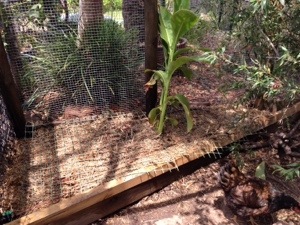
We used compost, manure and hay to make a Lasagne-layer filling for the new bed, and some old bit of green plastic fence mesh as a topper. The chickens were pretty excited when the compost went in! Now that we have put the mesh on top they are less impressed, but they are perching on the bed, so we figured that it has provided them with a little extra entertainment. πŸ™‚ The new Arrowroot plant seems to be faring quite well. It still has leaves!

The finished bed.
The finished bed.

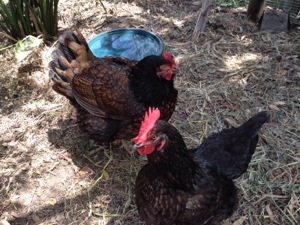
Harriet isn’t in too many of these shots, because she has started going clucky again and is frequently sitting in the nest boxes. But she came out to see what all the fuss was about. You can see her puffing herself up like a nice fluffy quilt:

Harriet is going clucky.

Normally Harriet is smaller than Raven, but when she is clucky she puffs up like this and starts bokking away. Funny girl!

20140120-205136.jpgRose is a little less shy, now. She is maybe starting to get a few tail feathers. Hasn’t she got enormously long legs? We had to jack up the waterer quite high because she is taller than all the other chickens.

As I write this tonight we are finally getting a trickle of rain. What a relief! Hopefully it will allow our new bed to settle in, and give the chickens some puddles to play with in the morning. Β πŸ™‚

Going to seed

We have been working in the garden this weekend, despite it being exhaustingly humid, and pretty damn hot. We really wanted to put up a new cover on the orchard, since the existing cover has holes in it, punched through by enthusiastic Peach and Plum watershoots. We got as far as putting up a new beam across the uncovered section, and making a single roofing arch out of polypipe. The kids are stir-crazy, though, and it is way too exposed to continue!

So, whilst Stephen was taking care of digging a new bed inside the chicken coop, I wandered about taking photos of plants in our garden. I kept noticing a pattern – all the Apiaceae family of plants are seeding at once. I’m talking specifically about our Parsley, Celery and Parsnip, but also the Coriander (which is always seeding in the garden). The carrots are too small at the moment to be seeding, and I only have about four plants since the last germination rate was pretty sad.

I thought I’d share with you some pictures so you can compare just how similar (and beautiful) these plants really are!

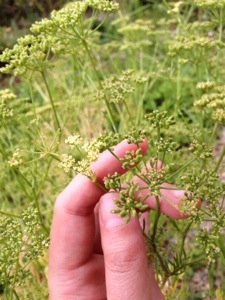
Parsley flowers
Parsley flowers are very subtle

The parsley has been seeding for some months now. Most of the plants have advanced seed heads, but this one was a little slower than the others and is still showing a few flowers. They are very small compared to the other Apiaceae in our garden.

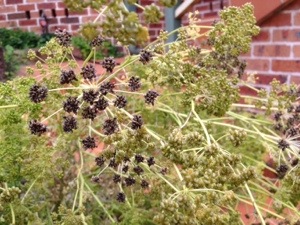
Parsley seed heads
Parsley seeds

In the shot above, you can see a good range of development of the parsley seed. The dark brown ones look ready to drop.

Parsnip flowers unfurling

Compare the Parsley with the Parsnip, though, and you can immediately see that the flowers are yellow, and quite prominent. Parsnip is quite beautiful when it flowers. See how the stem here is a little bit like a skinny celery? The shoot that puts up flowers is quite like a celery stem. Bet it tastes bad though!

20140119-122304.jpg

Here’s a lovely spray of Parsnip flowers. They are very much like a yellow version of Queen Anne’s Lace, only not so tall.

Parsnip against the sky
Flowering Parsnip

The Parsnip has only been flowering for a few weeks, but the Celery has been going for a couple of months.

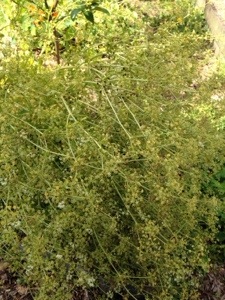
Celery flowers
Flowering celery

In the above picture you can see how thick and heavy the flowers are, they are pulling the stems over sideways under the weight. The flowers are delicate, too.

Celery seed
Celery seed

The most developed seed on the celery appears to be forming close to the stem, nearer the base of the plant. The celery leaves look a lot like flat-leaf parsley, here.

I don’t have any shots of Coriander to show, as all our “path Coriander” has finished and died back in the recent heat. It continually drops seed into our gravel path and comes up all by itself. This was the first seed we ever saved (and we’ve been eating it every since!), but we could never get it to grow in the garden when we planted it back. However, let it fall naturally into some rocks? Comes up everywhere. Turns out all the seeds in this family are quite hard to get to germinate, but they self-seed like crazy!

We have path Coriander, driveway Parsnip, and the Parsley just renews itself in the garden bed every two years. Just like magic. The self-sown Parsnip was amazing to discover. We have such trouble getting it going and here it is, a whole garden bed full of it, and in varying stages of growth so we can just pick the right size when we need it!

The flowers are always covered in wildlife, too. Bees (native and different honey bees) and ladybirds are particularly attracted. If you have some of these plants in your garden, and you don’t mind them popping up a little tall and getting very cheerfully untidy on you – why not try letting it seed? You’ll probably be surprised where it comes up next. πŸ™‚

New ironing board cover

I have been doing a lot more sewing lately, as I start making gifts for people, and repairing items I would normally stuff in a box and forget about. The other day I was trimming apart some Half Square Triangles (quilting! I will post on this project soon πŸ™‚ ) and I put the point of my scissors straight through my elderly ironing board cover:

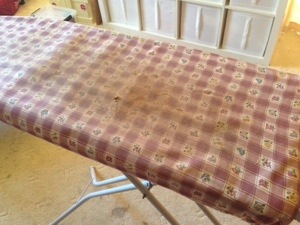
Old ironing board cover

Isn’t that hideous? I have had this cover for as long as I can remember, and … ergh! Not only is it tired, faded and stained, it now has a hole that is rapidly getting bigger! So this was the kick-start I needed to finally re-cover this puppy, which has been on my Todo list for about a year.

I knew I wanted a fabric I would like to see more of … a lot more. So I pulled out a lovely neutral print I scooped for a bargain at the local thrift store. This fabric was made up into some curtains and I’ve used it as part of various projects already. The backing for Evie’s Christmas quilt was made from it, for example. I already love the fabric because of the previous uses, and it goes nicely with the warm tones in the lounge room (which is where the ironing board is kept). Great!

I took off the old cover and kept the cord so I could use it again. The old cover was pretty crinkled and it was difficult to lay it out on top of the new fabric, but I managed it after giving the cover a quick iron. How, you ask? I put three cloth nappies on top of the ironing board as a makeshift cover. πŸ™‚

I cut around the old cover, then overlocked the raw edge, just like the original. If I didn’t have an overlocker I would have followed this technique, folding the edges over twice to make a pocket for the cord. Having an overlocker is a boon, sometimes. It made this job a lot easier!

Threading the cord through the stitching was easy enough using a tapestry needle.

20140117-161913.jpg

Finally, I cut a new piece of batting to go on the board using the previous foam as a template. The old foam is still there, but the new batting gives it some more pouff, which was sadly lacking after all this time. Now it feels nice and squishy. πŸ˜‰

After a brief wrestle to get the old cover on, I realised that some of the edges of the cover were too loose. It was sagging around some of the sides where the cord wasn’t pulling the extra fabric in. So I flipped the whole ironing board upside down, got down and tucked up the slack using a needle and thread. I would have used little safety pins if I had any, but thread tacks did a great job.

Thread tacks

The new cover looks a thousand percent better and I can’t believe I waited this long to fix it!

Draining yoghurt for extra yum!

Hi all. πŸ™‚

Today I’m taking it a bit easy because I have some new glasses, and I’ve been getting some eye-strain. Meh! It’s also still pretty hot, although not as bad as down in other parts of Australia (hi Melbourne!), where I think they are frying eggs on their car bonnets. Keep cool you guys!

So I’m doing some work inside today, and that includes draining the yoghurt I made the other day (here’s how I make it). If you are like me, and don’t enjoy yoghurt that leaves little pools of yellow whey when you dig it out with a spoon, then draining your yoghurt may be for you!

Basically, hanging the yoghurt so that the whey drips out will give you a thicker, stiffer yoghurt. Greek yoghurt is made this way. The longer you hang it, the stiffer it gets, and you can even get it to soft cheese consistency! Which is the yummiest of all. πŸ™‚

If you want to try this, all you need is a bit of cloth to use as a filter (cheesecloth is perfect, and designed exactly for this). The fabric wants to have an fairly open weave so that the liquid will pass through without it taking half the week. You will also need some string, and a way to hoist up the yoghurt over a bowl.

Choose a bowl that can hold the entire volume of the yoghurt you are draining. I did 1 Litre this morning, so I used my 1 Litre measuring jug. Line the bowl with your clothΒ (I doubled over my cloth because the weave is pretty loose). Β Then bring all the corners and edges of the cloth up into your hand and tie it off with a long string. You will use the long end to hang the bundle, so don’t cut it off too short!

I use chopsticks to make hanging the yoghurt easier. Wrap the string a bunch of times around the centre of a chopstick and it will hold the weight of the yoghurt without slipping, so long as you use a string that isn’t slippery. Tie a knot if you need to! Then you can quickly hoist the yoghurt up out of the bowl and balance the chopstick in place on your stand. A square chopstick works better than a round one, because a round one can start to roll about.

I used a jelly strainer stand on top of my bowl, but in the past I’ve used a couple of kiddie chairs, or the racks inside my fridge. An oven rack would also be handy. Any place you can securely suspend a chopstick will work, so long as it doesn’t slide off, and you can fit your bowl underneath.

Wait a couple of hours, or until it starts dripping instead of dribbling. I waited a little longer until the drips had stopped, and this had reduced the volume by half. I got 500 mL each of yoghurt and of whey. Exactly the thickness I love! If you want to make it cheesier, just keep on draining! You might want to do this in your fridge, though, because it gets very slow once half the volume is drained. Giving it an occasional stir or poke can help.

Store the whey in your fridge and you can make delicious silky bread with it by swapping out the water or milk in your recipe. My favourite way! Or if you don’t make bread, you can water your plants with it to give them a nutrient boost.

Enjoy your yoghurt with a dollop of honey or your favourite fruits!

A simple dinner

“Simple Living” is a strange description for what we do. Each task in my day is broken up into many small parts, each of which is simple in and of itself, but the whole is typically a complex dance, sometimes shrouded in mystery. πŸ™‚

Satisfying, though.

Take tonight’s dinner, for example: I decided to try a new recipe I came across whilst surfing the internet researching healthy lunchbox options that don’t involve bread. Impossible Quiche Recipe. I was drawn to the “impossible”, and stayed for the easy-to-make part. What got me hooked was I had a bunch of leftover zucchini still on the bench. Maybe the kids will eat it! >.>

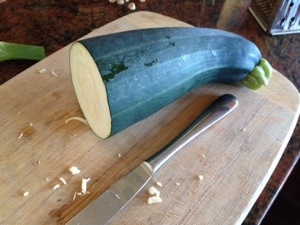
The recipe calls for “1 zucchini” which is a little woolly for me, since our zucchinis come super sized (Costa Romanesco variety). This one has been sitting on the bench since we picked it, maybe two weeks ago? I’ve lost track. This is the last bit left from our plants which have succumbed to Powdery Mildew (the fate of all Cucurbits in Sydney Summertime). We have more baby plants in, but it will be a while before we get more fruits. I figured this would be the equivalent of a large zucchini. Easy peasy.

Costa Romanesco Zucchini

I had no onion left, so I needed to find an alternative if possible. Solution: some smalls leeks now going to seed in the garden! These never got as big as a typical supermarket leek, maybe because of a lack of water, or inattention on my part. Regardless, the plants have all decided at once that they’ve had enough, and are starting to put up a little flowerhead that will grow into a great big showy beautiful flower:

If I leave them for much longer, the leek will become woody in the centre, but they are just fine when the flowerhead is still small like this. So, I grabbed two and ducked back inside.

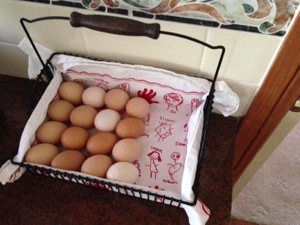
I used the butter in the recipe to sautΓ© the leeks, and added the mushrooms too, to bring up the flavours a little. I had no bacon to use, so the mushrooms are going to do the job of the meat, in terms of flavours. Then I used the oldest of the eggs in my basket and proceeded to assemble the quiche.

20140116-210630.jpg

The basil in the recipe was a nice fragrant touch. I used some leaves off the plant I have growing in a jar on my bench. Believe it or not, this basil came as a cut herb in a polybox from my organic veggie supplier. All I did was put it in the mason jar to freshen the leaves. That was the day before Christmas Eve! It has since rooted, and is flowering quite happily in my kitchen. Talk about convenient!

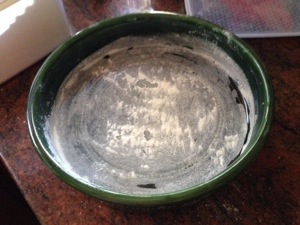
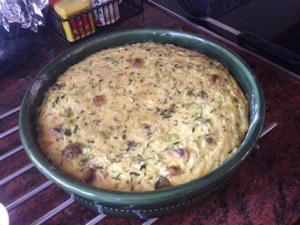
I prepare my quiche dish in the same way as I do for other baked goods: with a bit of butter rubbed on, and then dusted in flour. I hate the stink that the spray oil makes (it makes me cough too) and it leaves a sticky residue when it bakes. So now I do it the old fashioned way, and avoid using disposable baking paper too. πŸ™‚ Isn’t it a beautiful quiche dish? I was given it by my mother-in-law and it has made a lot of quiches in its time.

20140116-210652.jpg

Once the quiche was in the oven I cleaned up a huge pile of tiny new potatoes we had sitting in the bench covered in a tea towel. They will start turning green and going soft if I let them sit too long, so it’s potato salad time! I also put the tops of the leeks into the freezer, so it can be made up into vegetable stock at a later date. I keep a box in there to catch scraps like leeks, celery leaves and stumps of carrots. These make great stock!

All in all, it took a long time to prepare the dinner, but it was pleasant time working quietly without interruptions. The kids were resting quietly, there was a nice breeze coming in the kitchen window, and I was making it up as I went! It’s surprising how much enjoyment I can get by doing something myself, varying a recipe here and there, and knowing that the ingredients I’m chopping have come from my garden, from our own hard work, from seeds we planted, and from weeks and weeks ago!

20140116-210753.jpg

Like I said, complex. And mysterious. πŸ™‚

Cloth nappy system

I have a good friend who (I hope!) is about to have a baby any day now. She plans to use cloth nappies, which is great news! Whenever I hear of someone choosing a re-usable solution over a disposable one, I give a little cheer inside. Not only will she save a whole load of money, but she will also greatly reduce her environmental footprint. Where we live, drying nappies on the clothesline in the sun is something we can do year round. It’s also a lot easier to wash nappies than it used to be.

Cloth nappies are becoming increasingly popular and there are about a gazillion options to choose from. It’s actually really daunting to try and work out what nappies you should use when you are first setting up your cloth nappy system. I was going to send her an email which shows what I’ve settled on, but I decided to put it up here instead so that other interested people could also take a look! πŸ™‚

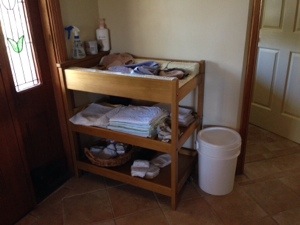
Without further ado, here is my change table I have at home (yes, that is my front door! Turns out this is an excellent spot for a change table in our house):

Cloth nappy change table systemI have a four year old boy still in night nappies, and an about-to-turn-two year old girl who is not yet toilet trained. I think I have two packs of eight coloured nappies (LOVE!) which I bought from Target for $20 each pack. I also bought some regular white flats; they came in packs of twelve, I think. I can’t remember what I paid for them, but it would be about $25, I would guess. The nappy flats are folded into quarters and stacked onto the middle shelf.

I do use disposables as well as cloth – it’s much nicer to take a pack on holiday than carry a whole bunch of wet / dirty nappies around, for example. I also use disposables when I need to refresh my wool nappy covers (more about wool covers in a separate post). Because I do all the covers at once, I have nothing to stop the nappies from wetting everything my baby sits on, so I use disposables until the covers are ready again. And, they are useful when you have a babysitter, too. πŸ™‚

Wipes are located in that basket. To use, I squirt the wipe with water, then add a dollop of Sorbolene Cream and then wipe it where it’s needed. Used wipes and wet nappies go straight into that bucket.

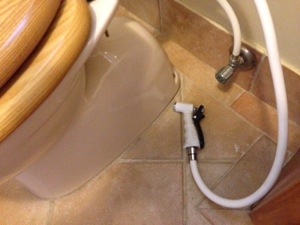
If I have a dirty nappy, I set it aside and get a new nappy onto my baby. Then once she has toddled off I take the bucket round the corner into the toilet where I have the best nappy system invention ever: a high pressure squirter attached to the loo! This thing is a lifesaver! I place the nappy into the toilet pan and squirt off all the dirty bits, leaving a very wet nappy. Then it goes straight into the white bucket too.

Squirter attachment for the loo

Every two days I take that bucket into the laundry, stuff it into the front loader and then set it for a hot wash overnight when our electricity goes to off peak pricing. The next morning I hang it all out on the balcony where the sun dries everything nicely.

There’s no need for me to soak the nappies, or to disinfect them. This method is called “dry pailing” if you want to look up the details of how to wash nappies in this way (and I might post on that too, if there’s interest).

As for how to fold and put the nappy on the baby? That’s a topic for another post altogether. πŸ™‚

Tutorial: Pillowcase seam repair

After our recent holidays I found myself with a lot of washing and sorting to do. This morning I came across this pillowslip, which had torn open where the pillow is inserted:

20140114-142042.jpg

This has been bugging me for a while, because it’s such a lovely pillowslip (I used this when I was growing up and it came in a bag of hand-me-downs recently). The closure is like a cushion, with a slit across the back that the pillow goes through. It tends to bulge open at the best of times, and the torn seam has rendered it pretty unusable. So, time to fix it!

When you have a torn seam, the fix is usually a simple case of turning it inside out, and then sewing over the old seam line.Β If you have never done any sewing before, and you want to try your hand at it, this type of mending is a great way to start! You only need a few tools (a needle and thread at the most basic, but a sewing machine is a great help).

First up, turn the item inside out, and iron the seam allowance flat. This makes it easier to see exactly how the pieces are supposed to fit together, and to pin them into place. In my case, the pillowslip had two flaps that are supposed to sit on top of each other (I used the other end of the flaps to work out which way to lay them on the seam).Β I also spotted that the seam edge was still raw and starting to unravel after all these years. It’s very unusual to find a pillowslip like this one! They are all overlocked inside, now.

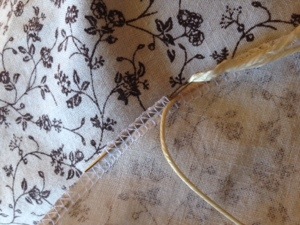
20140114-150445.jpg

Pin the seam pieces together and give it another quick press to help the layers stay put when you are at the machine. A quick backstitch at either end of the new stitching will secure the existing seam and the new one. If you are sewing by hand, use a backstitch and be sure to go over some of the existing stitching to make sure the old torn ends are secured.

20140114-142103.jpg

Repair complete! If you also want to finish any raw edges, you can put a zig-zag stitch over the top, or use an overlocker if you’re lucky enough to have one. If I was repairing this by hand, I wouldn’t have bothered to finish the edges, as the rate at which it was ravelling was pretty slow.

A simple repair like this one helps to get as much use out of your things as possible. Now the pillowcase can go back into rotation with the others, and have another twenty years of service! (Maybe!)

Repaired pillowslip