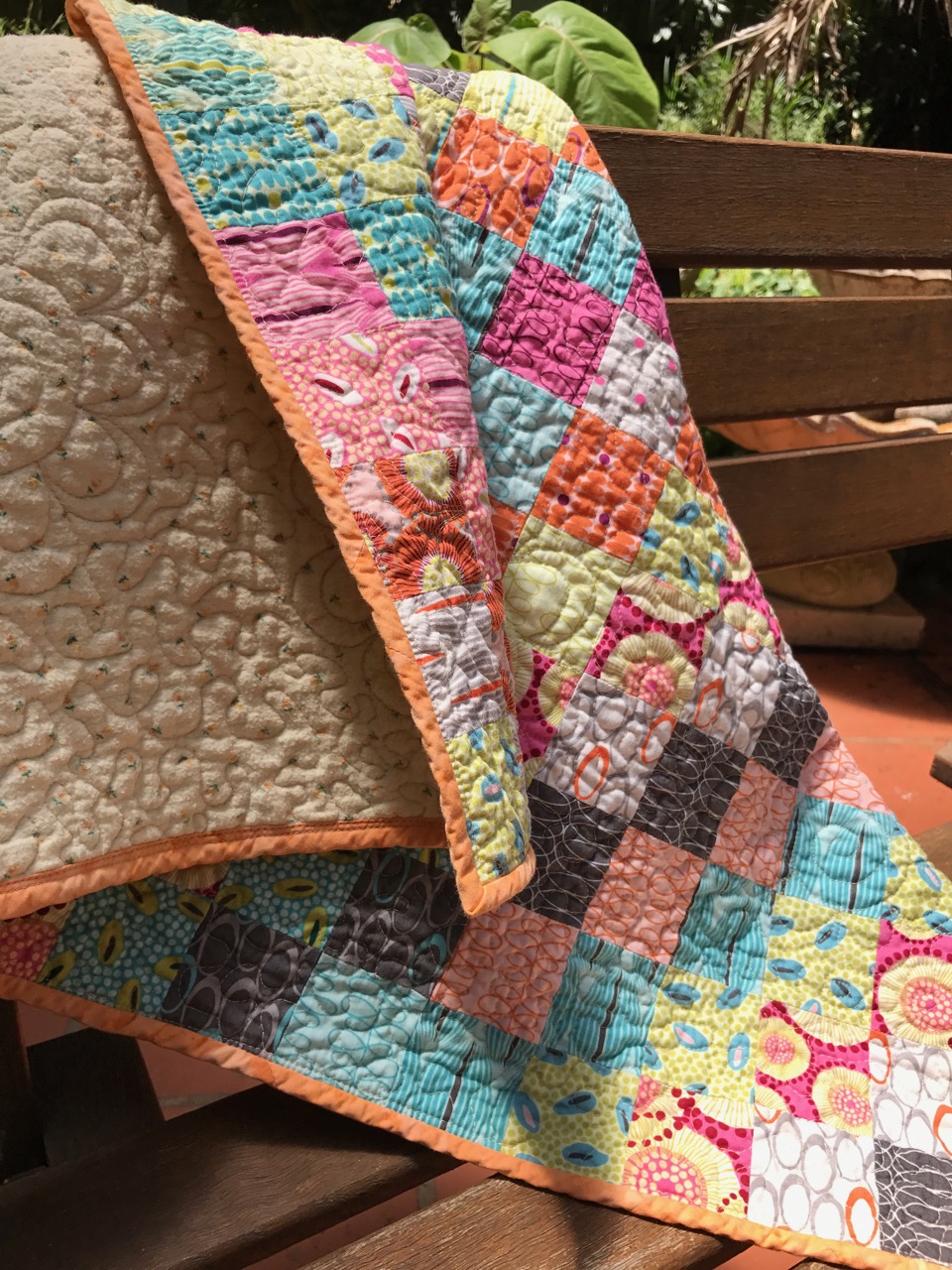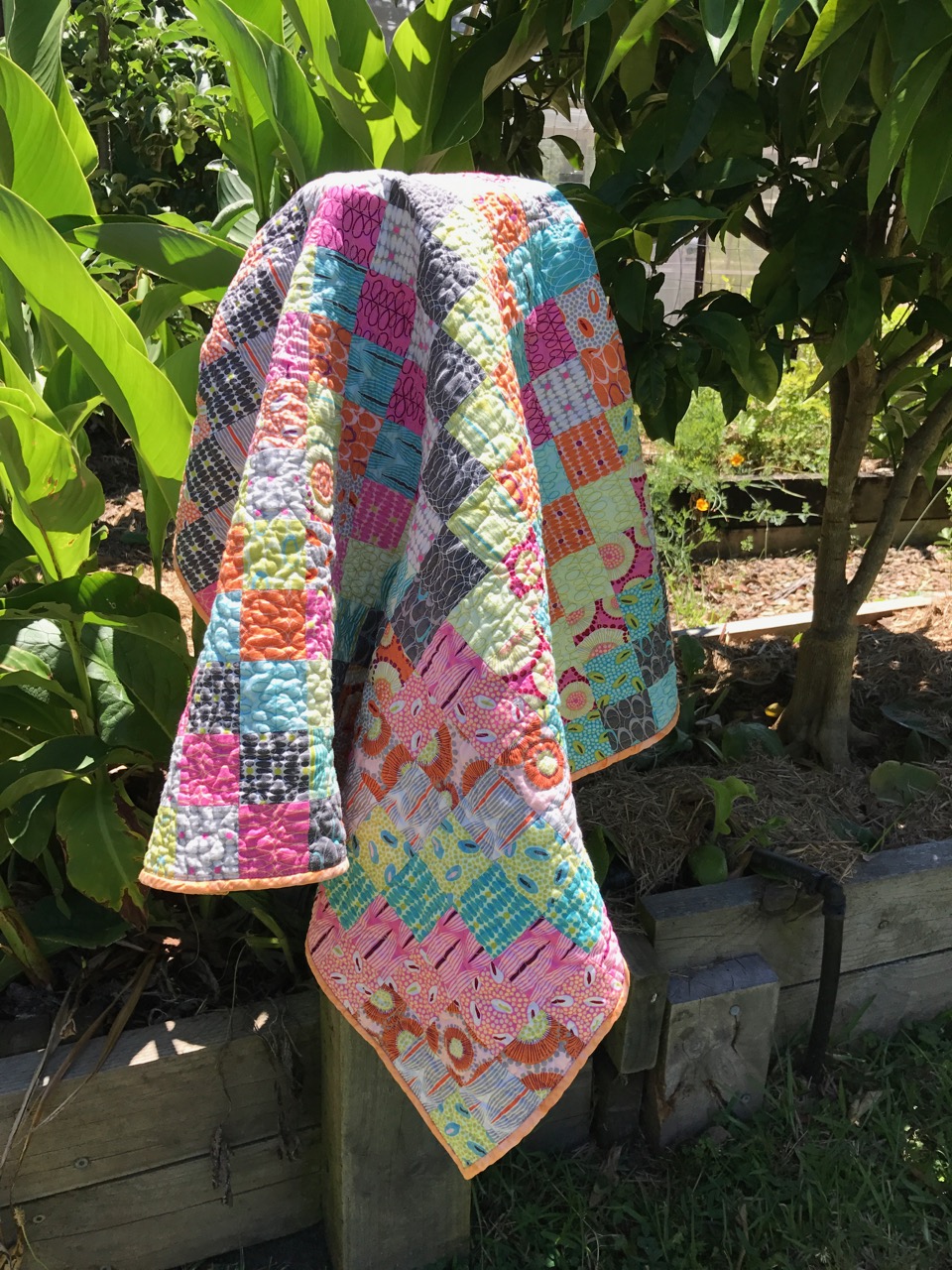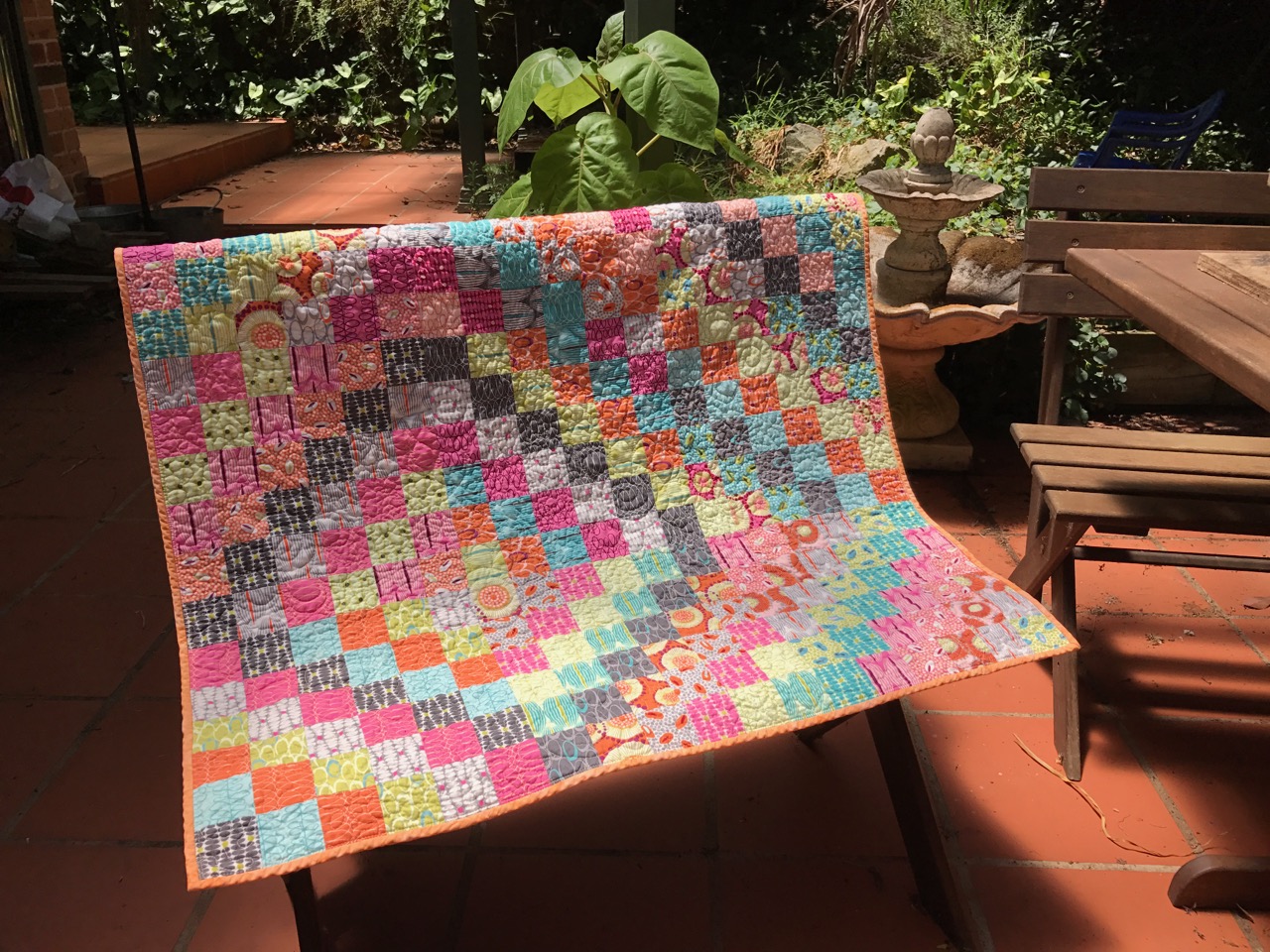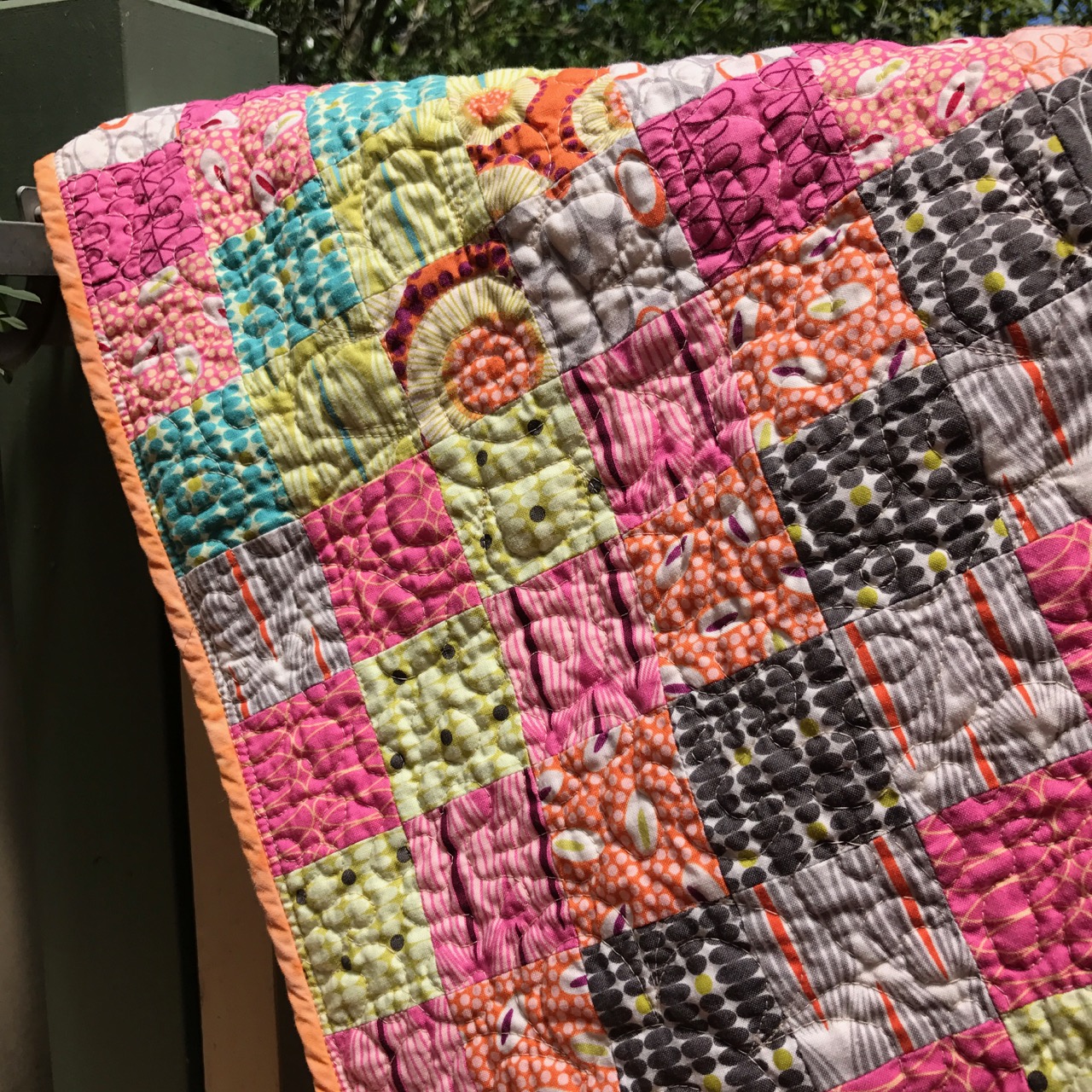
Tree change!

Now for something completely different — we’ve moved to a rural property!

Our new place is 2 hectares (5 acres) on the edge of the Southern Highlands—south of Sydney, in the cooler hills, with a drier, more temperate climate.

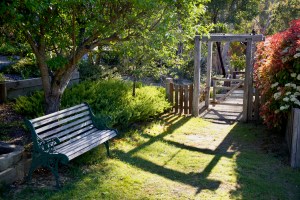
And what an amazing place this is!
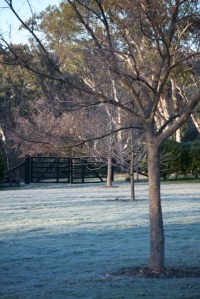
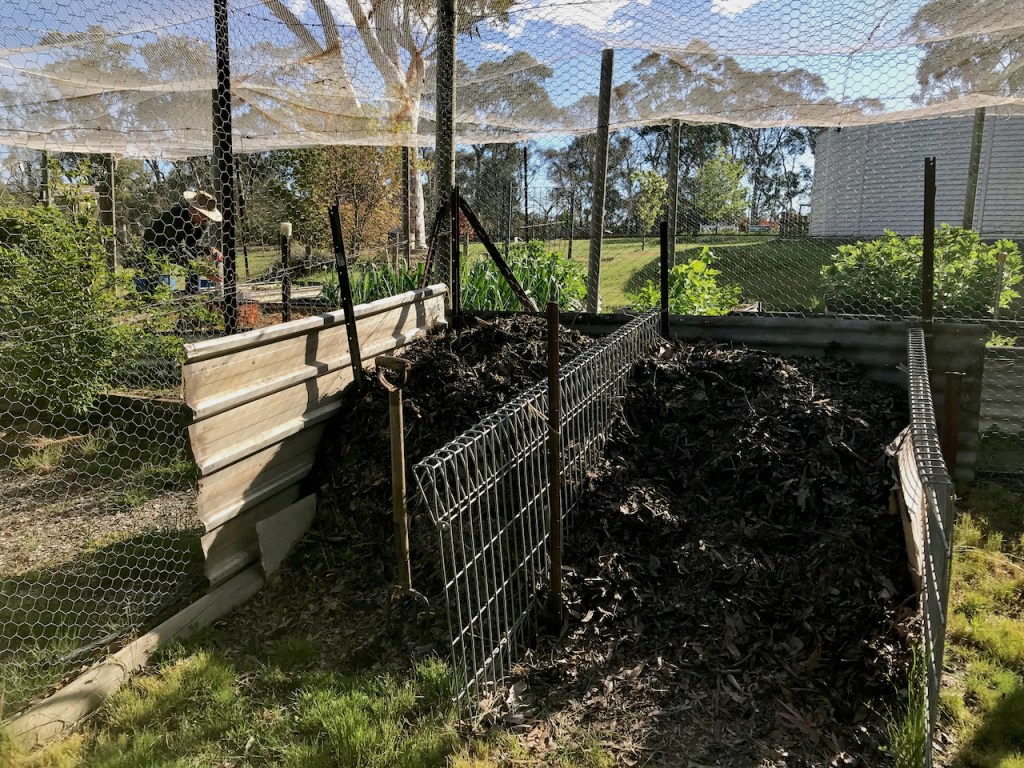
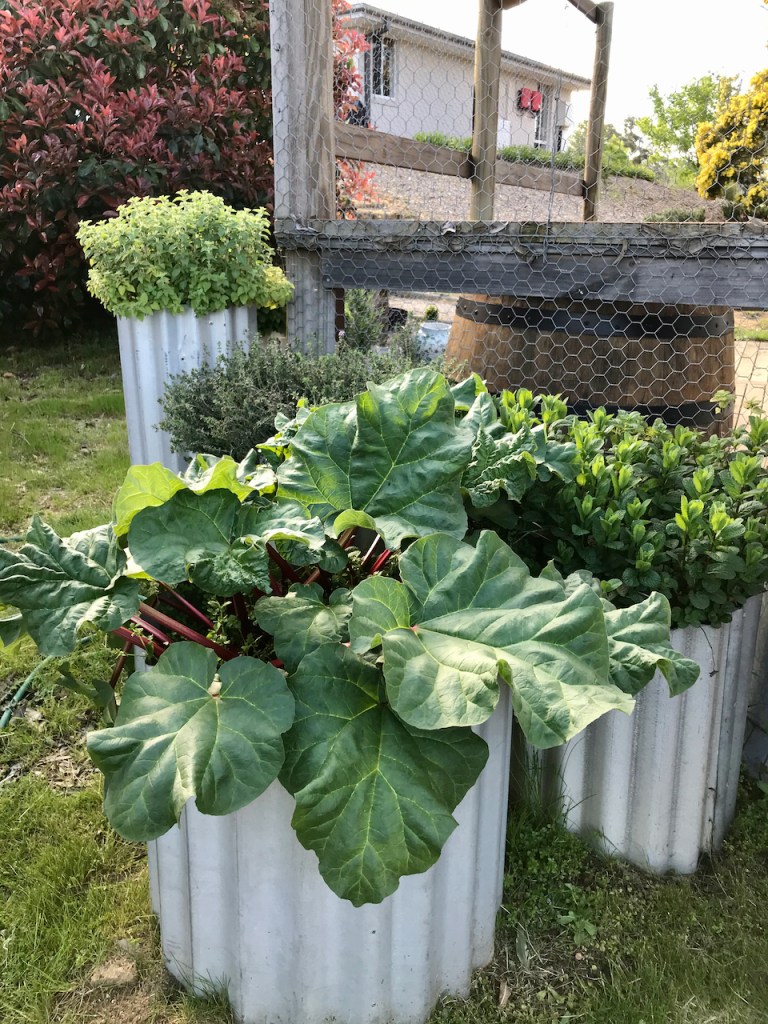
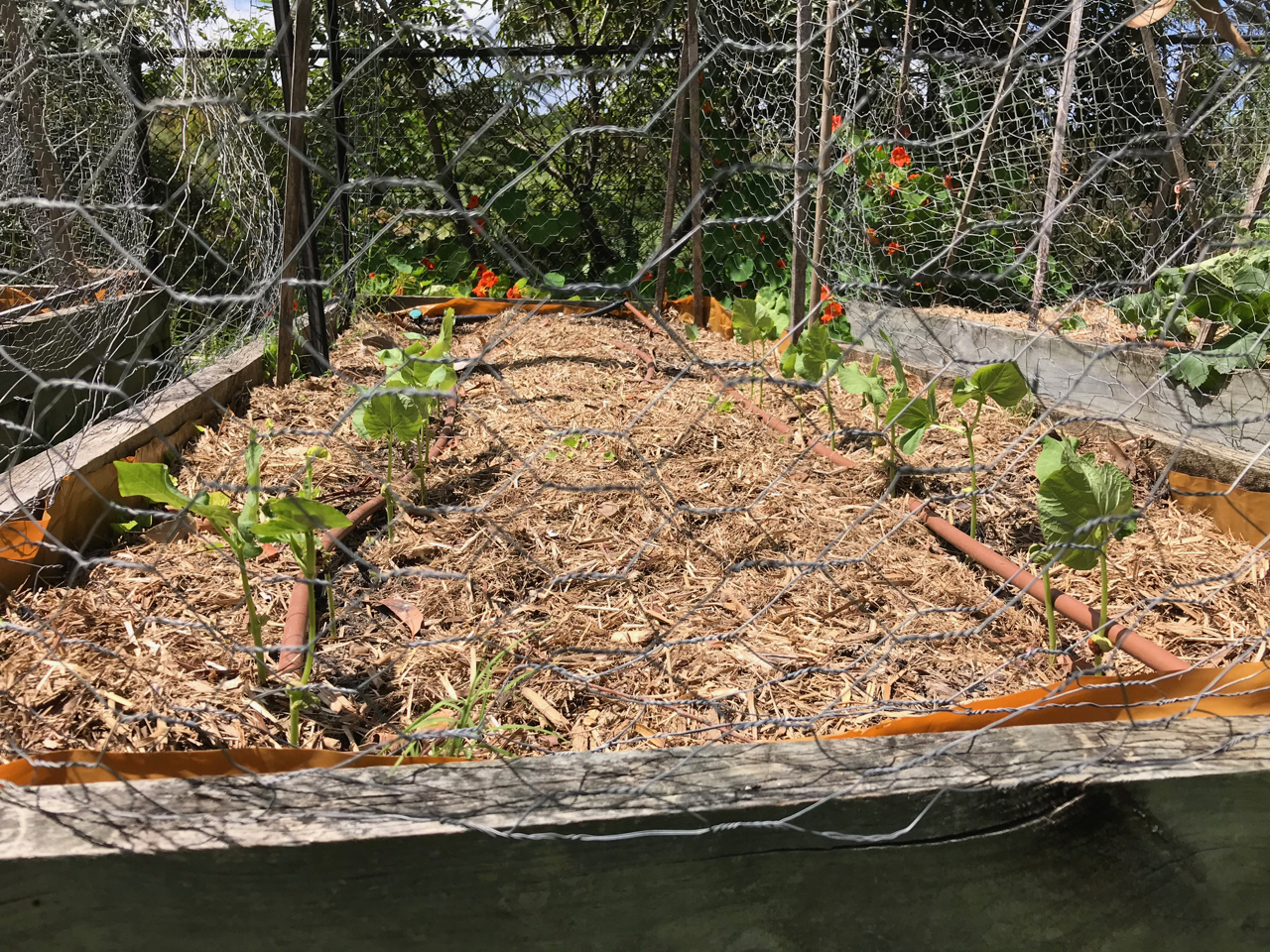
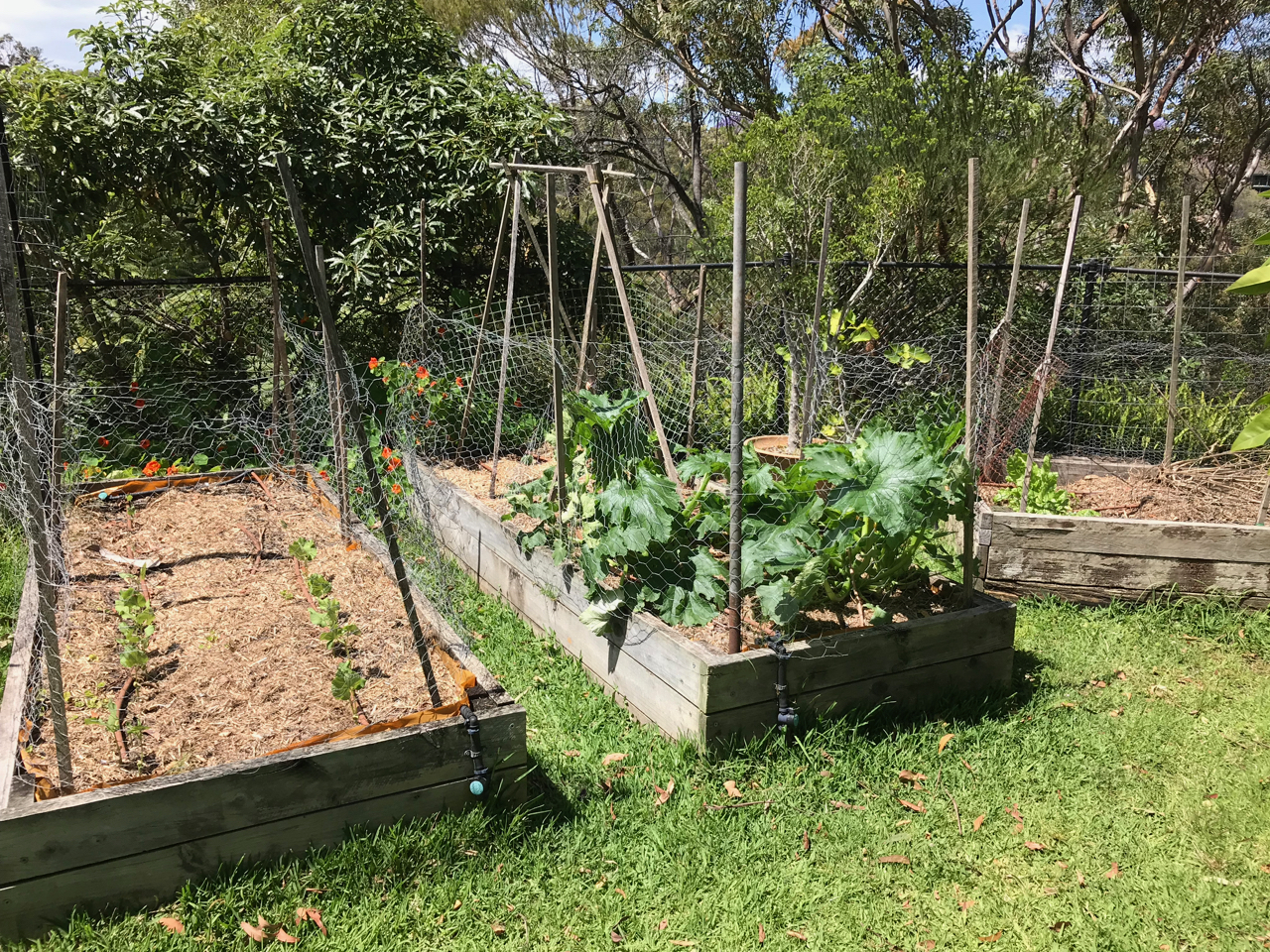
We have a large amount of space in which to grow a lot more of our food:

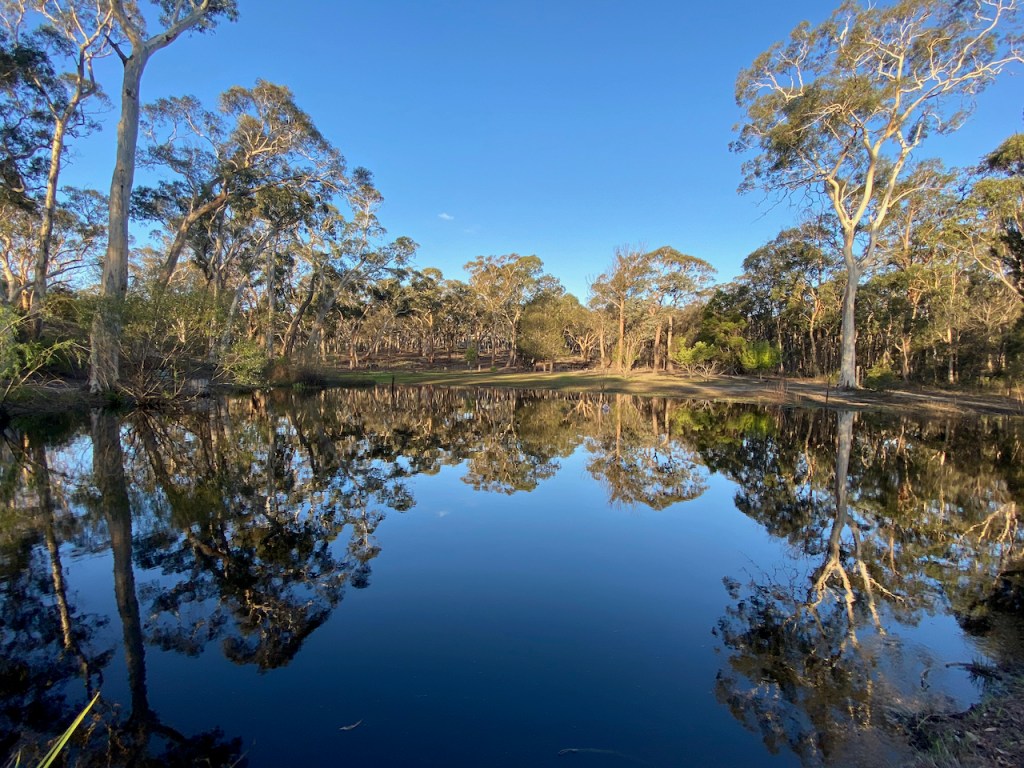
Plus a beautiful dam:

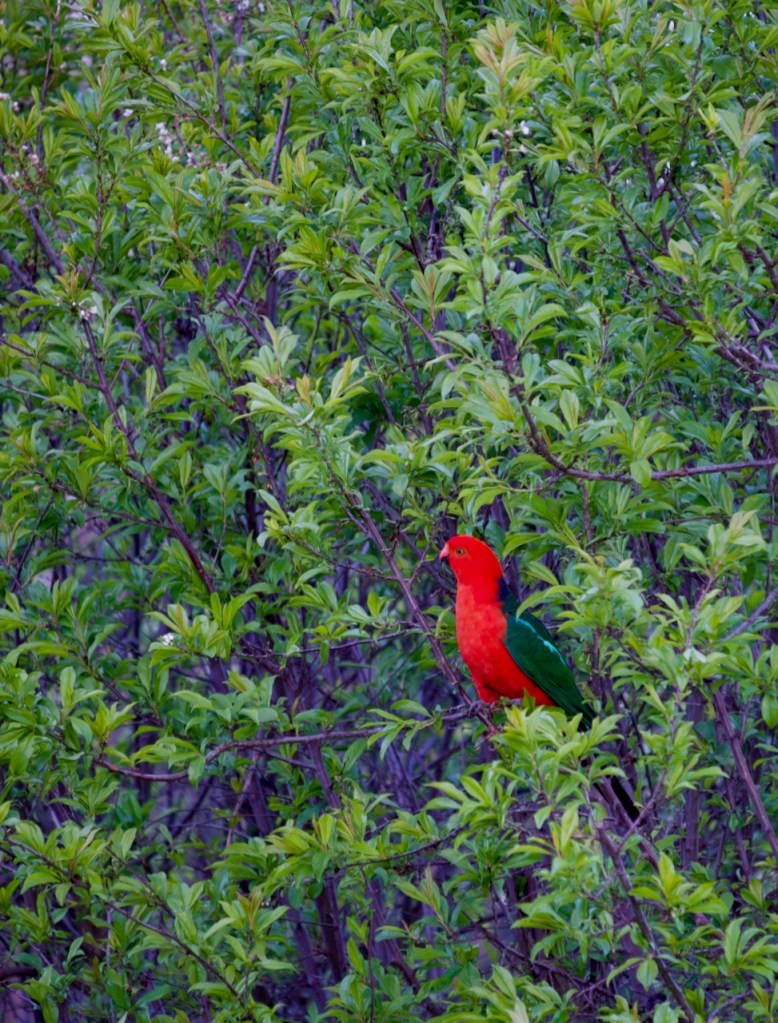
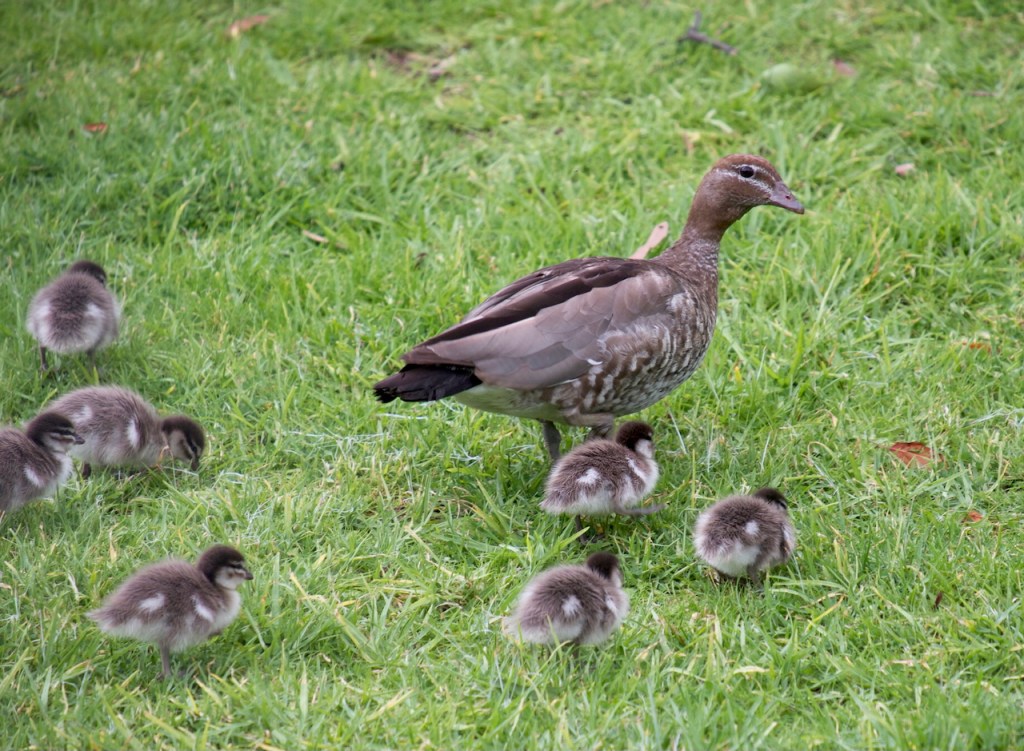
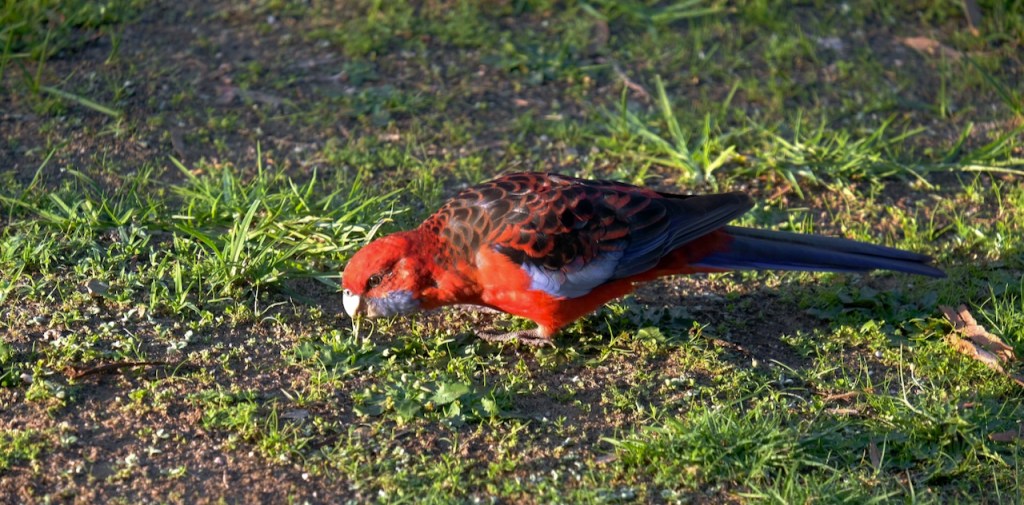
And a huge variety of wildlife:

We’ve been settling in over this last year—and what a year it has turned out to be:

  • A crippling drought had us in its grip at the end of 2019, drying up all the dam water for the first time in many years. It was heartbreaking to watch the landscape and local wildlife suffer through this.
  • Then the bushfire crisis escalated in our area just before New Year’s Eve, devastating the neighbouring town of Wingello. Thankfully, we came through unscathed.
  • In January 2020 the kids and I spent a lot of time evacuated until it was considered safe to return, whilst Stephen and our eldest came back periodically to keep the garden alive. The kids had maybe two weeks back home before starting at their new school.
  • At this point, things were looking pretty bleak!
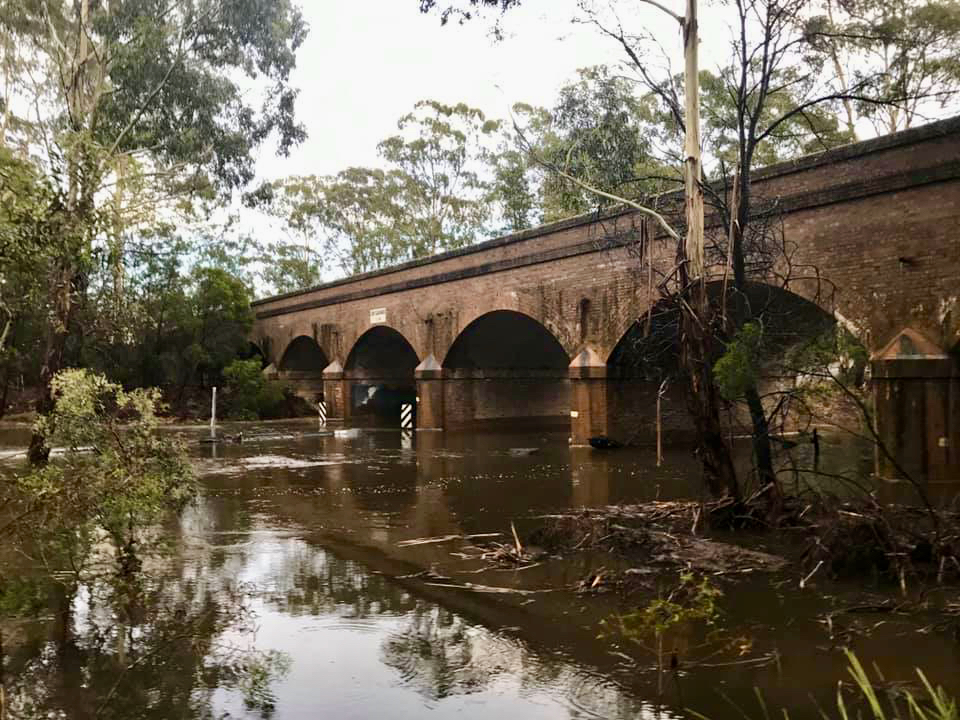
  • Finally, at the end of January we had some rain–by early February we had so much rain that the area was flooded, and we were cut off for a week from the main Sydney road (the Hume). It was impossible to grumble about this though, we were all bemused and so relieved to have the water!
  • Then the 2020 school year launched (switching schools is always a major challenge, and exhausting). We had about four (?) weeks of school and then everything shut down due to COVID-19–and the world tumbled into a new era.
  • Our eldest brought her fledgling music teaching business to us, leaving Sydney behind to teach remotely from our bakehouse for the rest of the term.
  • I stopped going up to Sydney to work in our office, and since then, it’s been 6 months of Zoom meetings. So. Much. Zoom.

However, once the drought broke, things really started looking up!

Especially now that it is Spring, and I’ve finally taken a couple of weeks of holiday time from my job!

We’re planning to plant out the vegetable garden, establish an orchard and (soonish) add to our livestock:

  • with ducks (I’ve always wanted ducks!), and
  • goats–as pets, and maybe for milk!

I’m excited about what the next year will bring, and I hope you’ll enjoy seeing more of our new place!

Documentation for the London Hood

Just a quick note to let you know I’ve just published a rather extensive article about my London Hood recreation. 🙂

Those of you interested in medieval garments might be interested to read about:

If you find any broken links, please let me know!

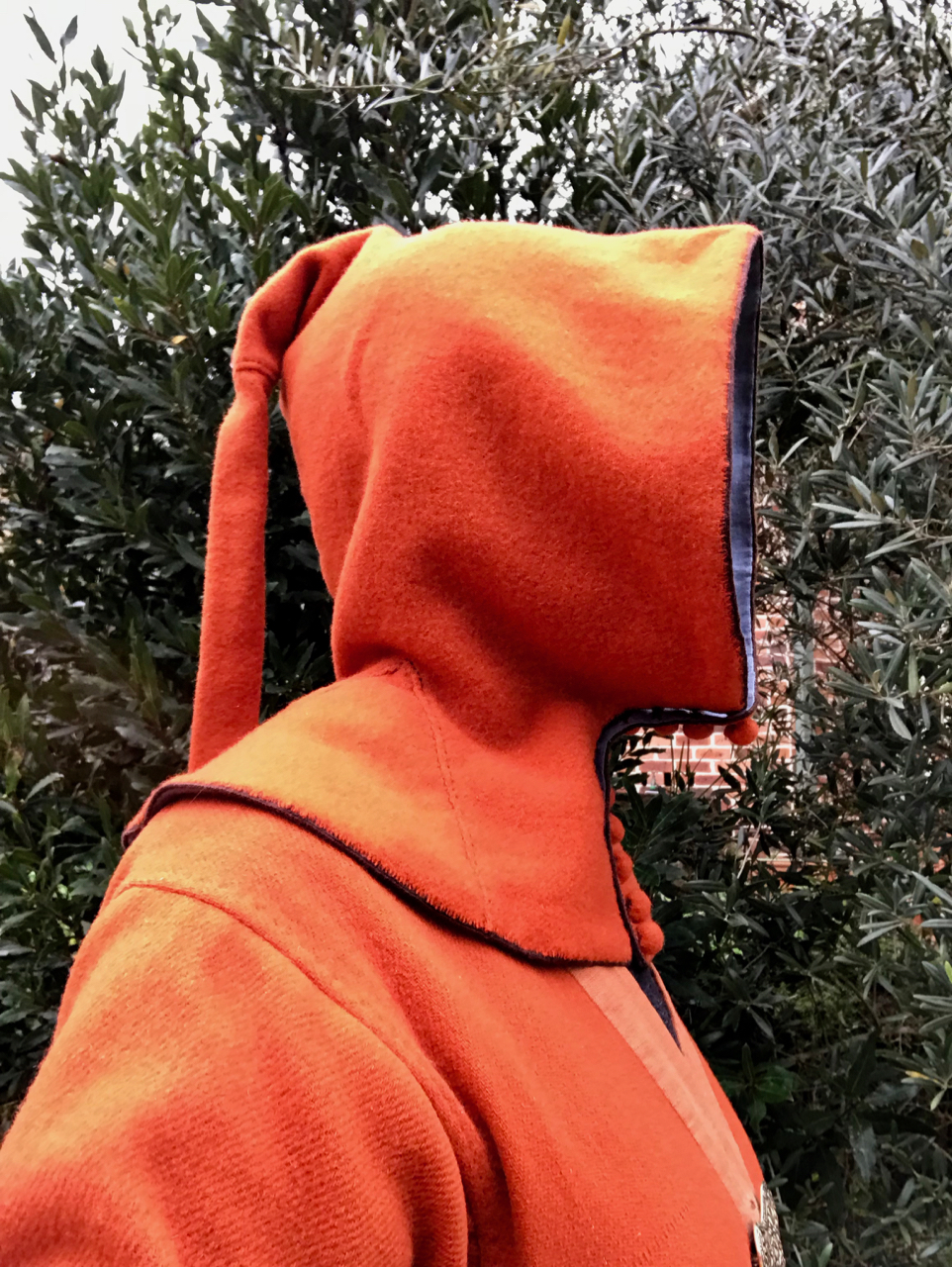
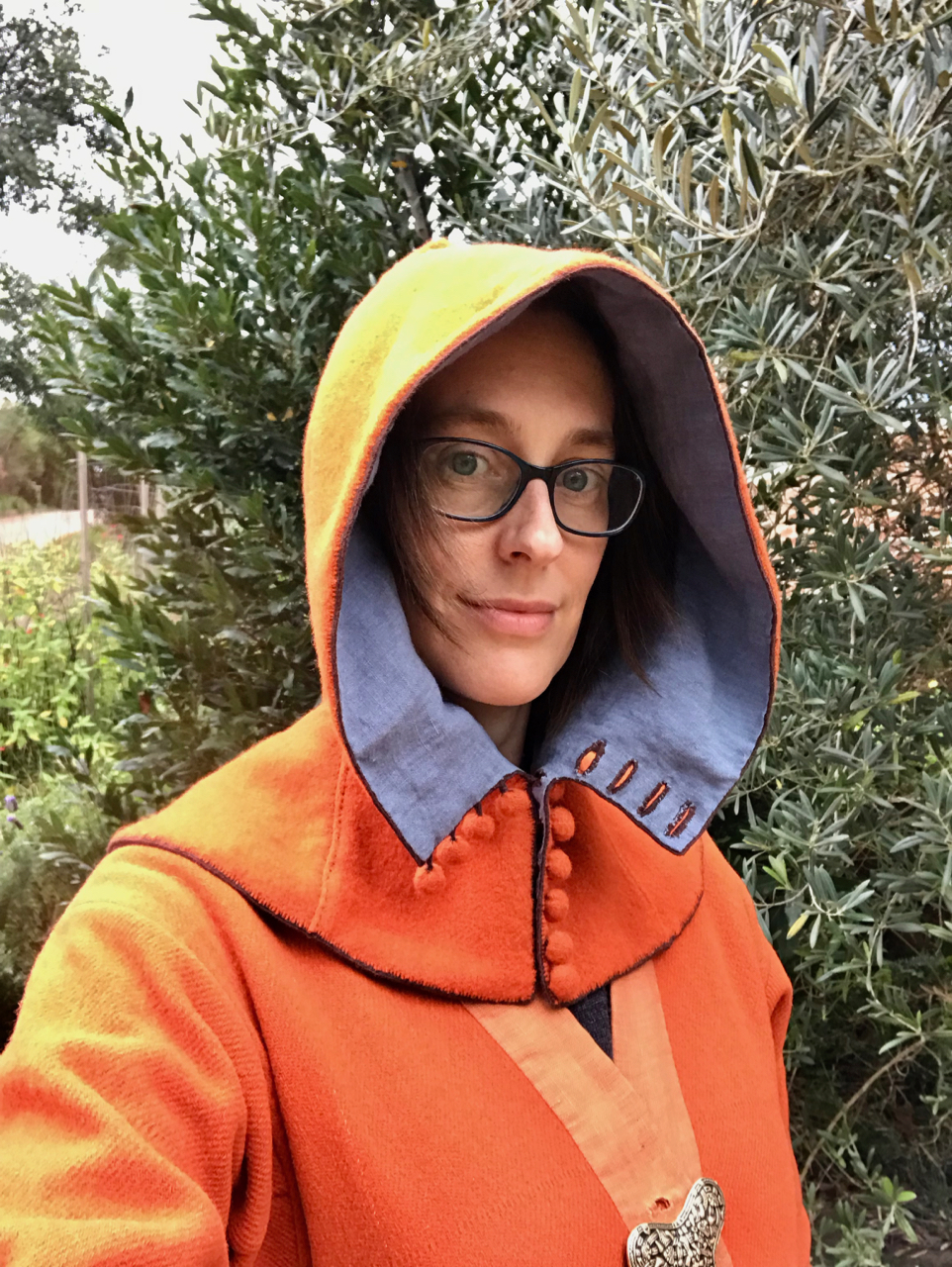
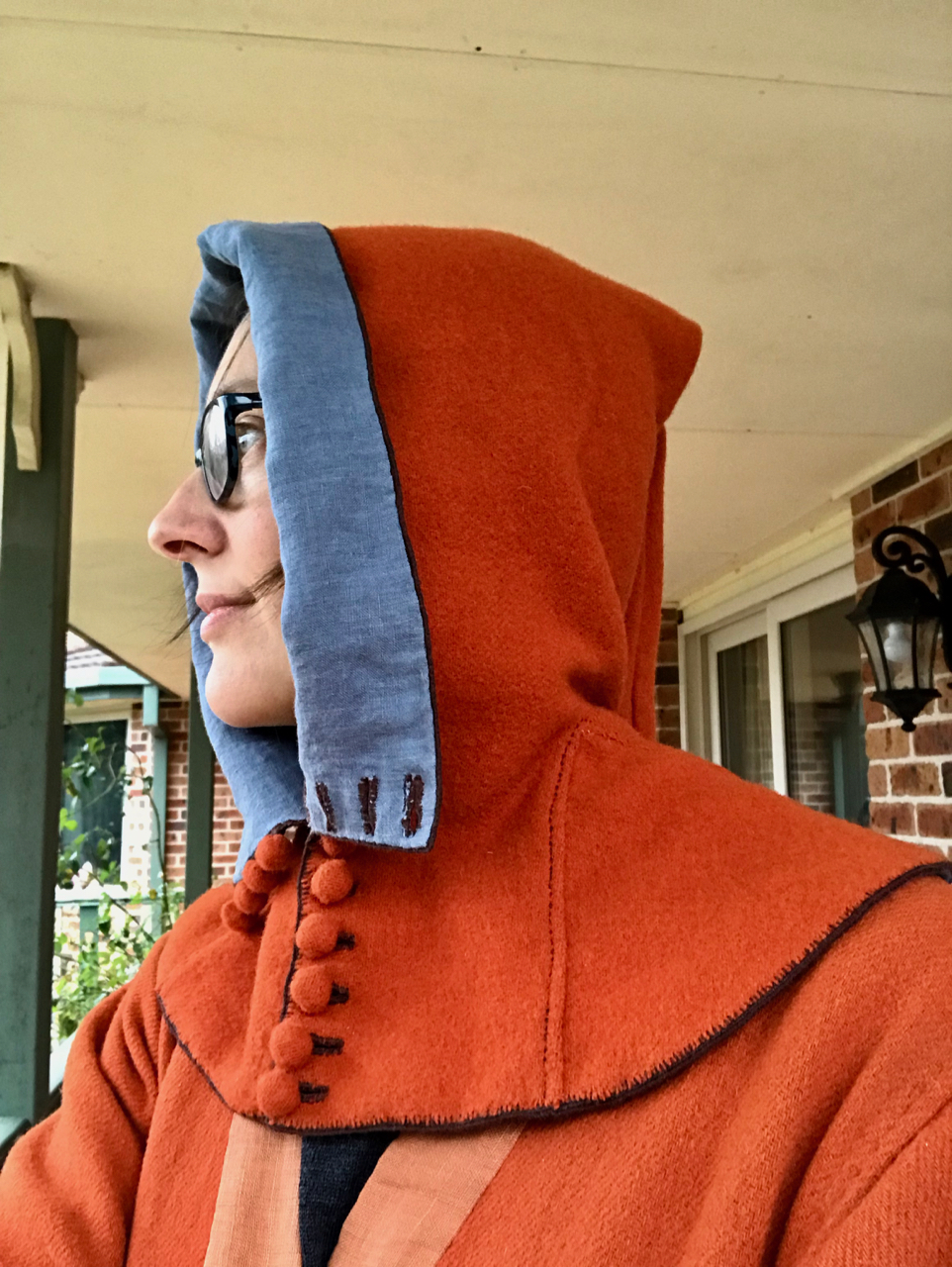
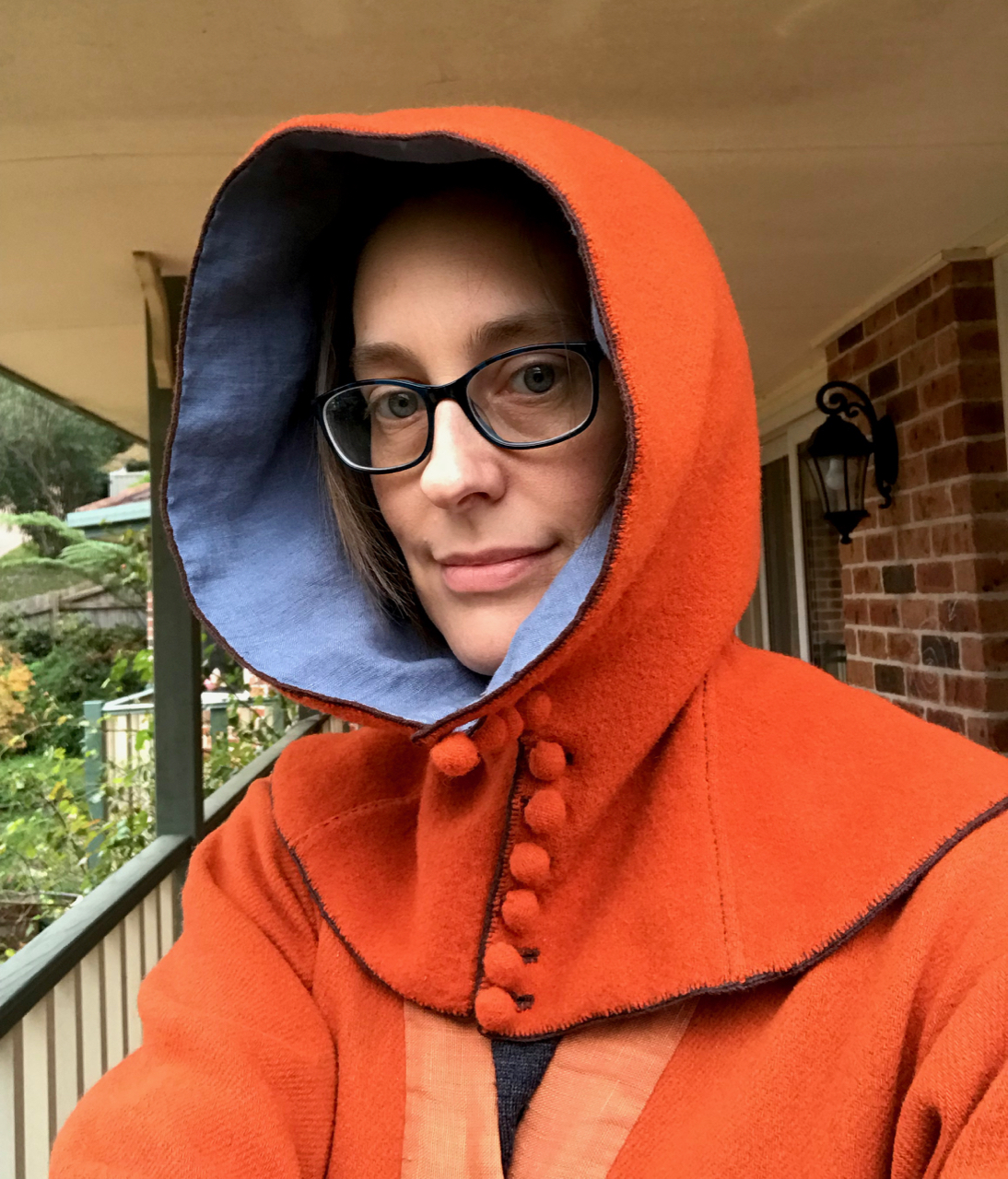
A London Liripipe Hood

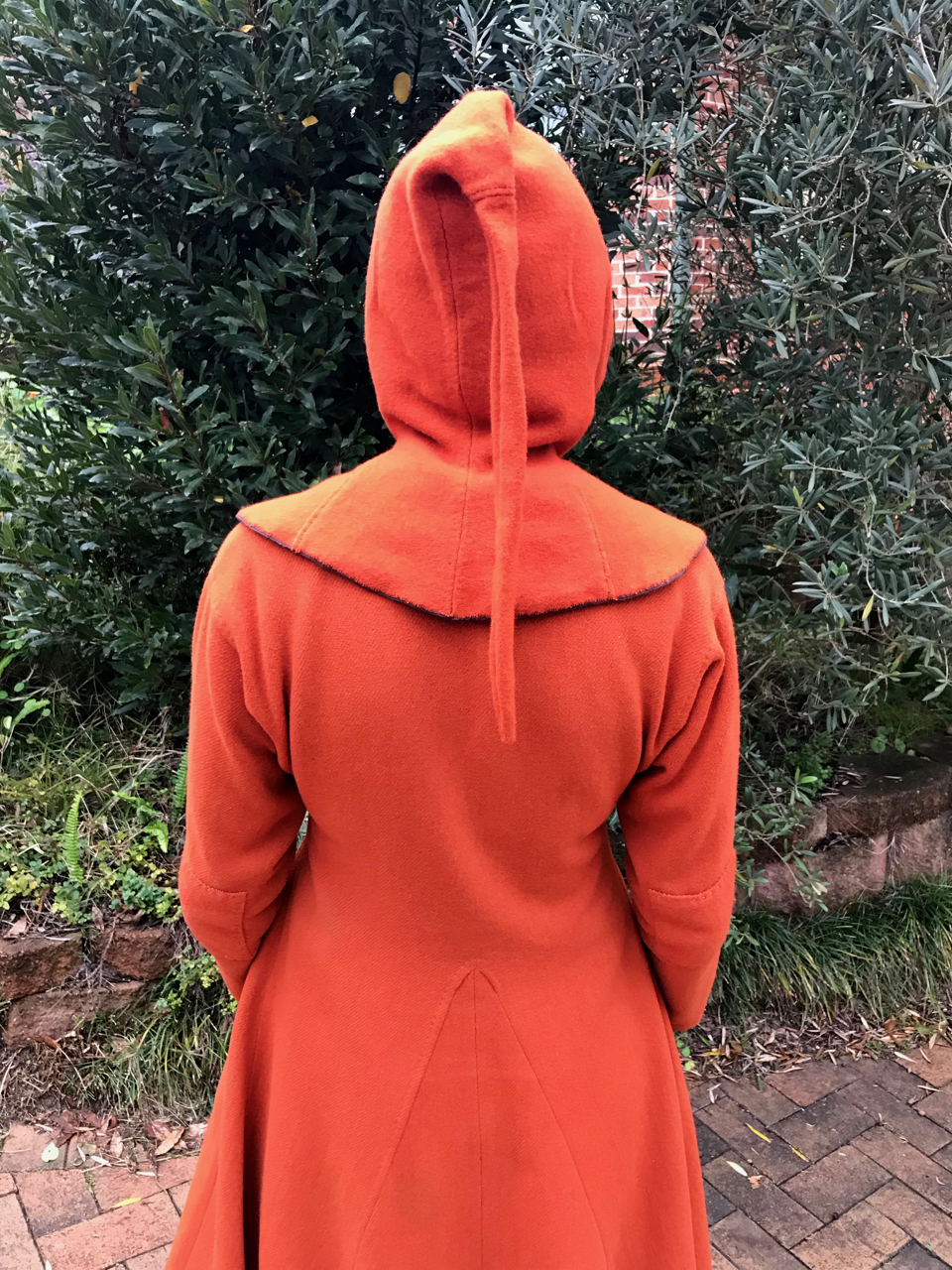
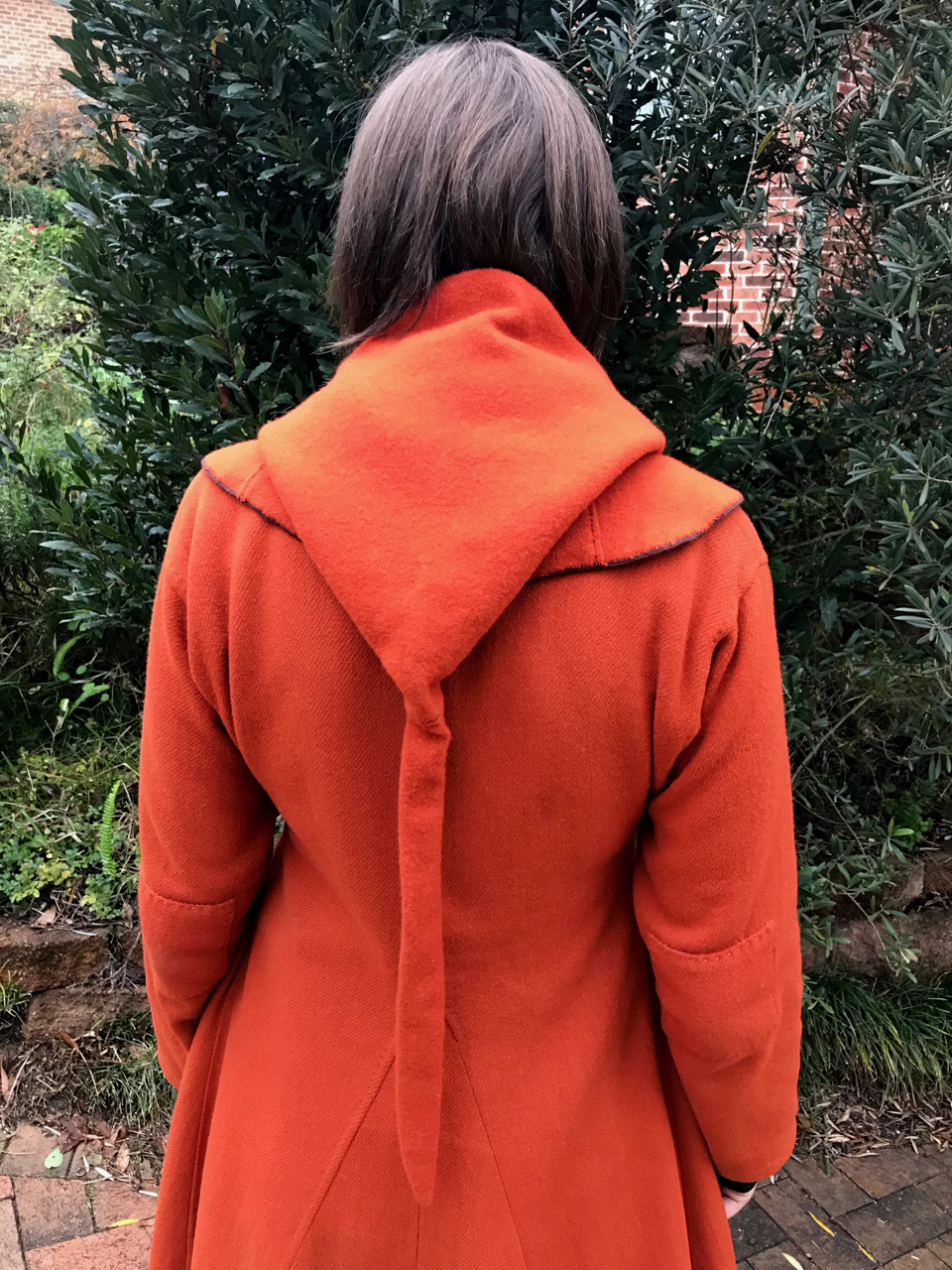
I’ve joined the ranks of many re-enactors who have decided to make a replica of a London Hood — complete with a silly “liripipe” tail!

This project kept me busy with a number of different skills, so I might break this down into sections, with more detail in additional posts.

I initially drafted this post last year and failed to publish it as I fussed over making a “Series” out of it. Bah! Out with it already!

Jess
  • Making a pattern based on historical (extant) finds
  • Construction walkthrough
  • Detail: Buttons and button holes
  • Detail: Tablet woven edges

How about we skip ahead right now to the eye-candy?

My main goals for this project (apart from finally having my very own adorable hood) were to have an item that provides:

  • good rain protection,
  • warmth in windy conditions,
  • reasonable sun protection for my eyes (autumn / winter / spring), and
  • reasonable visibility.

This hood ticks all these boxes!

First up, it’s comfortable in all but the rainiest of conditions. The wind can get inside the face of the hood a bit unless I button up tight. With my Birgitta’s Cap underneath (at an event) or a woollen beanie (at home) I am super snug.

What about rain protection 🌧️? Surprisingly good! I’ve worn this as I walked to work (about 25 minutes) in heavy rain, with my orange coat. I only got wet in my inner clothing at one shoulder where the cape of the hood directed water down a seam line in my coat.

Downside? The linen lining got very wet, wicking up from the cape hem. If I had my time again I wouldn’t line with linen! It took ages for the lining to dry (at work, on our coat hook) and made it unpleasant to wear back to the train station at the end of the day. But the wool outer was merely damp!

My main happiness with this hood is that the face opening keeps its shape: this means it doesn’t flop in my eyes, even in light rain! The visibility is pretty good, as a result — with no sun in my eyes.

I have to peek out when I’m crossing a road, though!

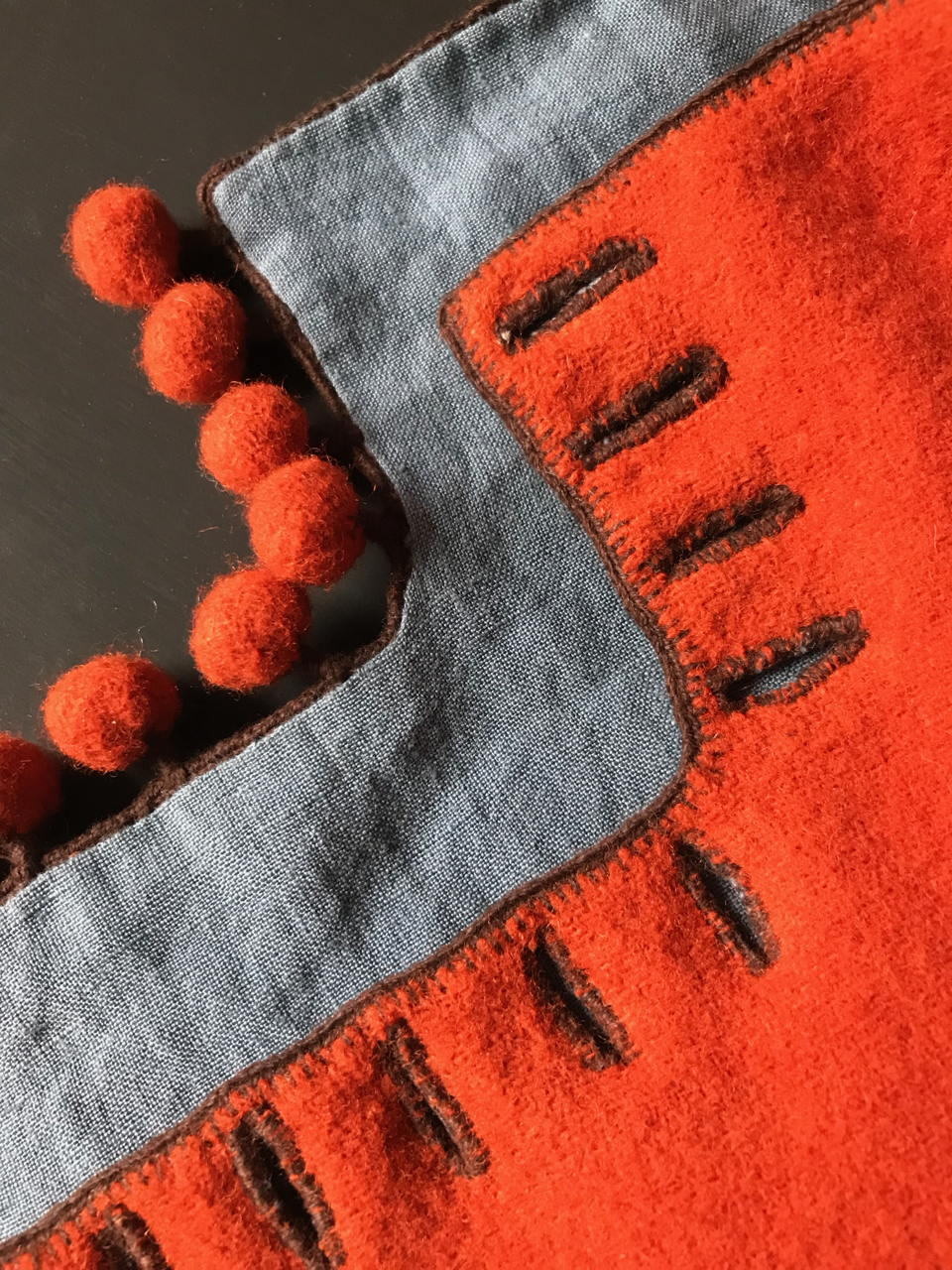
The buttons are somewhat adorable (my daughter says they are like “little pompoms”), and are not too awkward to button up. It was initially quite weird, but I’ve now got the hang of buttoning down from the chin without ending up with an odd button hole at the bottom!

I wear this hood everywhere. Since I drafted this post, I’ve worn this hood to work, every day, for about 6 months (autumn, winter and spring). I get a few funny looks, but mostly I can’t wear this anywhere without at least one passer-by saying:

“Oh my god, I love your hood!”

Sewing skirts from scratch

A couple of years ago I started taking a series of Craftsy (hey what? now called “bluprint”!) classes to learn how to make my own sewing patterns, using flat pattern making methods. The first class I tried is called “Patternmaking Basics — the Skirt Sloper” and is taught by Suzy Furrer.

I’ve finally managed to create my first pattern, and I’ve sewn two new skirts!

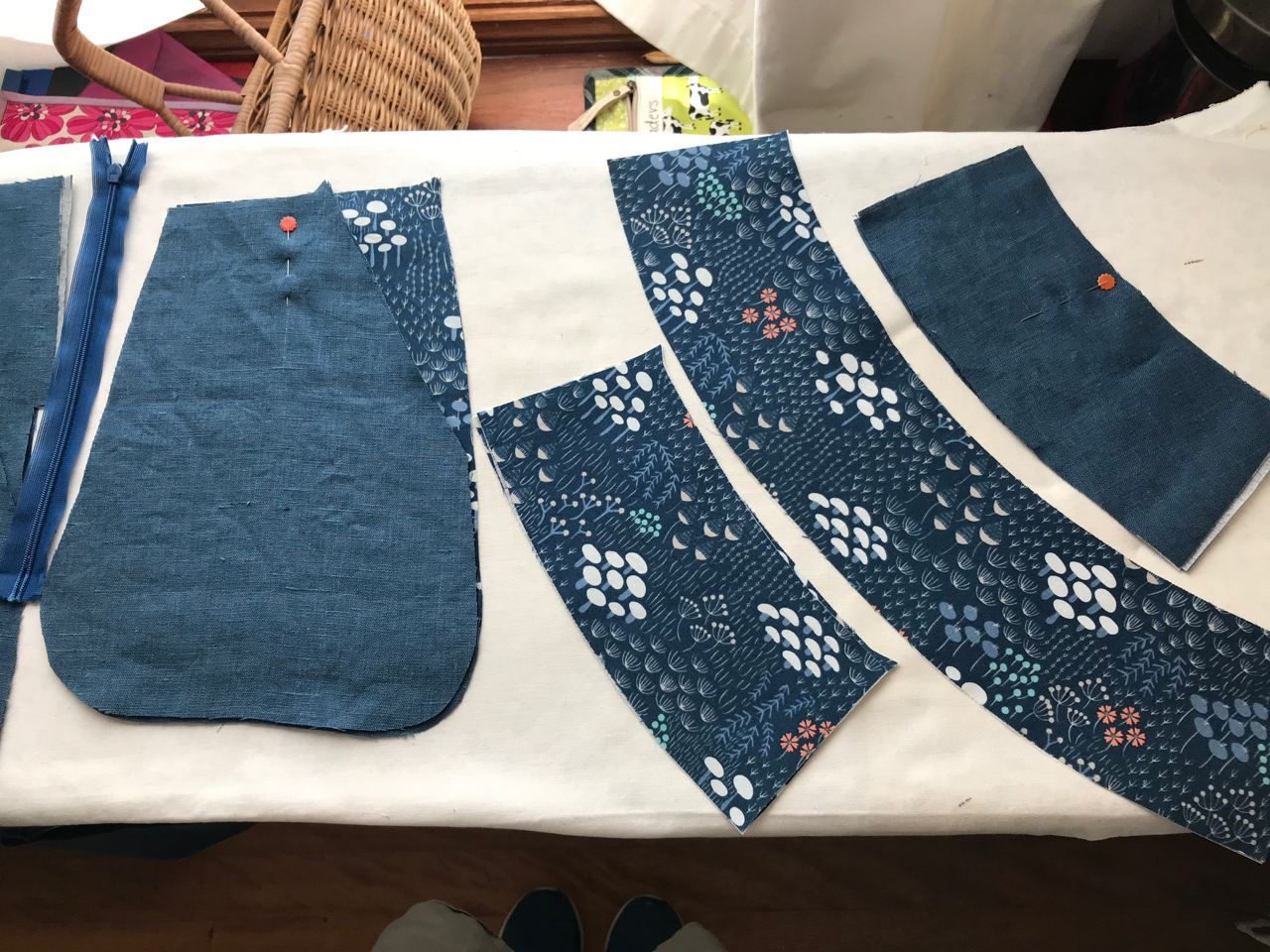
My inspiration was an old midi-length skirt that was handed down from my Mum — it’s a lightweight linen, with pleats, but is very much too large, and I’ve worn through the fabric in a couple of places, especially round the zip.

I chose to create a similar skirt, since I clearly loved the original! The one thing that was always missing with this skirt, though, was pockets!

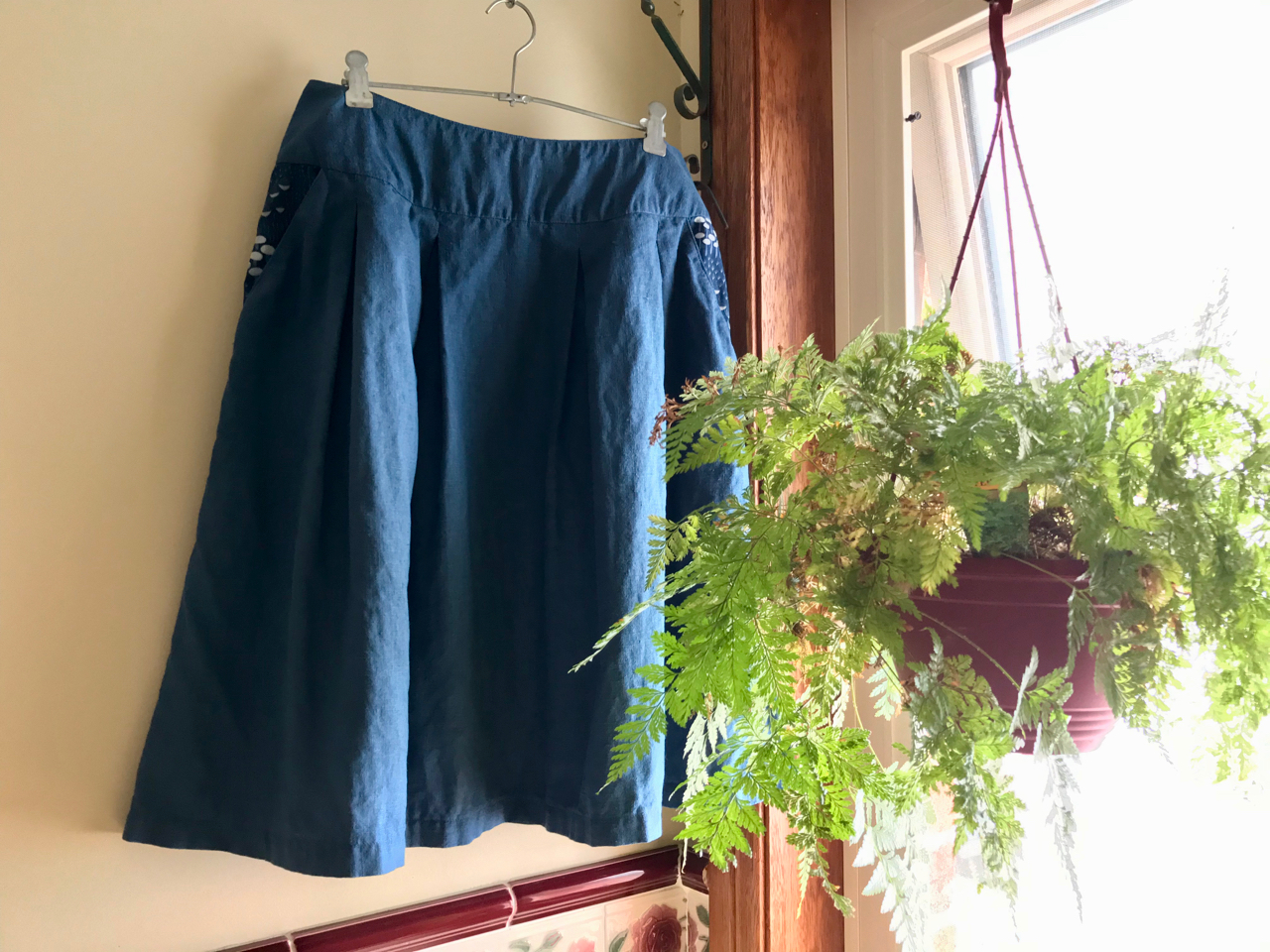
The first skirt I made is in blue linen (the colour here is “Blue Bonnet”, which is my absolute favourite hue — a lovely medium blue that is almost teal).

I am 100% happy with this skirt!

  • Perfect fit, since I drafted it for my shape exactly (and managed to get this right!).
  • Great choice of fabric weight (medium weight linen, which is a good dress weight, and not too sheer without a lining).
  • Fabulous colour, obviously. 😀
  • Nicely sewn together (if I do say so myself — I tweaked some details for the next one, though).
  • Perfect amount of fullness from the inverted box pleats.
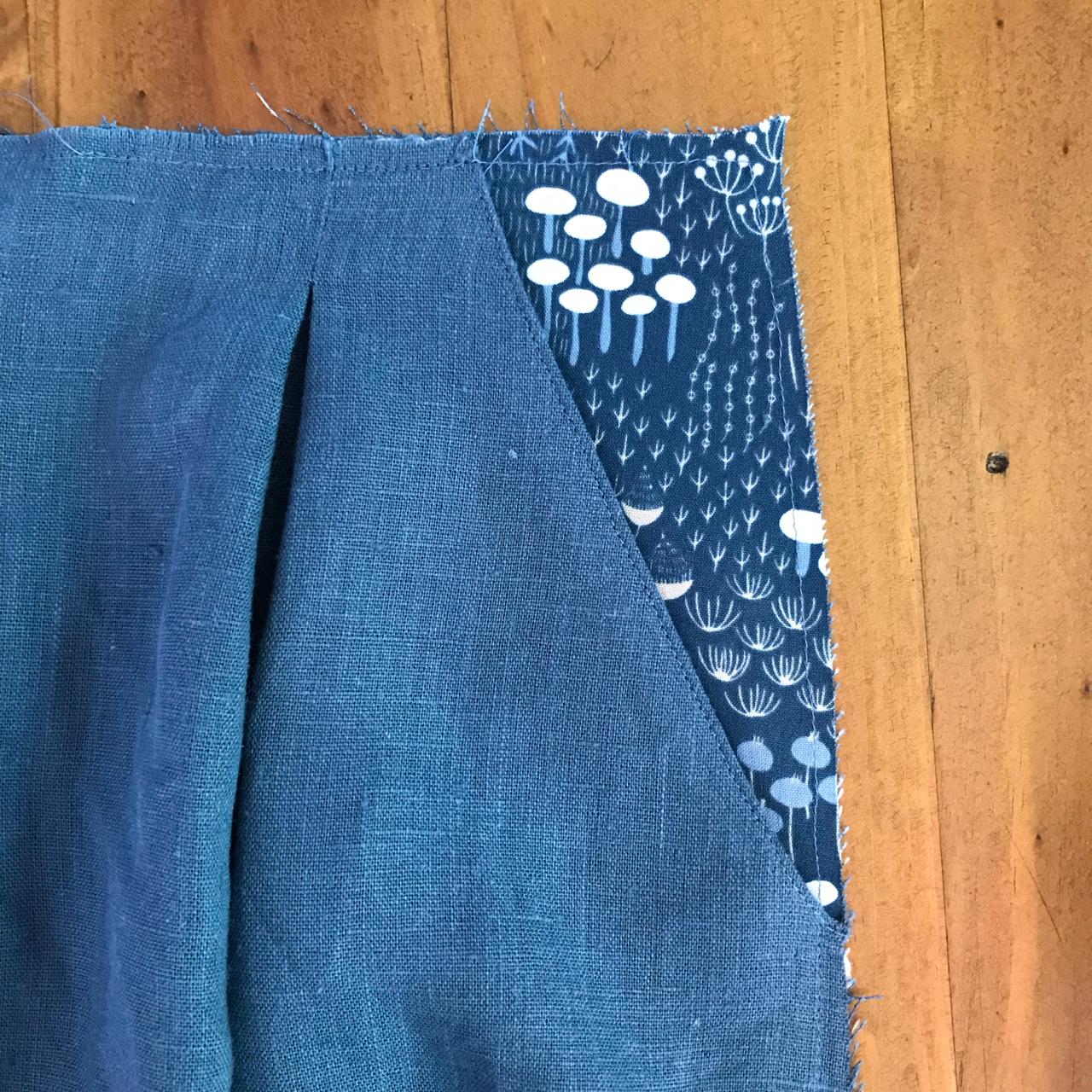
  • POCKETSES!
  • Also, the pockets are comfortable, deep, and nicely placed for my hands. They are not wimpy pockets!

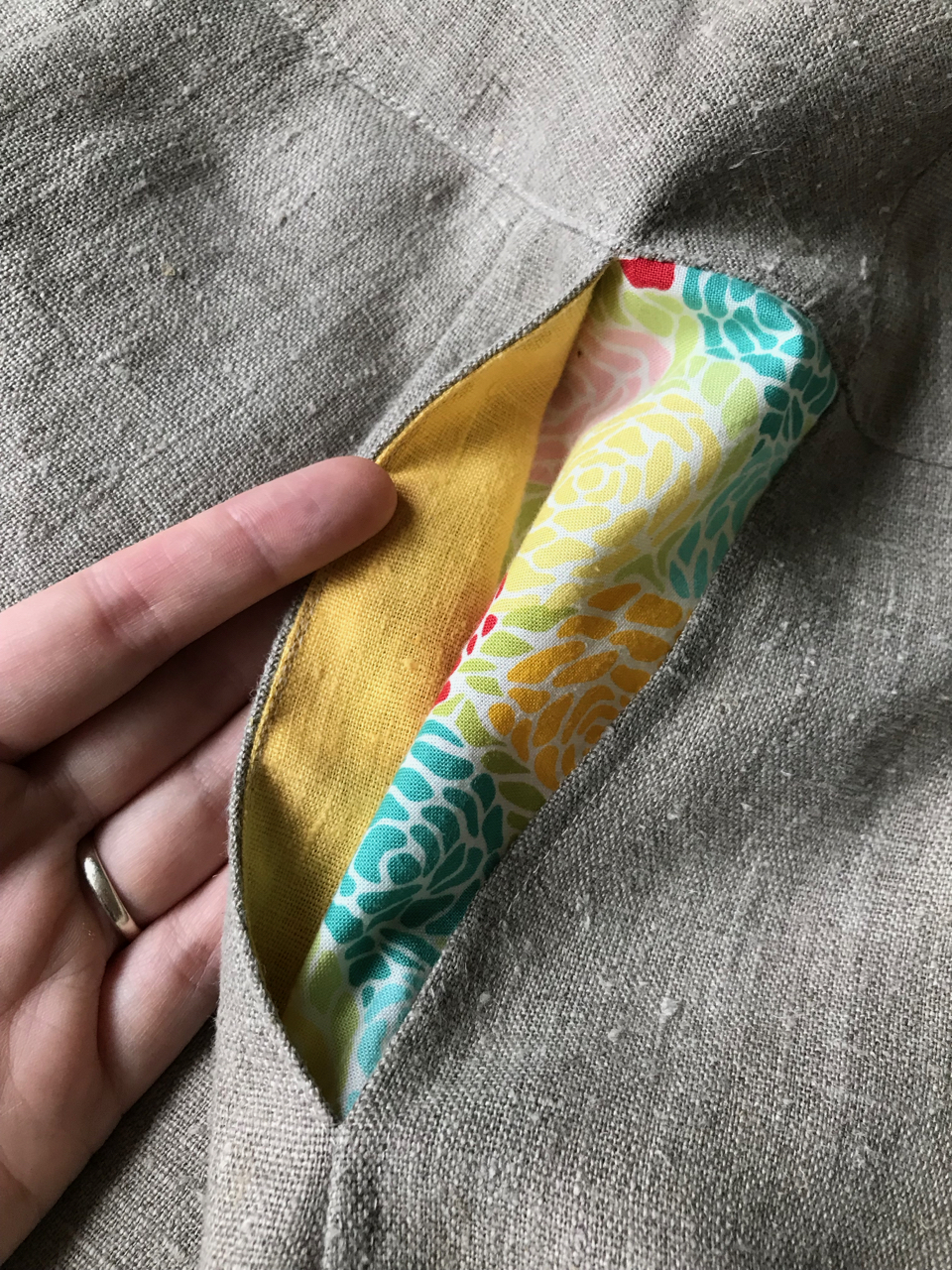
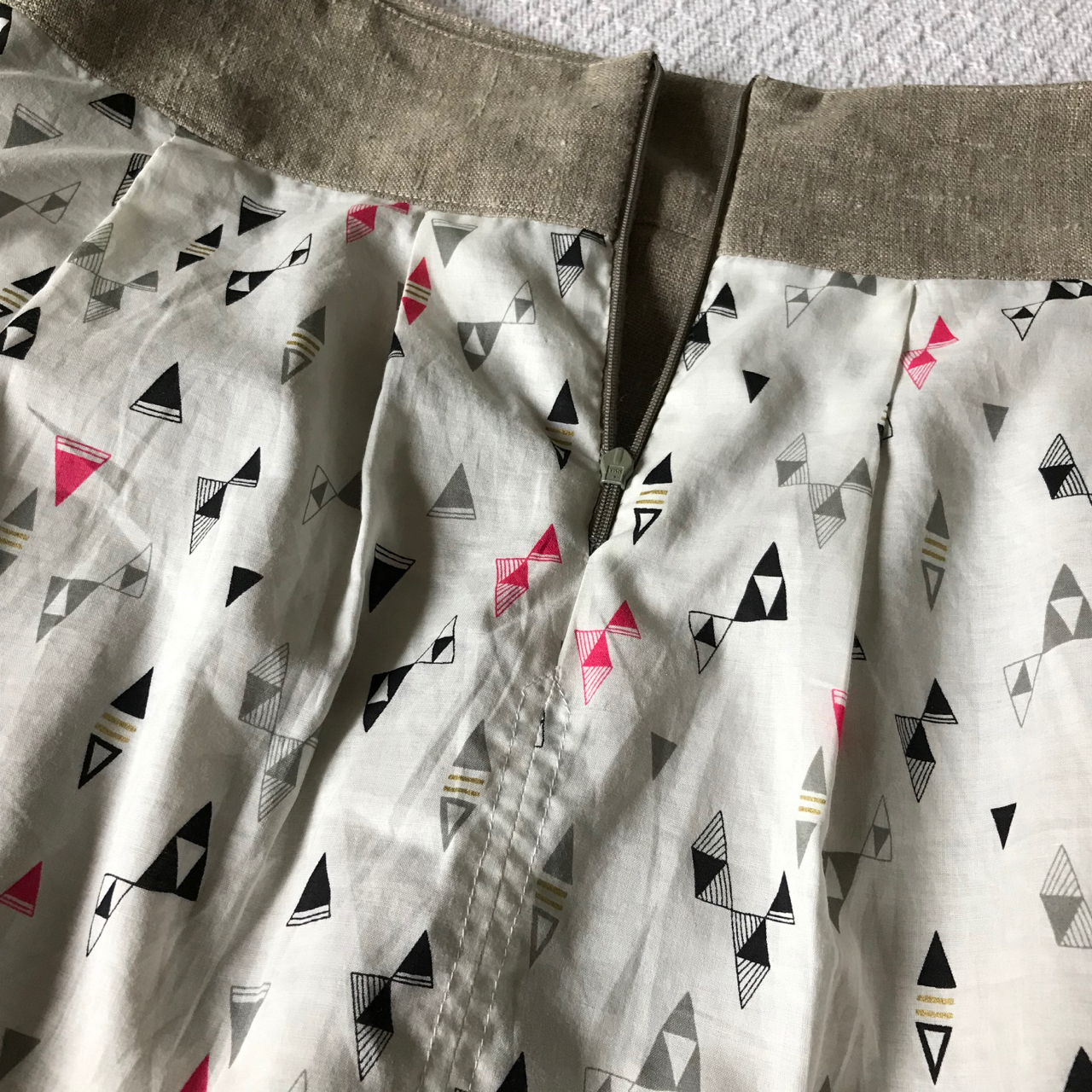
This was such a success that I immediately wanted another one — this time to fill the colour-gap in my wardrobe left by the worn out beige / natural linen skirt (my original inspiration piece I mentioned previously):

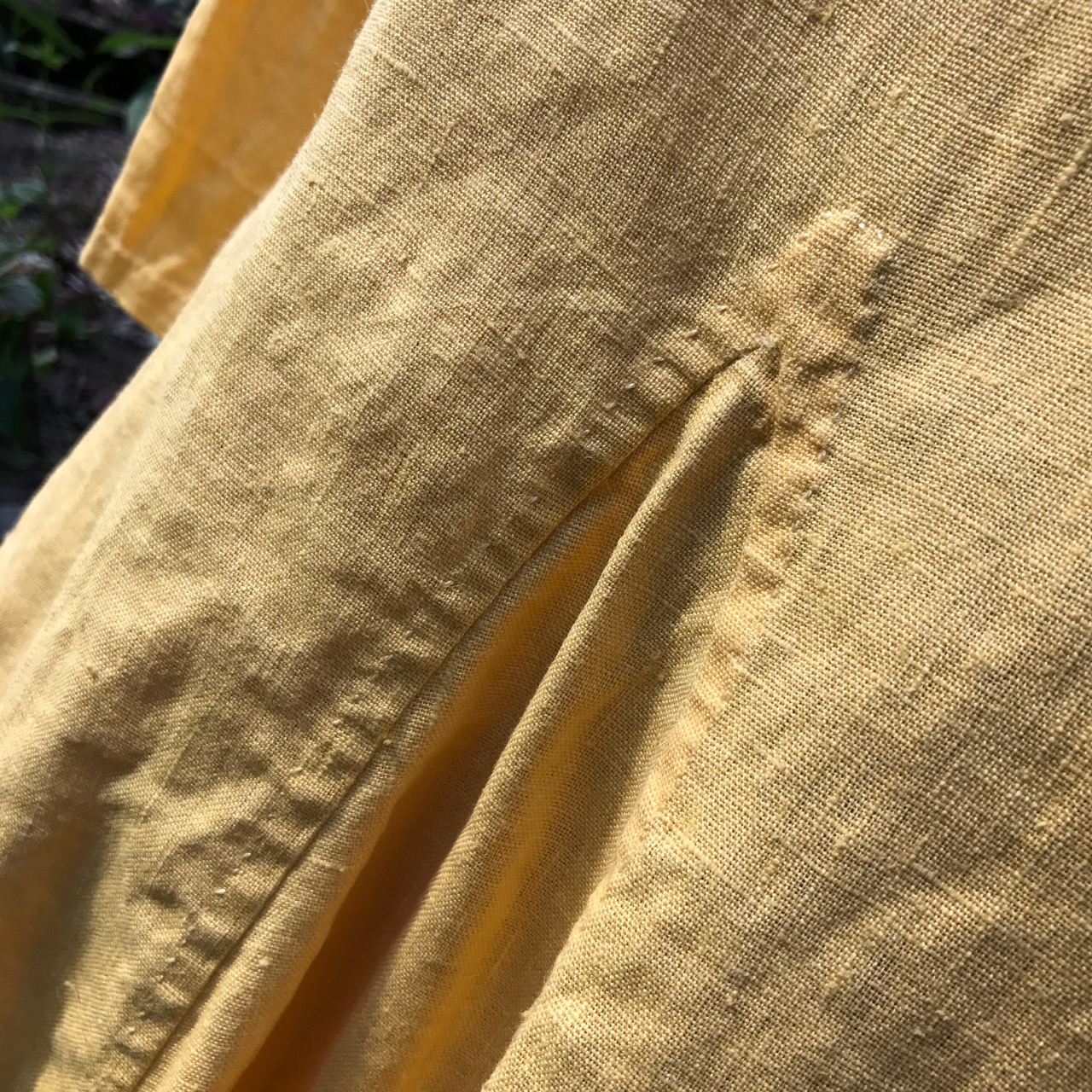
This time I used a heavier weight linen (which I had in my stash from making my viking garb). I didn’t have enough fabric left to do the full box pleating, so this time the pleats are knife pleats, and there is less fullness in the skirt.

  • I top-stitched the bottom of the yoke this time, as well as the top. I think this looks more “finished”.
  • I cut the yellow pocket lining on a crazy grain-line, since I only had just enough to cut each piece. This worked really well since the straight grain is along the line of the pocket opening. This stabilised the pocket opening very nicely — it won’t stretch out, now.
  • I lined the skirt with a cotton voile, which feels very nice when I’m wearing it. Overall, the skirt is heavier, and feels like it would be warmer on a breezy day.

I feel like there are many ways this could be made up — I could put a zipper on the pocket opening to make a more “secure” pocket (if I felt like stashing my keys and then doing hand-stands, perhaps!)

I could also put some tablet weaving trim onto the base of the yoke, or again, onto the pocket opening. Much food for thought! For now, though, theses two will do me until I start to wear them out.

Weaving is the Bee’s Knees! Well … Feet.

This year I acquired a book I’ve been wanting for a loooong time: Applesies and Fox Noses — Finnish Tabletwoven Bands, by Maikki Karisto and Mervi Pasanen. This book focuses on tablet woven bands from Iron Age Finland, with patterns from, and inspired by, extant bands from the period.

It’s an amazing book for a beginner, or an experienced weaver, alike!

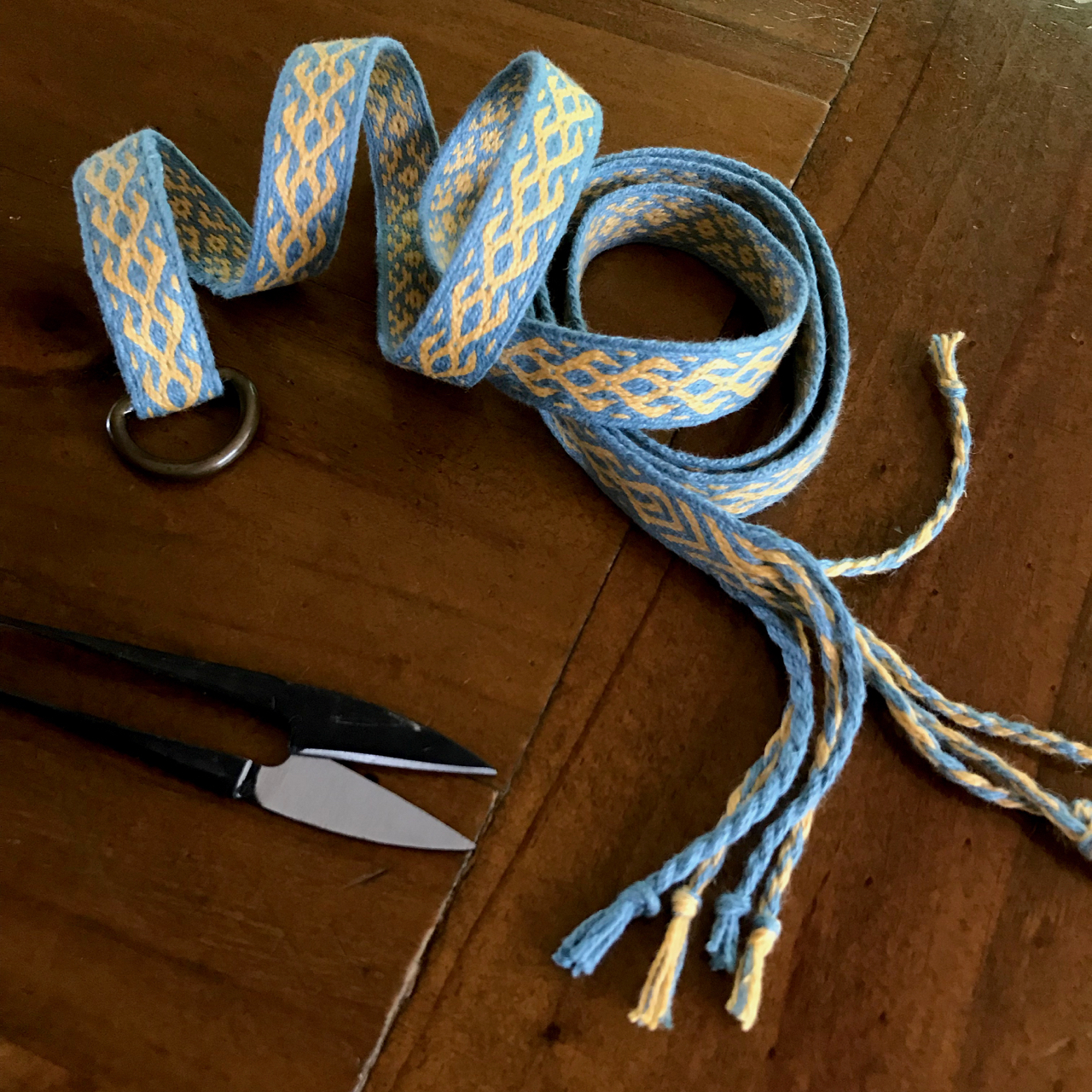
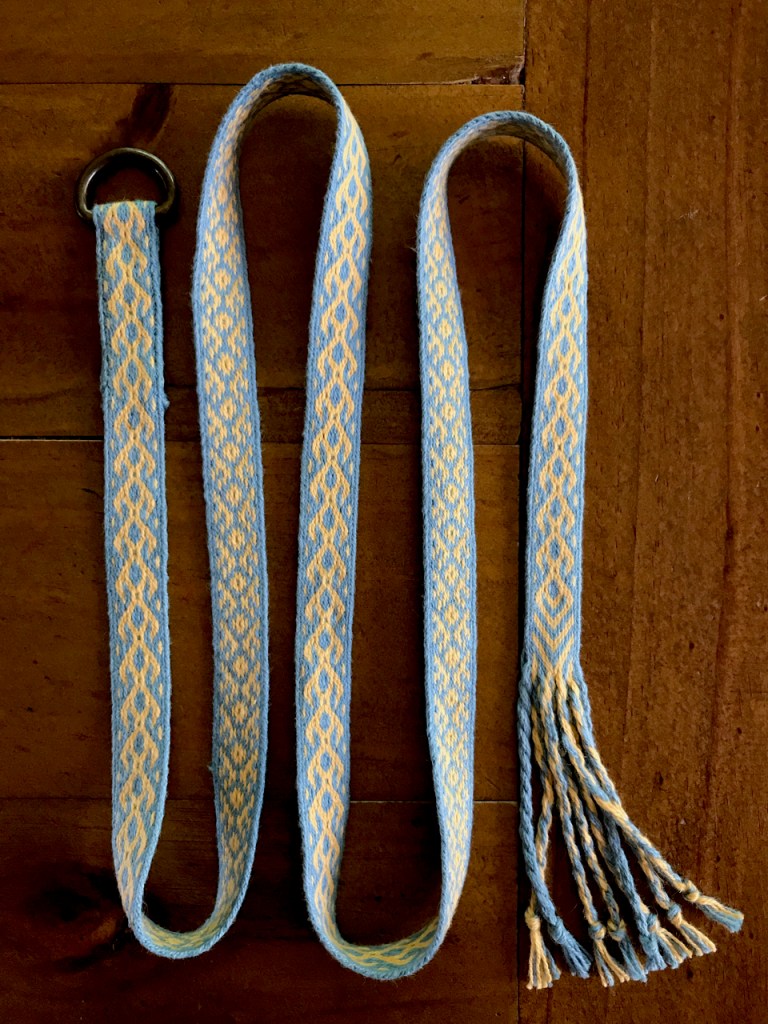
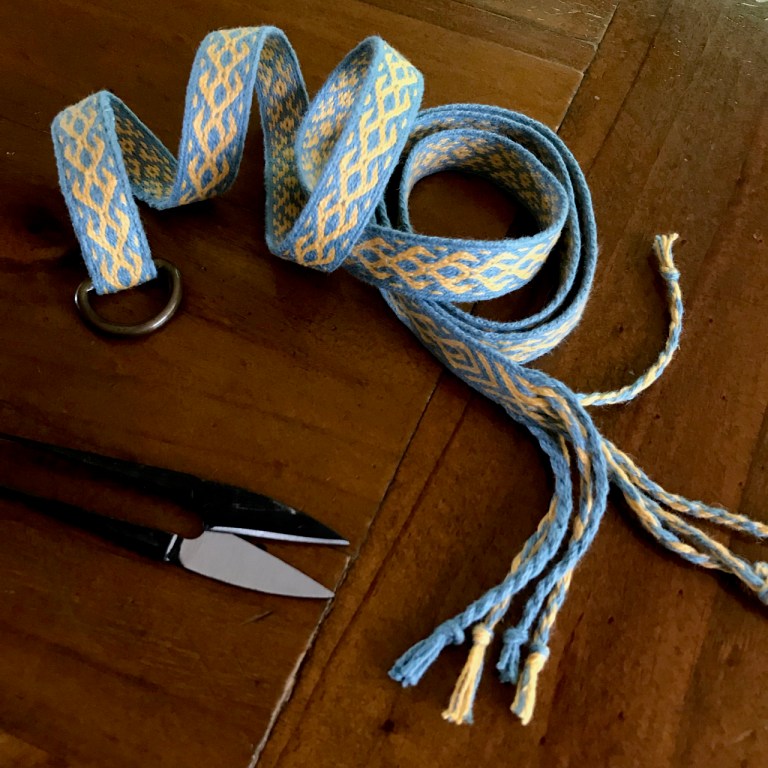
I got stuck in straight away, choosing to weave one of the easier patterns, called “Bee Feet”, or in Finnish, “Mehiläisjalkoja“.

“Bee Feet”

This band was a lot of fun to weave. I’m not a novice — I’ve made other bands before, and experimented with developing a pattern from a historic band — but it was a delight to go back to a simpler band for a change!

This pattern is a short repeat, so it is easy to pick up and put down! I enjoyed practicing keeping my tension stable between sessions so that the width of the band was more even, and the shapes in the bee feet were consistent. There’s always something to learn!

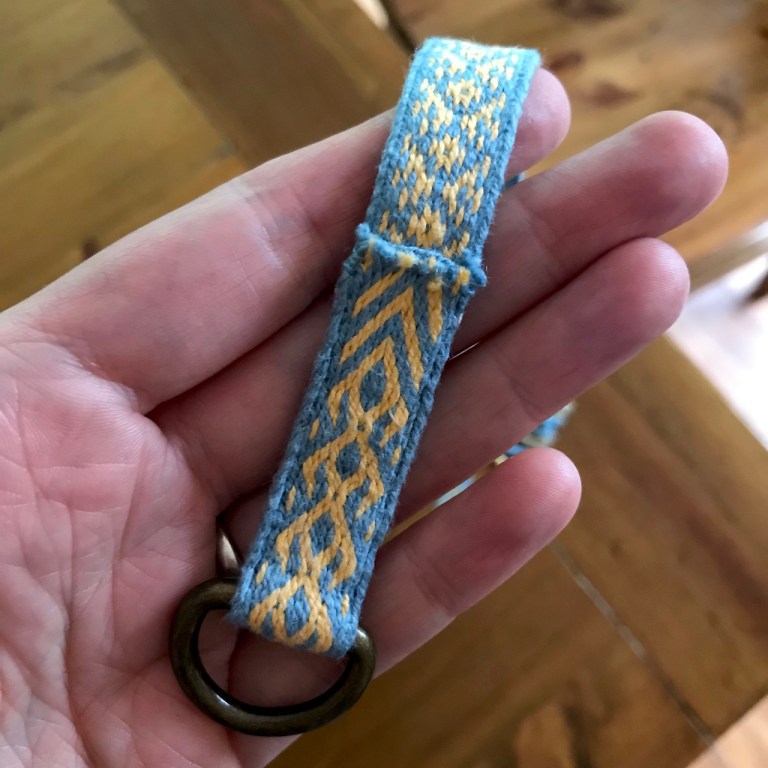
I made the band up into a belt, to be worn my my youngest daughter at Rowany Festival — our favourite yearly historical re-enactment event. She chose the colours to complement her yellow tunic, which (hopefully!) will still fit next Easter.

The band itself is woven from Cottolin, and with 40% linen content it still manages to have some lustre when it is “cold pressed” — after washing the band, I roll it flat with a stone rolling pin! This gives the band some shine.

I’ve already warped up a second band from the book (destined to be another belt, or possibly some trim for my son) called “Fine crooked knees with small applesies”. I chose this for the gorgeous pattern, but I could easily have done so from the name!

In case you think I simply weave off tablet woven bands without thinking about it, here’s a more accurate picture for how I start:

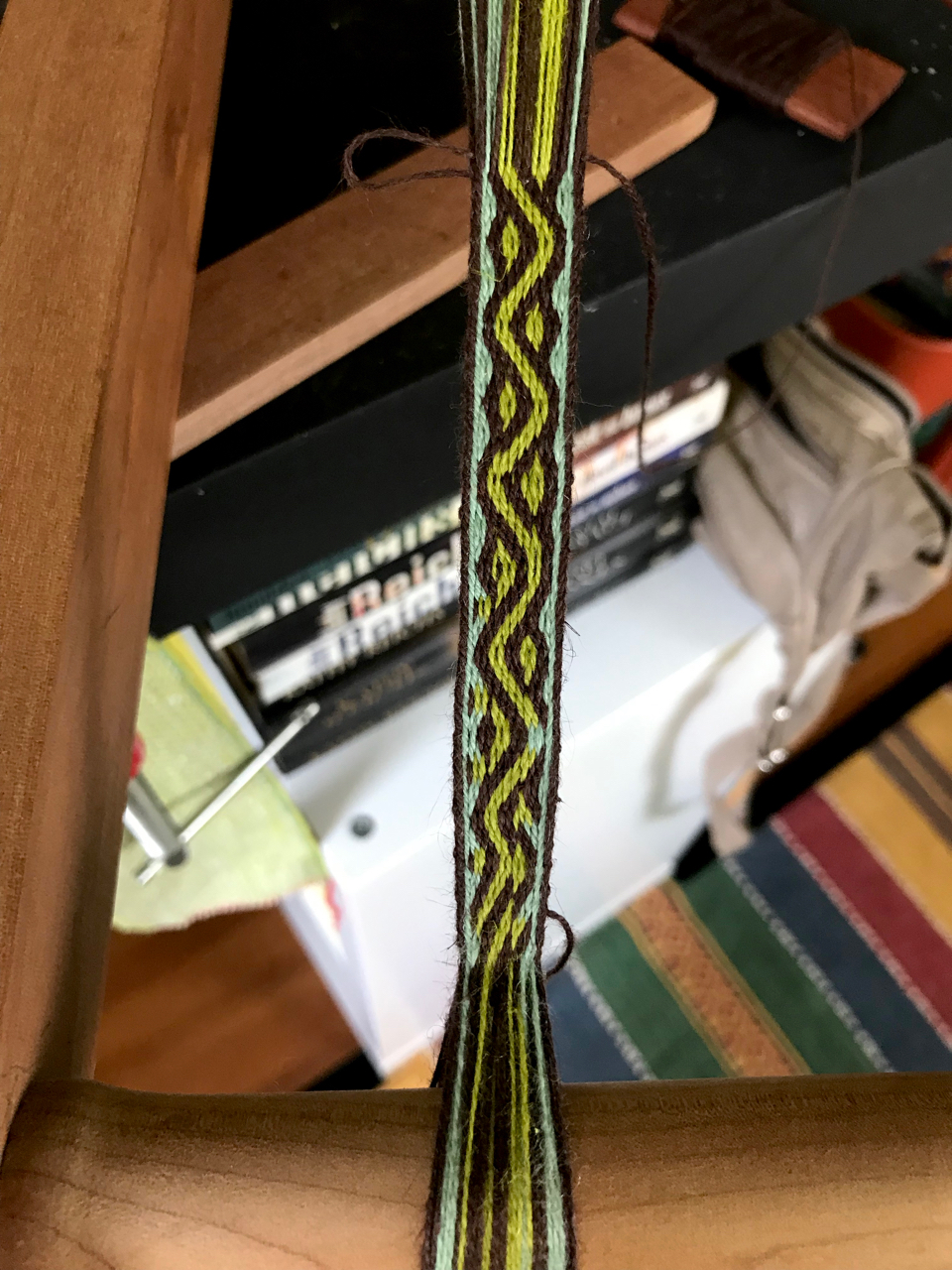
Establishing a pattern on a new band — not always easy!

Believe it or not, I simply started the pattern with the cards one quarter turn in the wrong position, and it took me three repeats before I worked out how to set it right!

I think it’s amazing how the clarity of the pattern can suddenly establish itself, especially when using high contrast colours like these. I’m really looking forward to seeing this band when it is finished!

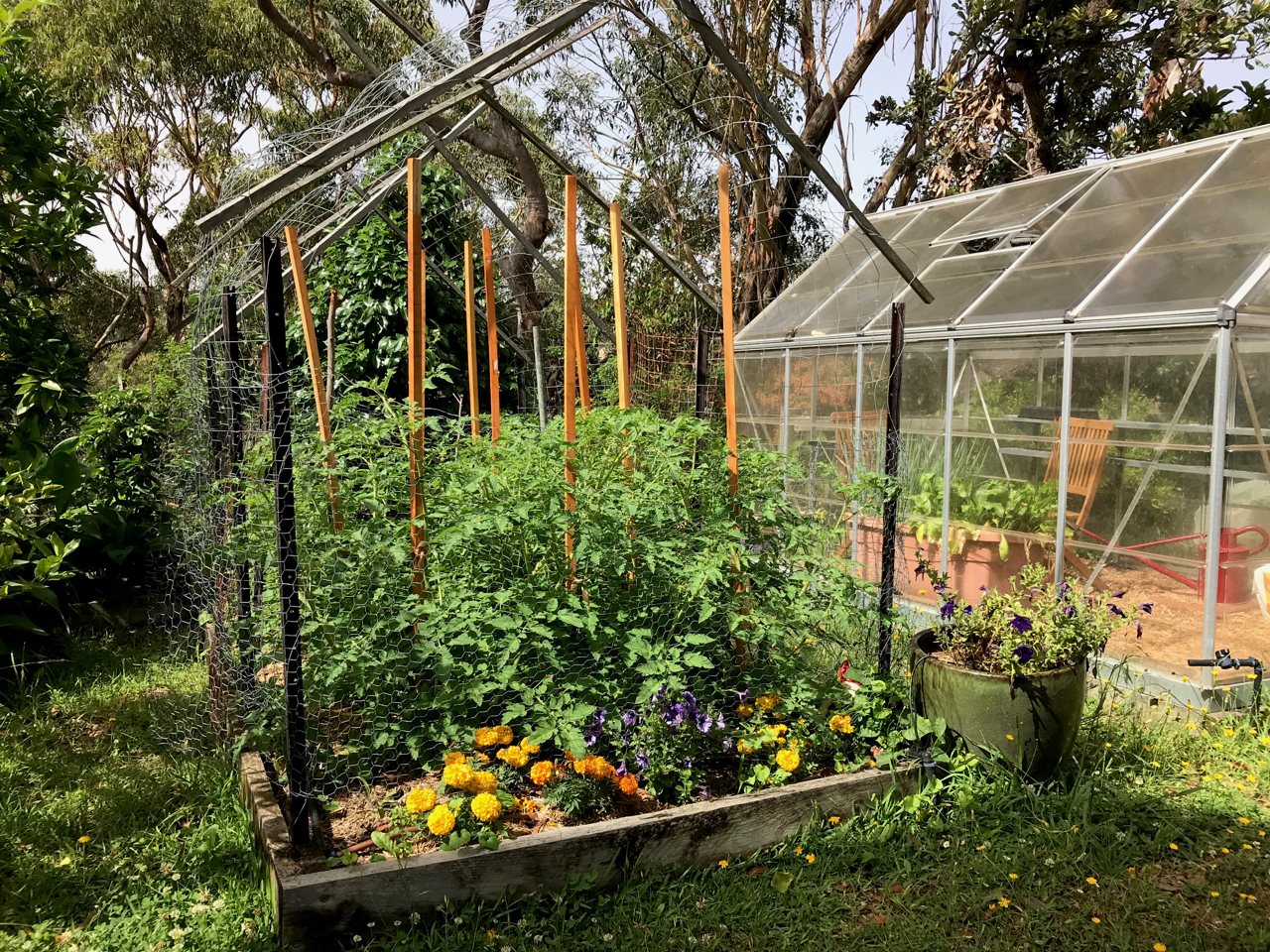
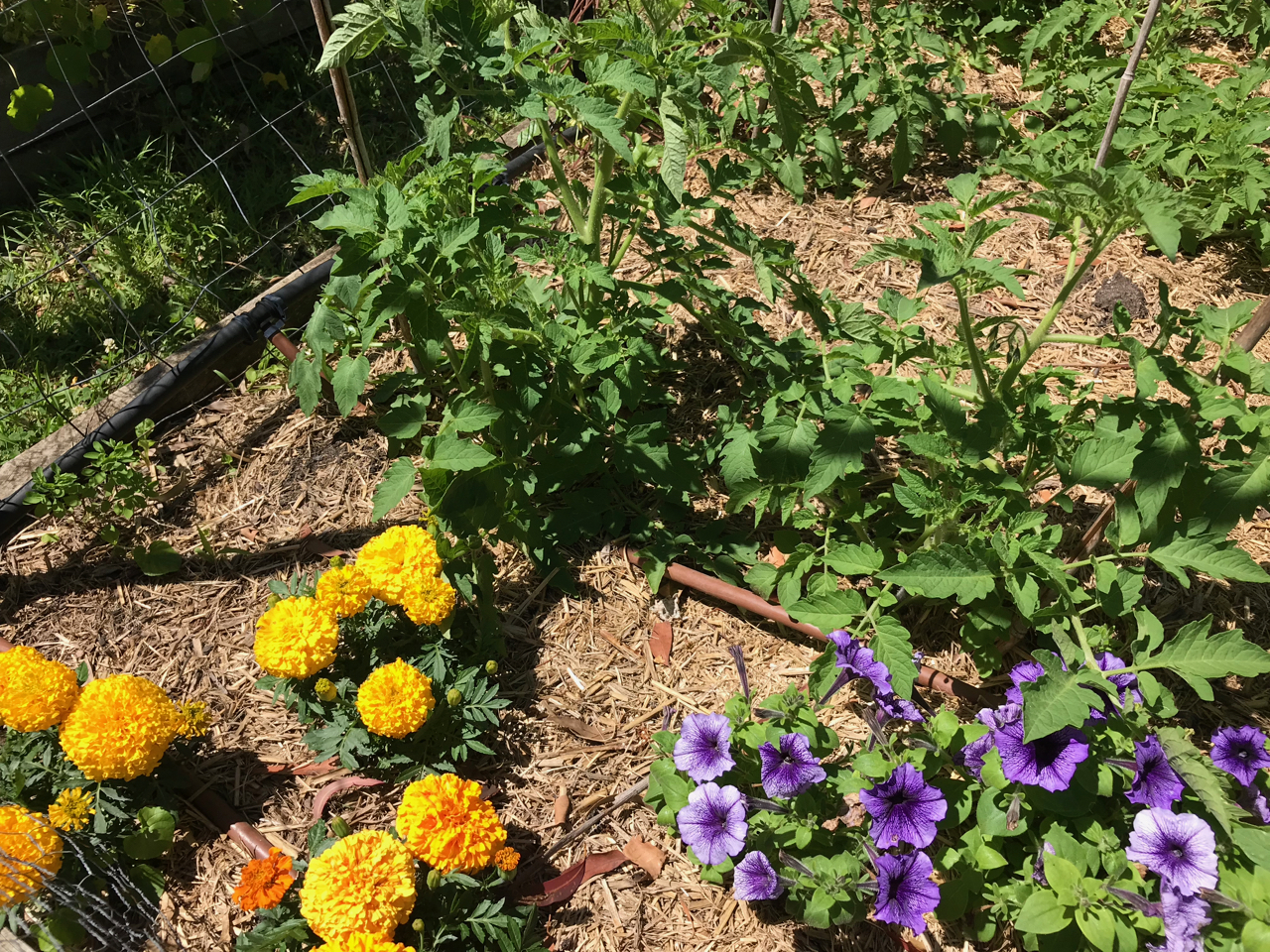
One final note. Last week or so I showed you some photos of our summer garden, as it started to establish itself. Check out the tomatoes now! We have fruit forming already. Yum!

Grow, grow, tomatoes!

Summer Smells like …

Garlic!

It has been a long time since I showed photos of our garden, because I’ve been crazy busy with full time work. But it’s time to show off the garlic harvest!

The 2018 garlic harvest

The garlic bulbs this year were smaller, and we decided not to replant any next autumn — we’ll get new bulbs from an organic supplier to freshen up our seed stock.

The leaves on the garlic plants were also really stinky. We fertilised with fish emulsion two weeks before harvest, and there was no rain at all! I decided not to plait up the leaves this year, as a result. Hopefully they will store well like this, once the stems fully dry out.

Here’s where we’ve been drying the garlic over the last week:

Our back verandah — a haven after Spring

Isn’t this a dreamy space? We actually had Spring this year in Sydney — usually we charge straight into humid Summer in September. This year we’re surrounded by colour and bloom. 🌸 🌺

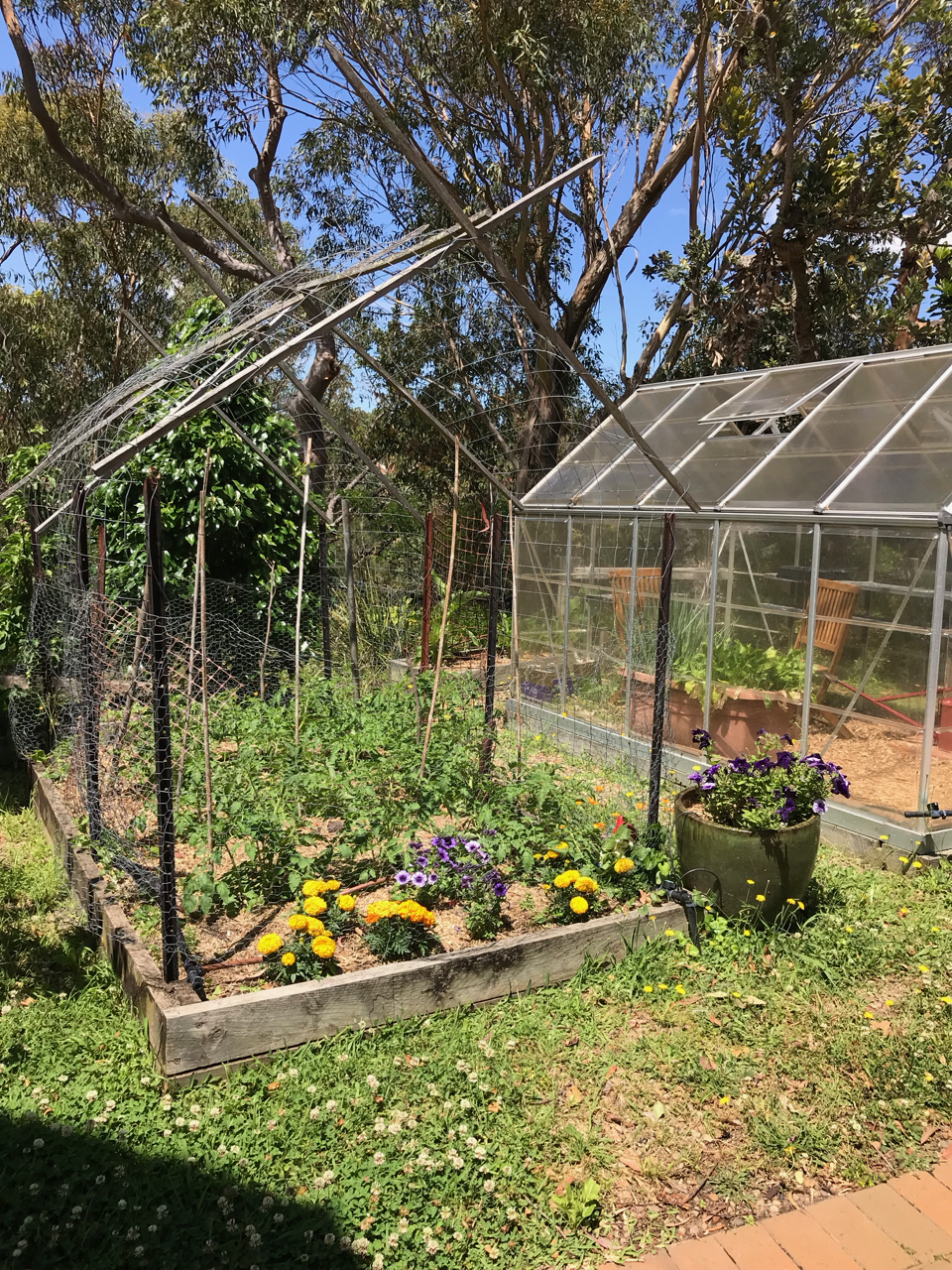
As for vegetable gardening, now that my husband is able to spend more time in the garden, things are looking way more organised!

Our youngest daughter is mad for flowers and has influenced us to plant marigolds in the front of the tomato bed. Such a cheerful addition!

I’ll leave you with two last photos — these ones promise good things over summer!

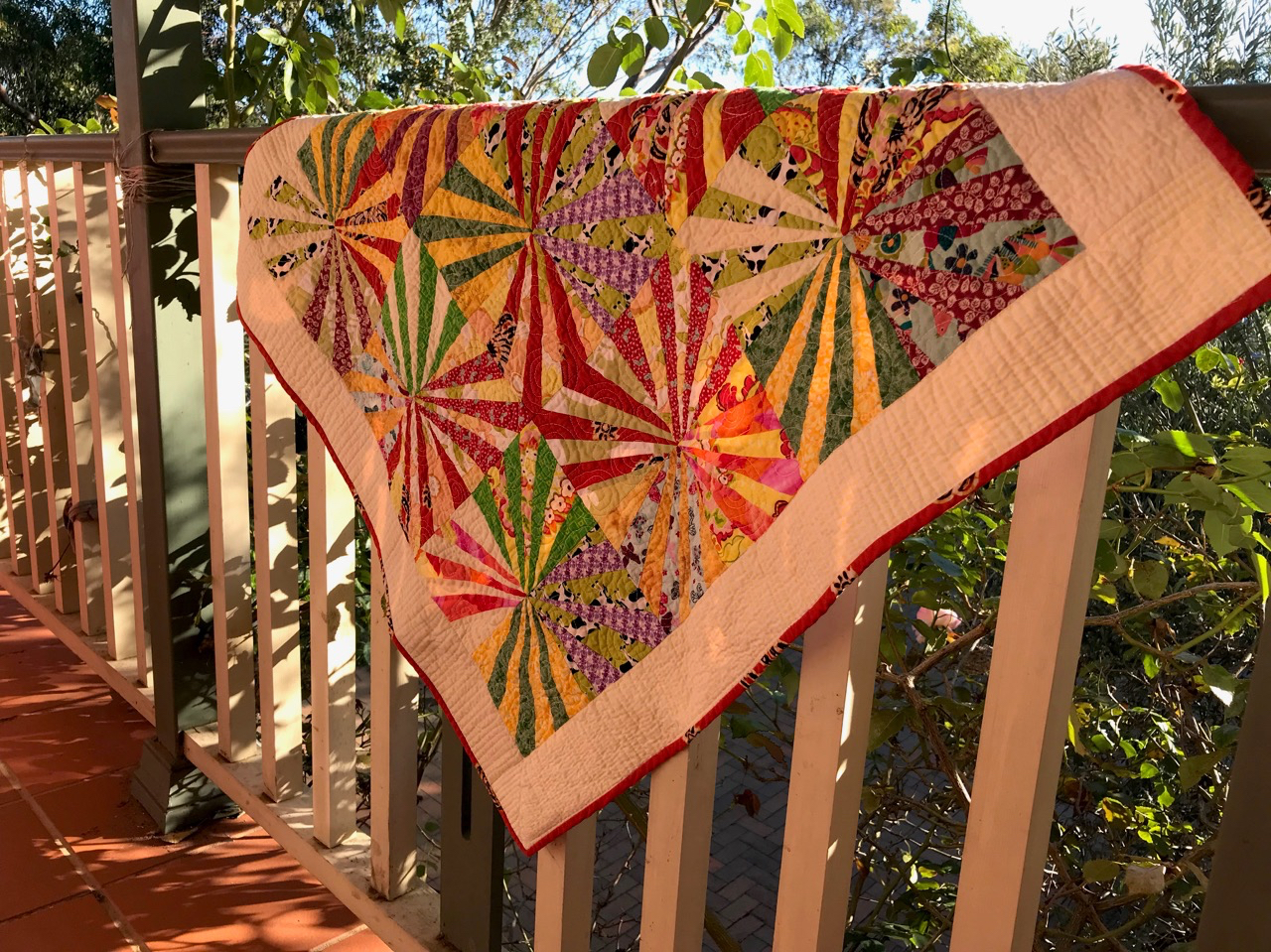
“Joyburst” Baby Quilt

There’s something wonderful about making a baby quilt.

image-19

Mostly I love this because I can take a creative idea and play about with it, without needing to design for an epic-sized project. And this one I made entirely from scrap!

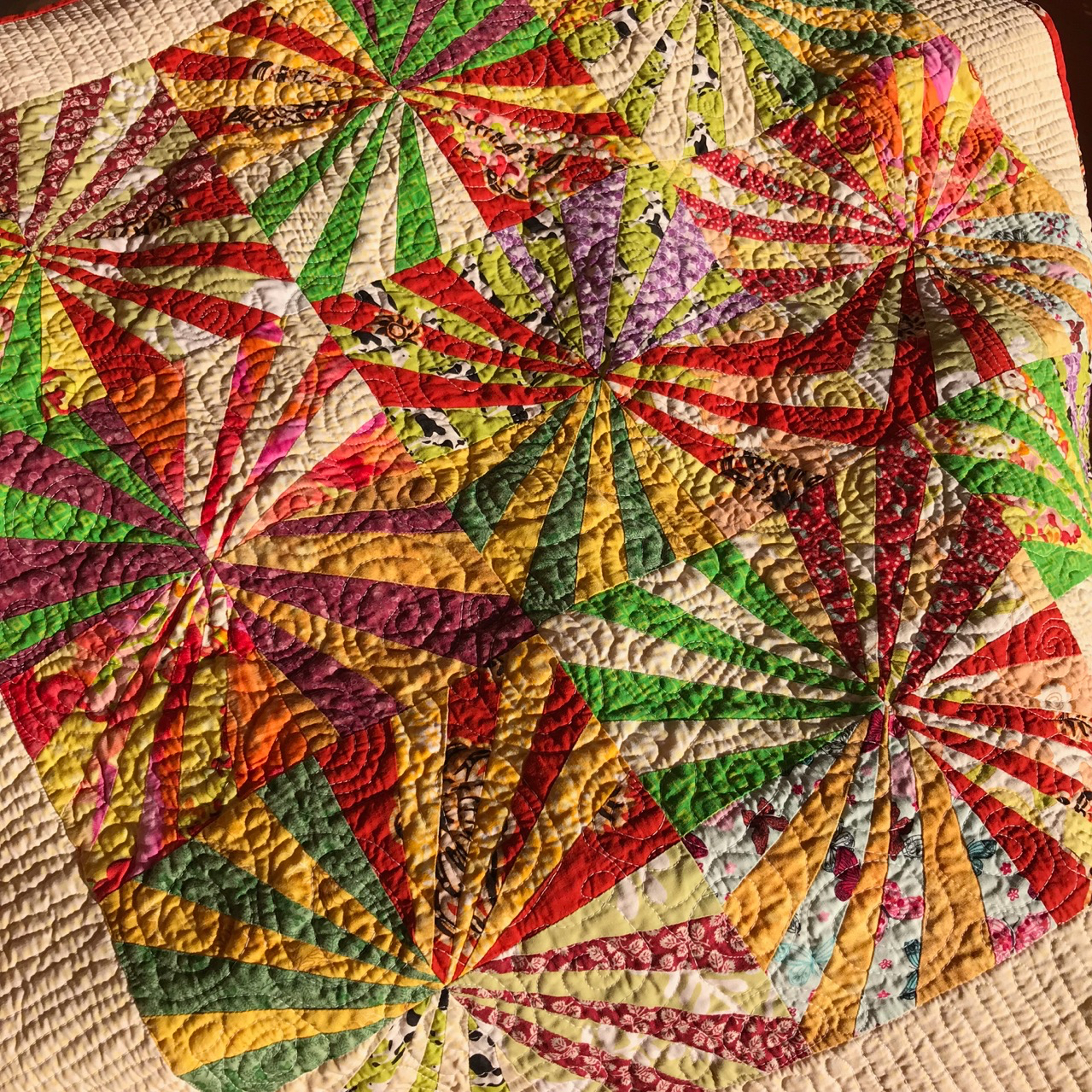
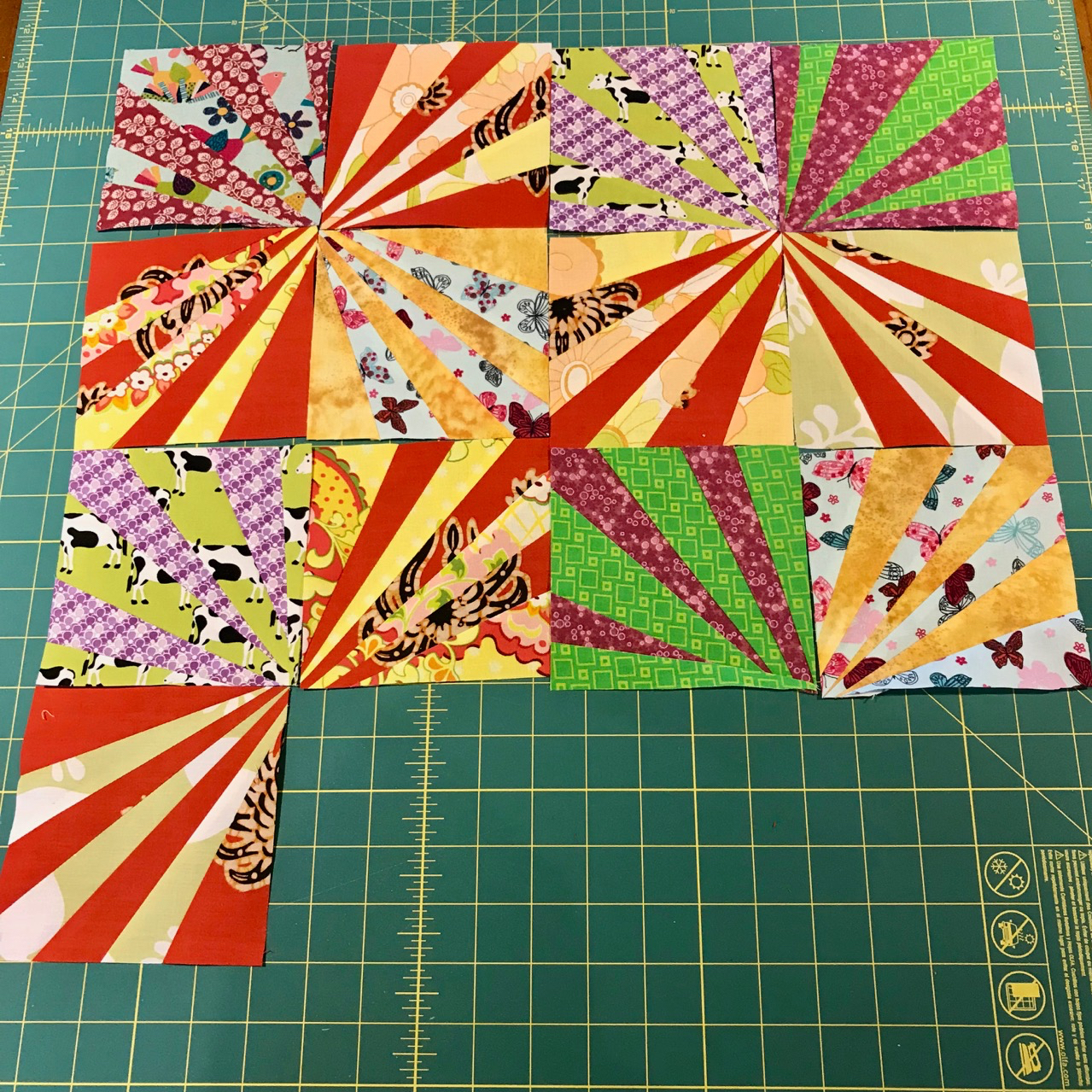
My inspiration for this quilt was this quilt by Karen Griska. I loved the riotous colour in this quilt and the way the radiating stripes look a bit like crushed peppermint candy!

Whilst I would have loved to recreate that effect, I was working from scrap stash, and there was a bit of a time incentive 👶🍼. I decided to stick with a piecing method I’m familiar with — stack and slash.


For each pair of blocks I chose two highly contrasting squares of scrap fabric, then I laid one on top of the other and cut diagonally through both blocks. Each seam then joins two contrasting edges together.

Raditing quilt blocks being assembled

After the first couple of blocks I discovered the best angles to use for the radiating lines. The blocks shrunk significantly in size due to the piecing required!

To make the finished quilt large enough to be used as a baby throw quilt I added a bit of yellow gingham sashing, which really made the crazy sunburst blocks pop out.

Close up of the spiral quilting

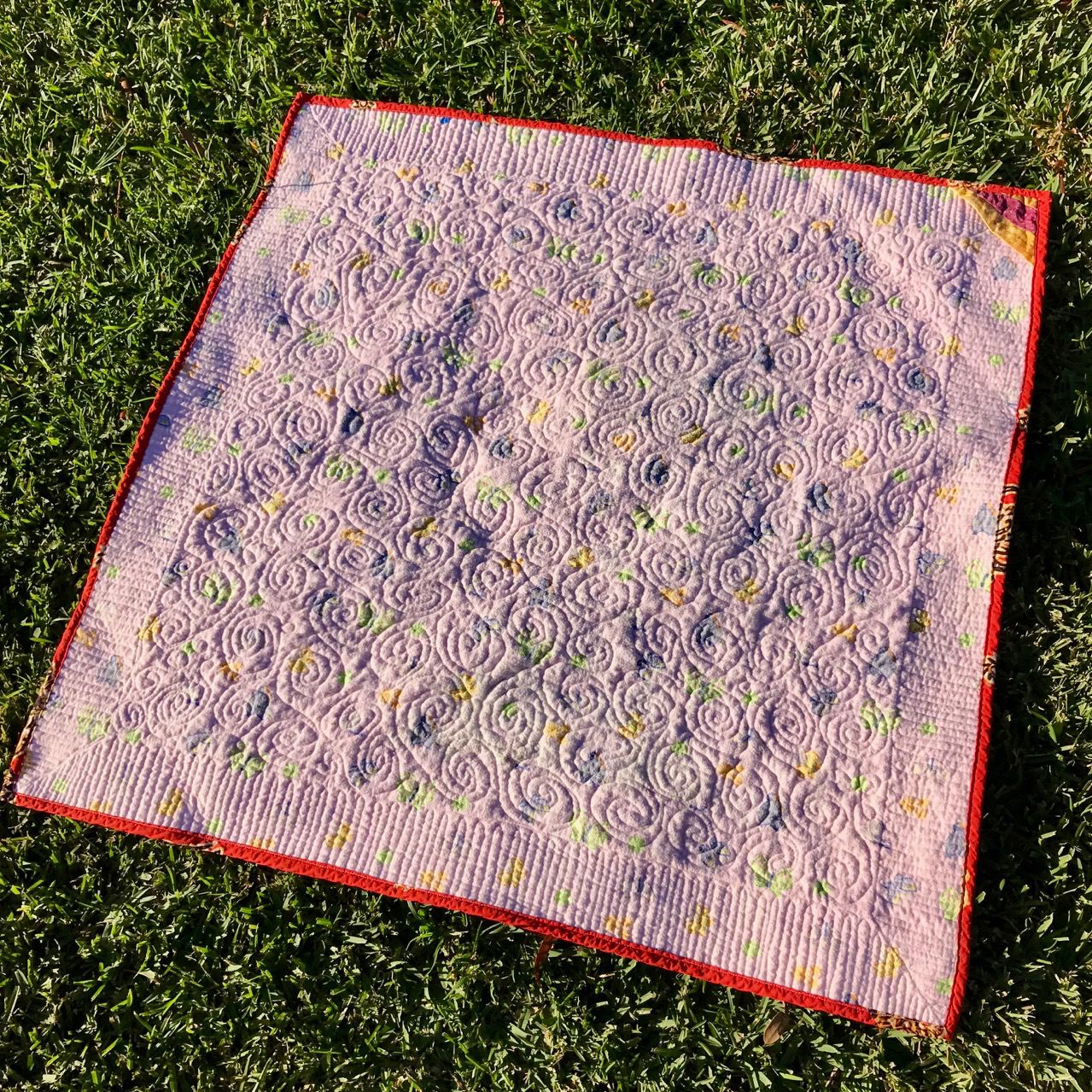
I quilted this with an all over spiral design, except on the sashing where I used some wonky parallel lines. Would you believe it took as long to quilt the sashing as the whole main body of the spirals?

I love the wonkiness of all the elements in this quilt. I used my darning foot throughout because it’s a fiddle to change it over to my regular walking foot. I even did this for the “straight” lines that divide the quilted sections!

The quilt back, showing spiral quilting details

Once again, the quilt backing is an old flannelette baby wrap that was leftover from when my kids were teeny. I really hope my friend loves the colours! I left my comfort zone in mixing greens, reds and purples together. I do think it came up absolutely smashing!


School Reader Bags

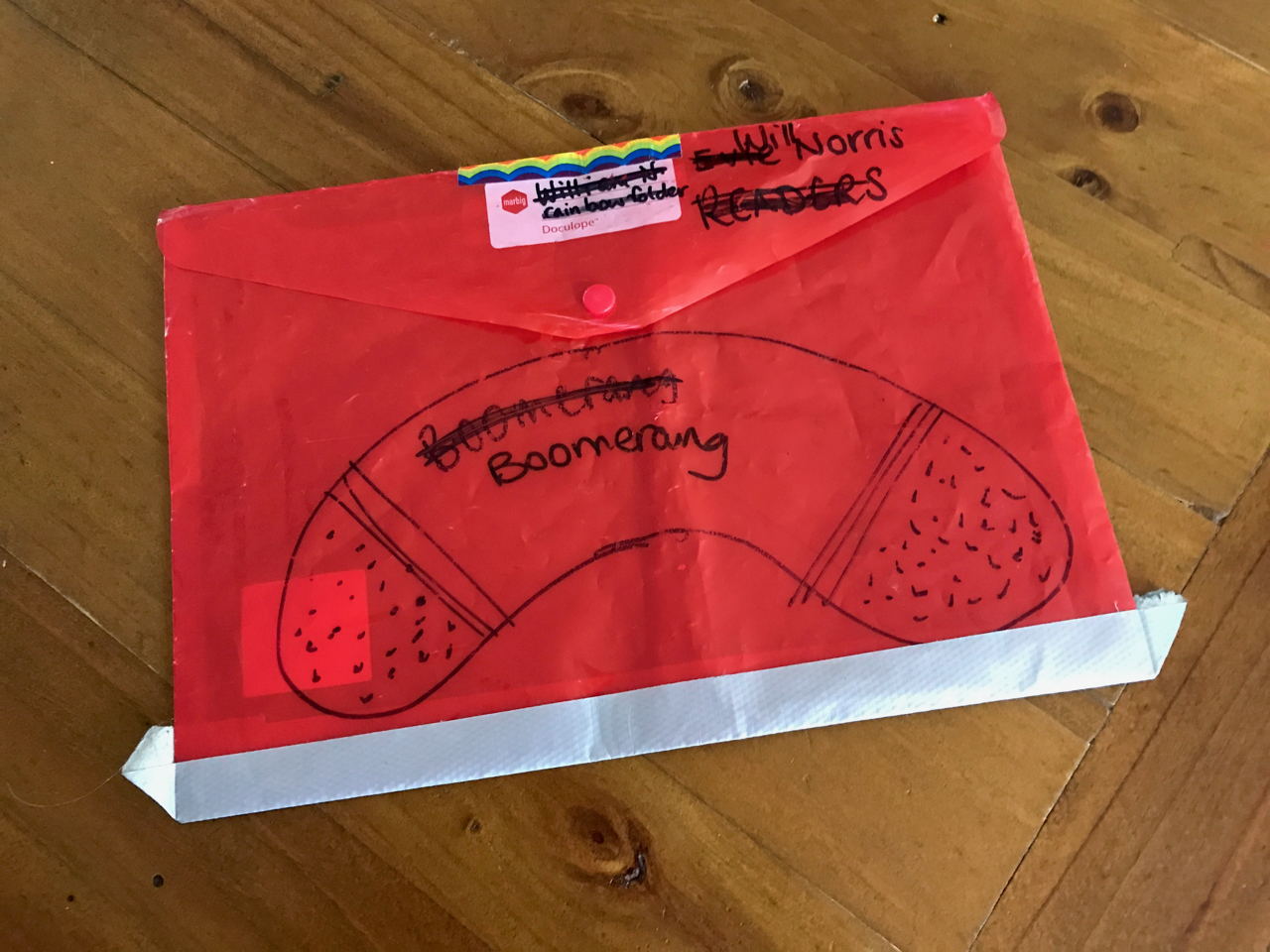
Will is now a couple of years into his schooling, and I have been increasingly frustrated by the plastic envelopes he is required to use for transferring items in his school bag. Our school sends notes home in one envelope, readers in another, plus there are two more envelopes for use at school.

I hate using these things! They don’t survive long in the school bag, and I usually reinforce them with cloth tape to stop them falling to pieces.

IMG_4496

The worst thing of all, is they are made of plastic, and there doesn’t seem to be a good reason to use this unsustainable material!

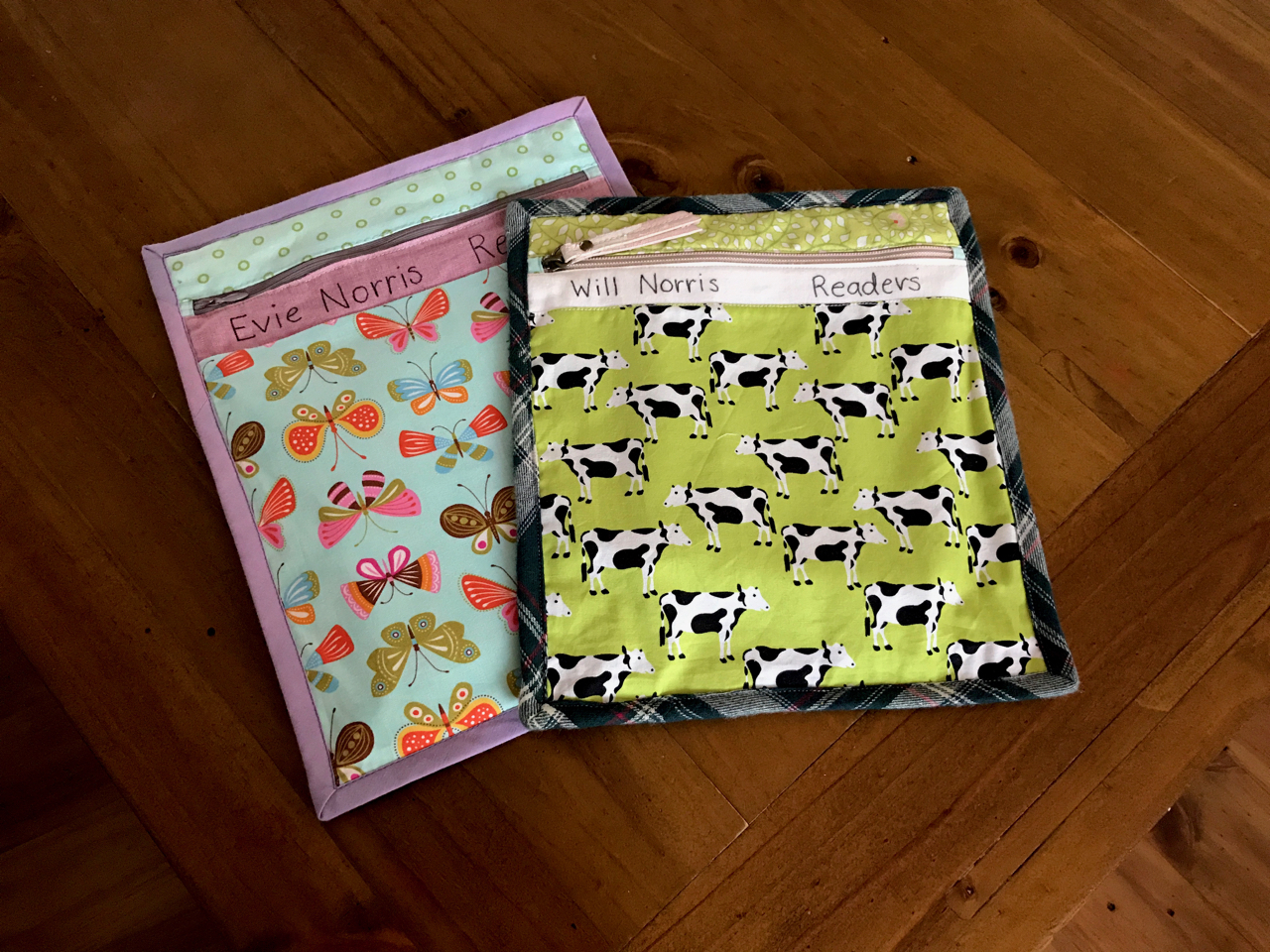
I asked Will’s teacher if I could make a cloth bag for the readers, since the library bag is cloth. She said yes — as long as it is waterproof! Apparently the children often get their readers wet because their drink bottles leak in their bags.

Alright, I can understand that. So I just needed to interline my cloth bags with something water repellant.

IMG_4498
Nylon rip-stop fabric

I happened to have some nylon rip-stop fabric that came home from preschool one day last year, so that was a quick and easy solution. This fabric is the stuff they make modern camping tents out of, I think, so I figured it would be water repellant enough.

Working with the nylon was a right PITA because it was so slippery. However, I used my walking foot, which helped, and I chose to make a simple bias-bound edge on my bag. This meant I could sandwich my layers together and create the structure of the bag in one go.

No need to turn anything inside out!

IMG_4493

The zippers are pulled out of old items: William’s came off a handbag that had disintegrated, Evie’s from a skirt that I cut up for my sister’s wedding quilt top. It is an invisible zipper, but it actually works pretty well regardless! I used a regular installation method to make it sturdy. 🙂

The rest of the materials were all bits I had left over from other projects. You might recognise the fabric from Will’s pyjama shorts, or the napkin fabric I used for my Christmas crackers! 😀

I have to say, I couldn’t have made such a professional looking job of the zipper installation without referring to ikatbag‘s wonderful tutorial series, Zip-A-Bag. LiEr does an exceptional job of explaining how to do things with zippers, and bags in general. If you are a Maker, I can’t recommend this site enough!

Overall I am delighted with these bags — cheerful fabrics go a long way to encouraging some interest with the readers within. Of course, the kids love them too!


“Summer Trip” Baby Quilt

I have a brand new niece!
This occasion calls for a brand new baby quilt, of course.

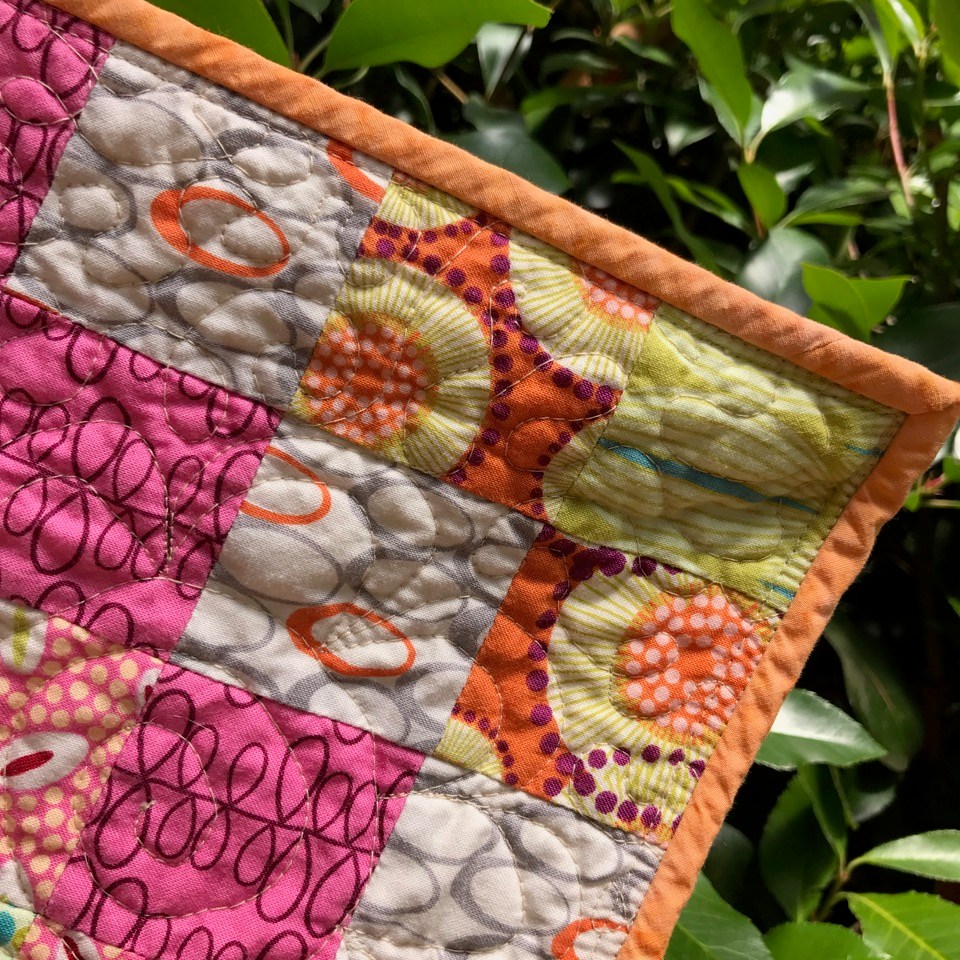
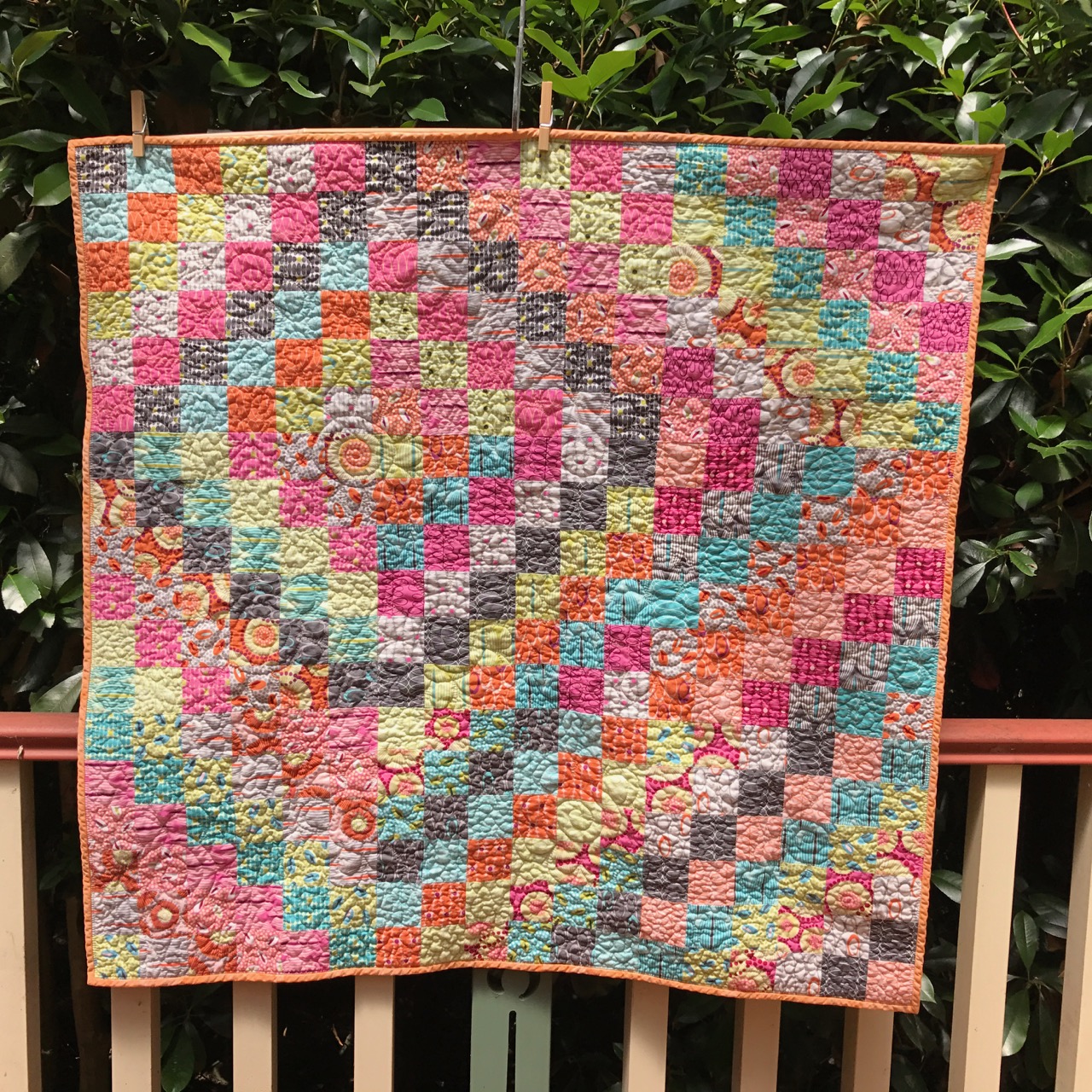
This quilt is a scrappy Trip Around the World, which I’ve been pinning for *ever* on Pinterest.

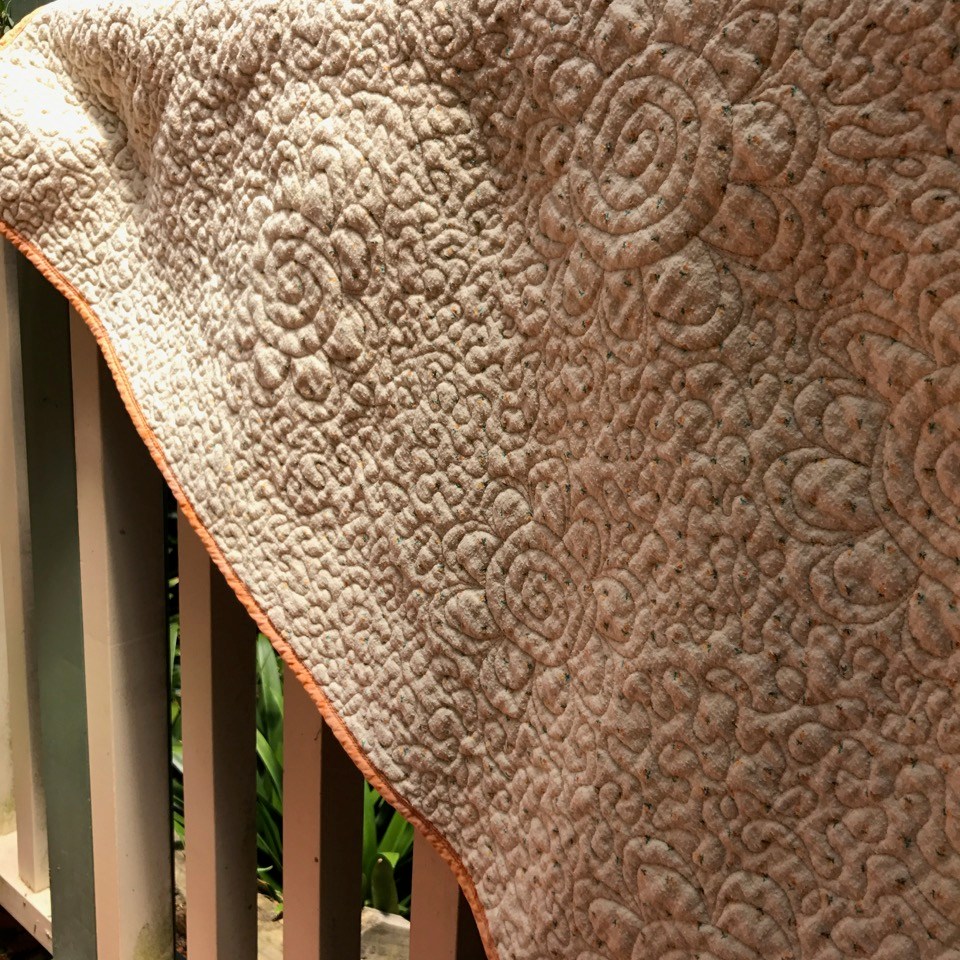
The backing is an old flannelette baby sheet of Evie’s that just matched so perfectly!
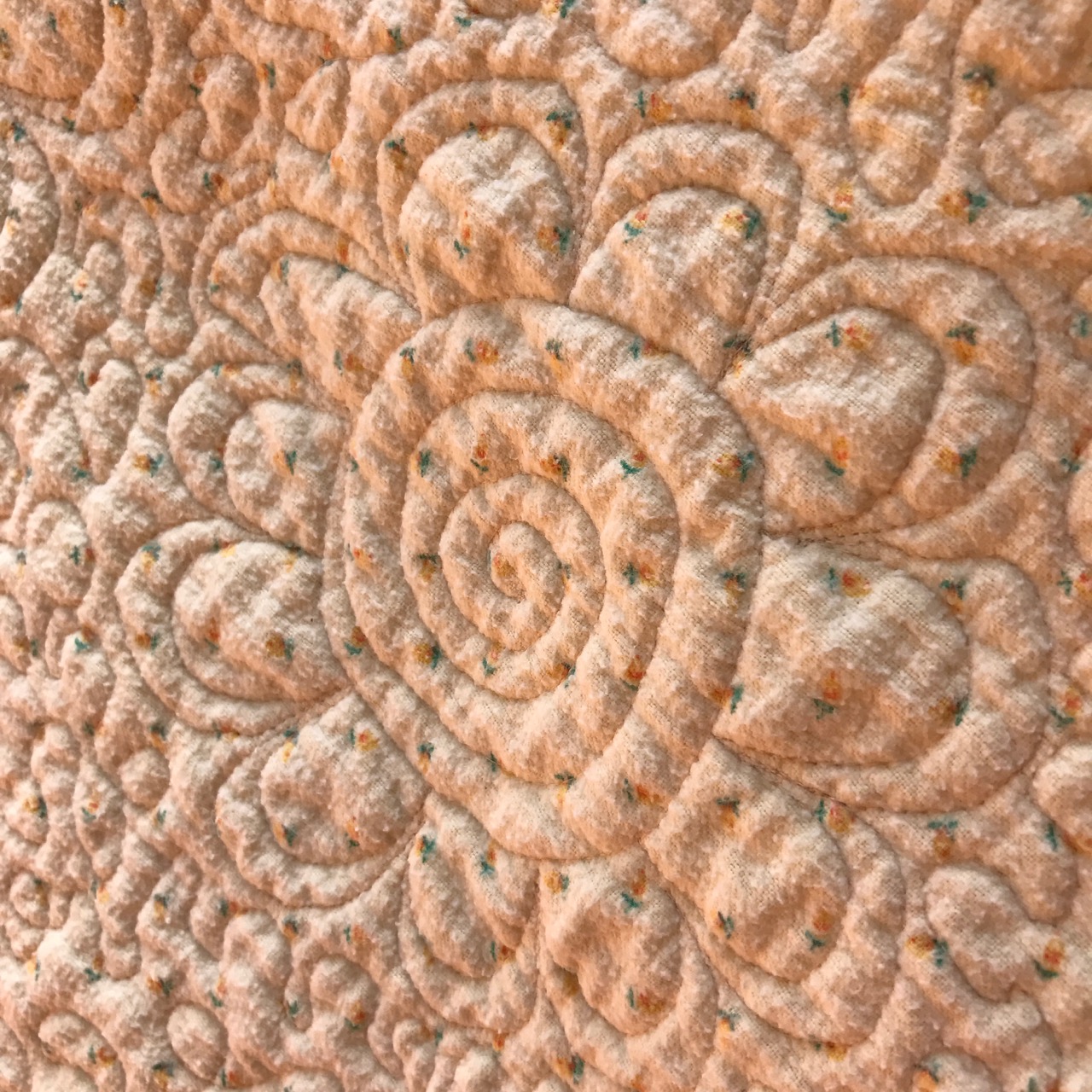
Isn’t the texture delicious?

The quilting consists of cheerful daisy motifs that pop up out of their spiral centres. I stippled the background to emphasise the flowers, and really exercised my new Free Motion Quilting (FMQ) skills.

I’m delighted with this quilt! Not bad for my first real FMQ on a proper sized quilt, huh?

I think it is serendipitous that my niece is called “Summer” — this quilt is just so perfect!

Happy Birthday, baby girl. May your future be a riot of colour and fun!

Rowany Festival Garb 2017

Have you wondered why it has gone quiet on the blog these last few weeks? I needed to get a *lot* of new garb made for Rowany Festival 2017!

IMG_0051

From top left we have:

  • Three smaller child tunics (for Will, Evie, and Evie) and a teenager tunic (Izzy)
  • Another teen tunic (Izzy) with a viking Kaftan; a viking serk for me, and a blue apron dress (with Viking bling!)
  • The same dress with the birka tablet woven belt I made, my own kaftan, a second natural linen apron dress (designed to go over a white serk, which I didn’t have time to make); a pink tunic for Evie.

In total, this represents 11 completely new garments from scratch!

Some of the tunics are more authentically created than others. Isobel’s yellow tunic, for example, was flat-felled by hand.

IMG_4406
Detail of hand felled seams

However, by the time I got around to Will’s new green tunic, I was giving him sewing lessons, so we finished this tunic on the overlocker (serger). He sewed most of the seams himself (sitting on my lap)!

My apron dresses have the back straps meeting towards the centre:

The natural linen coloured one has hand-sewn top hem and flat-felled seams.

I wanted to recreate the Haithabu Harbour dresses here, so the top of the dress is quite tight (I had to take the red mannequin apart to get the thing on over her hips!). The blue dress feels about right, but needs the back darts to be added. I may take the dresses in above the waist to make them more fitted, as the flare begins right up at the top hem.

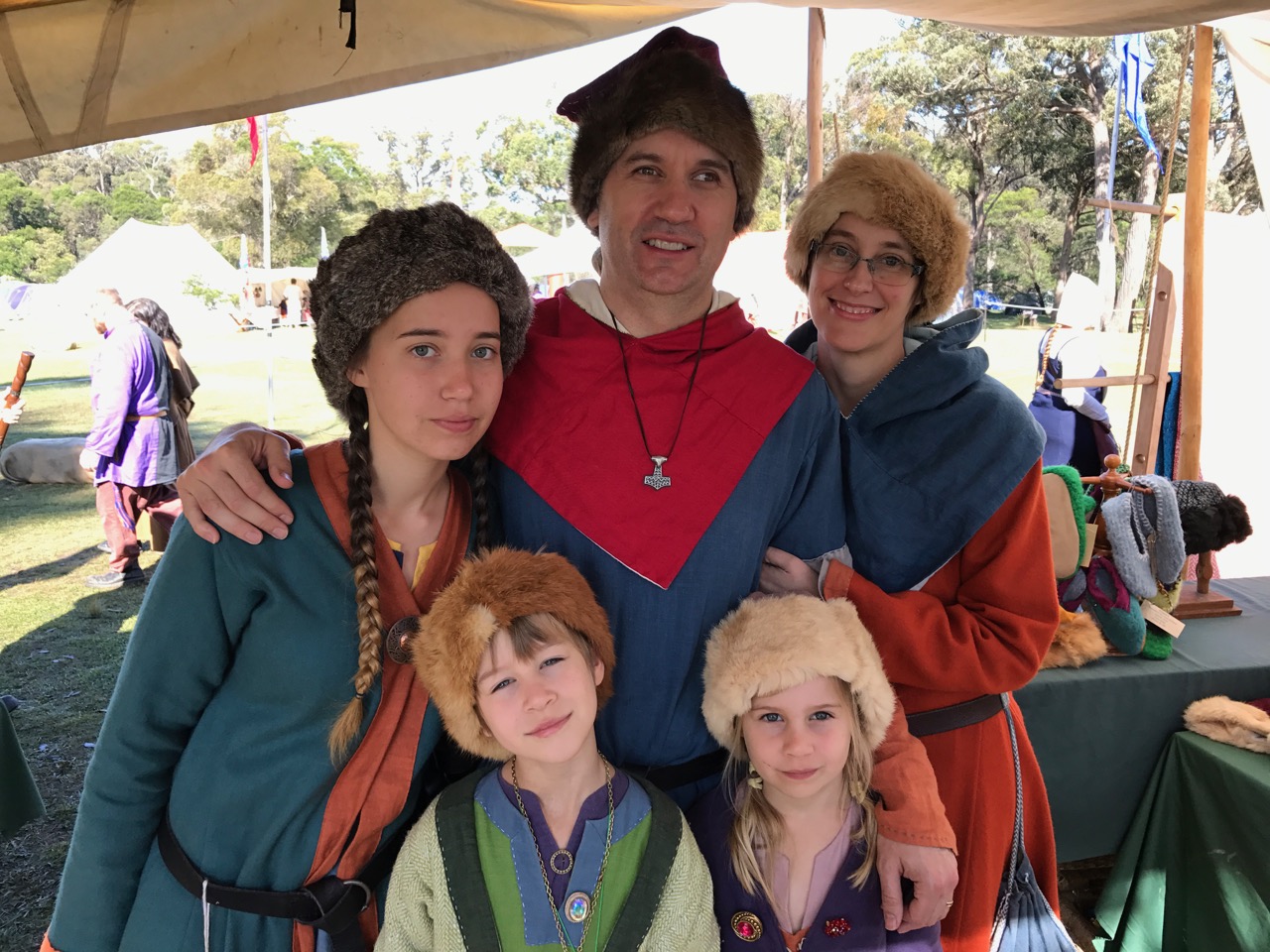
Here we are enjoying festival in our new gear! (Hats were not made by me — but they are so awesome!)

IMG_4383 (1).jpg