
At the start of the year I had a visit from my friend, Tina, who is an experienced weaver and spinner. We hadn’t seen each other in person for years so it was really fantastic to catch up with her.
We had an amazing time using my goat’s fleece for spinning!
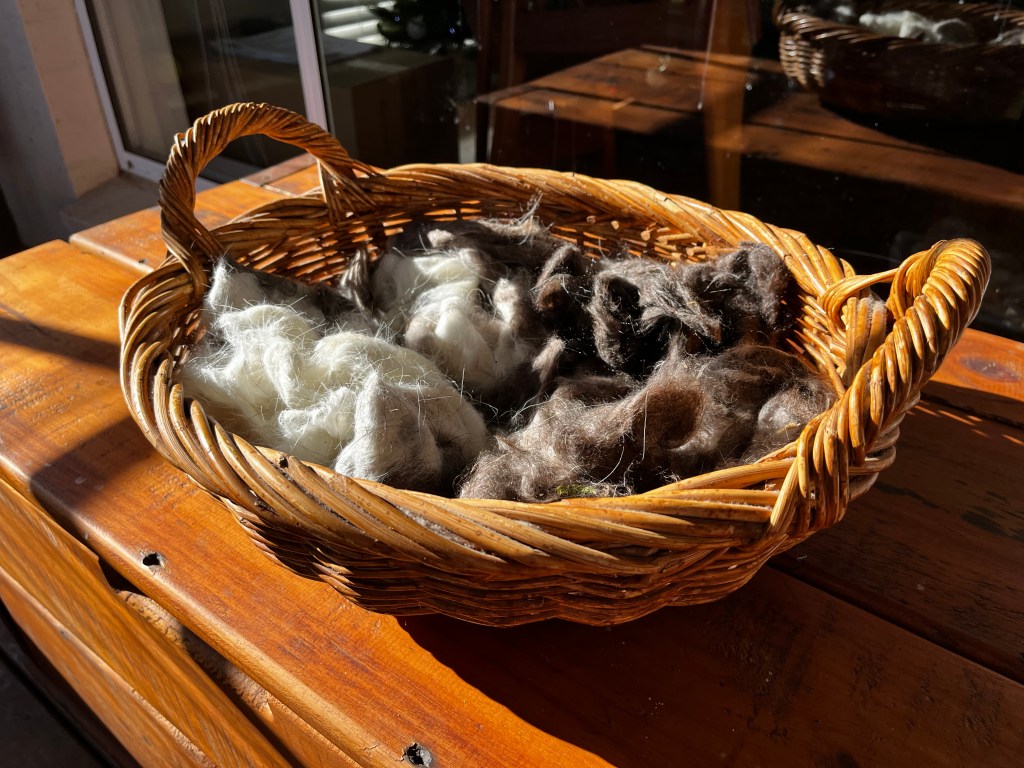
I combed this fibre from my six goats at the end of last winter, when they shed their winter undercoat.
I used a dog comb (a miniature rake with swivelling tines)!
Bit by bit, day after day, I took a little more fluff and stuffed it into plastic bags in case I could one day use it.
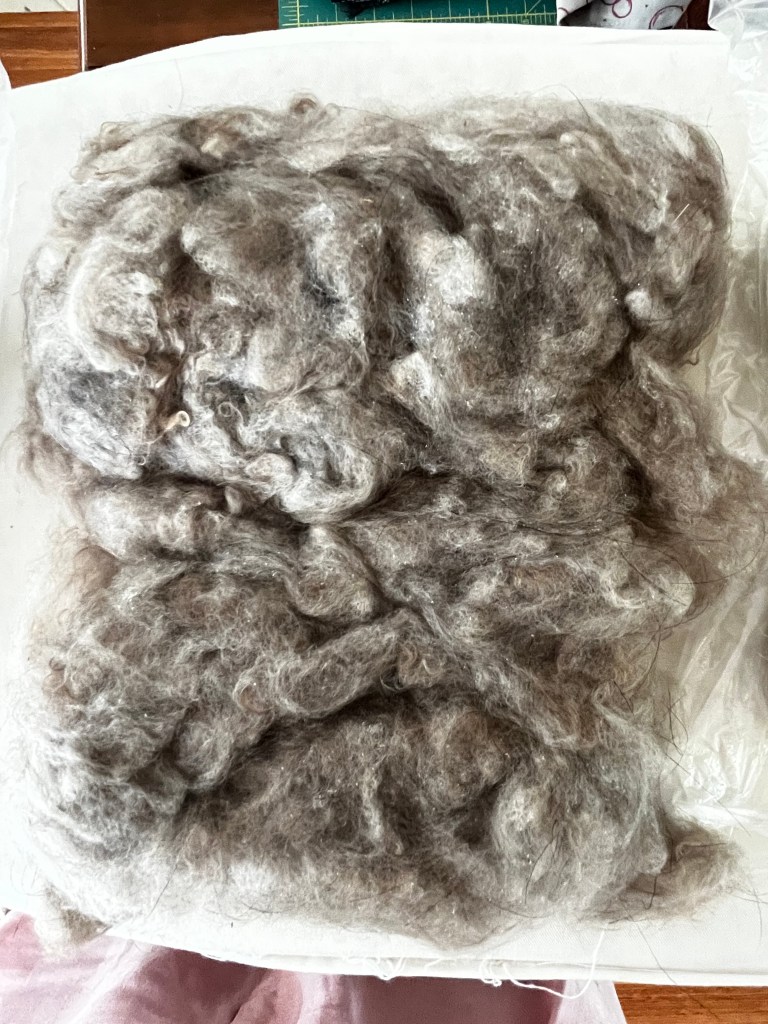
At the time I knew nothing about spinning or preparing fleece or fibre, but you don’t know if it will work until you try it!
I soaked the fluff in soapy water to scour away any dirt, and dried it on our back verandah.
Tina showed me how to prepare the fibre for spinning: lots and lots of picking out the long guard hairs!
The long white and black guard hairs are from the goat’s outer coat. Depending on a bunch of factors that I don’t yet fully understand, you get more (or less) of the guard hairs alongside the fluffy cloud of cashmere. These will be scratchy and coarse if they are spun into the yarn, so we spent a whole afternoon removing them.
By hand.
We then carded the fibre and made rolags to be spun the next day.
Turns out cashmere is very tricky to spin because the fibres are so short, and they don’t have any crimp (like sheep’s wool does).
I left Tina to spin the tricky stuff whilst I tackled some commercially prepared merino top.
Tina gave me a bunch of great spinning tips so I could get started learning to spin.
It turns out I can do this!
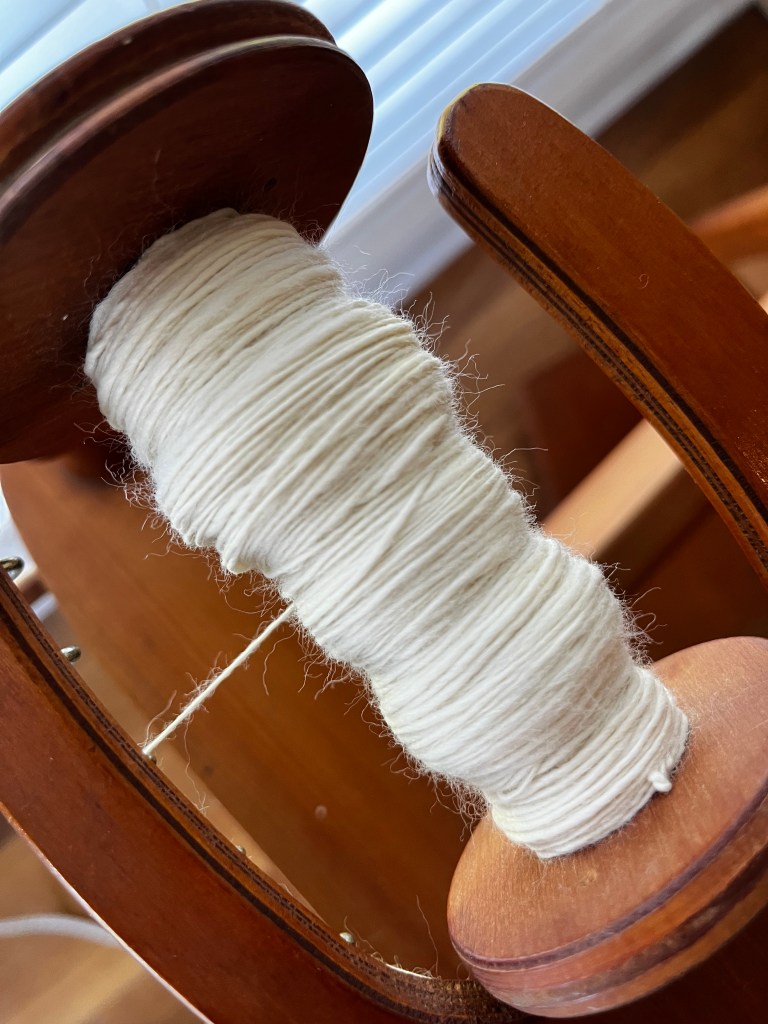
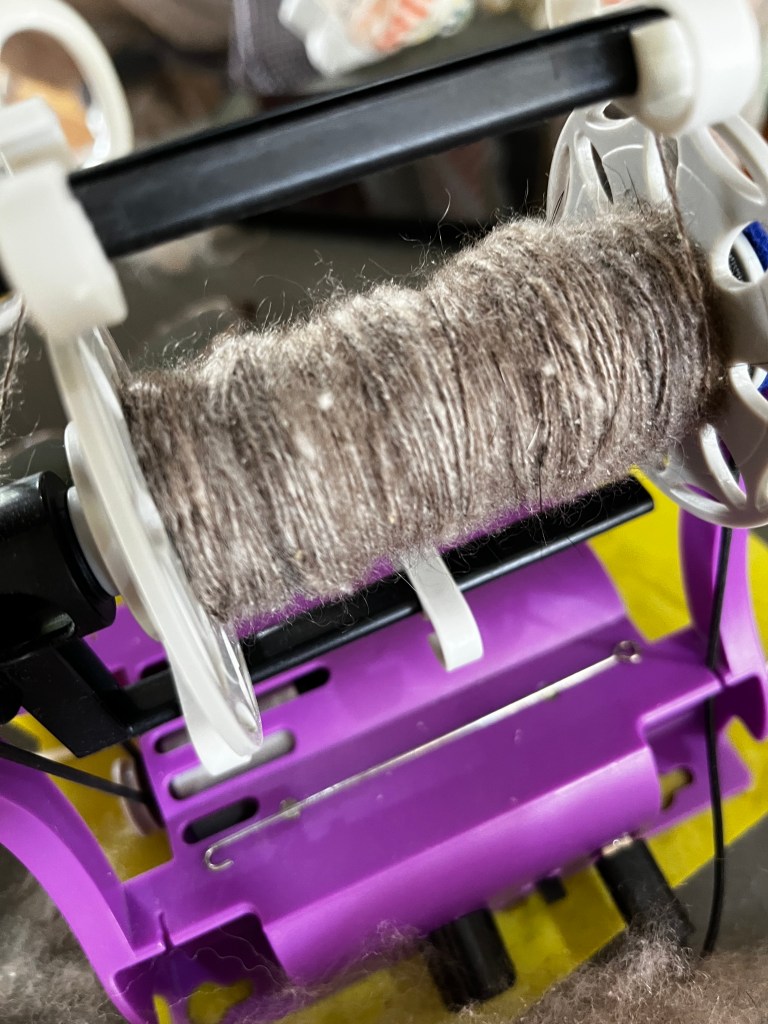
Meanwhile, Tina spun up the cashmere on her portable e-spinner, to get a feel for the yarn.
This is what she got after our spinning session on the second day.
Amazing, huh? 😍
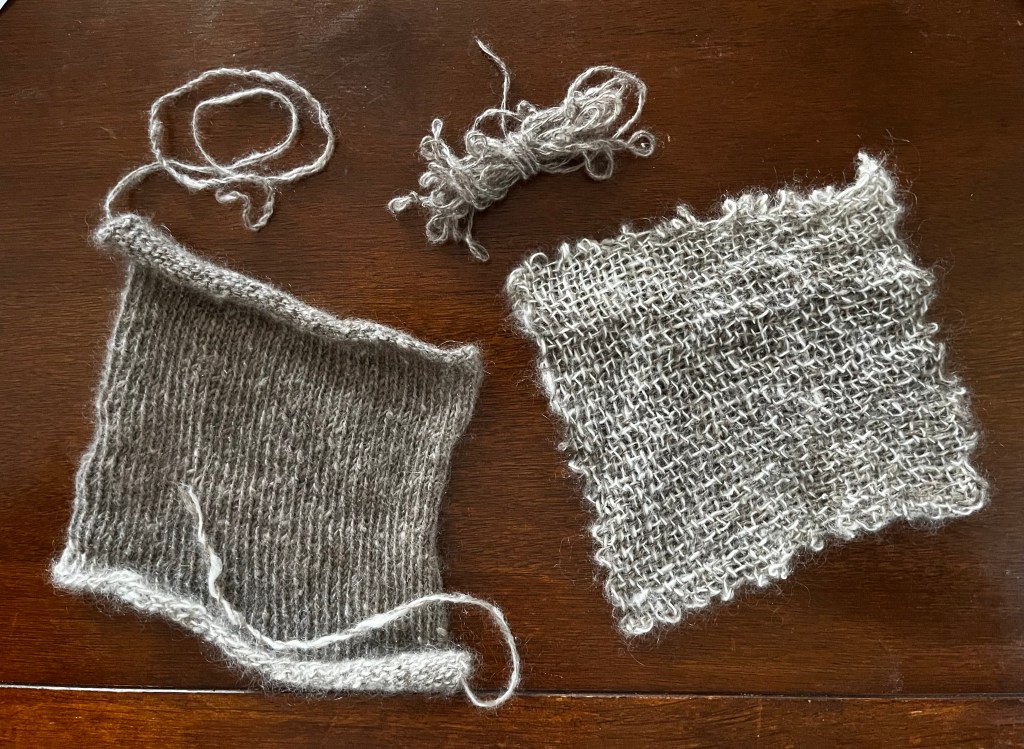
I am blown away by Tina’s skills. She took my goat fibre home, continued to spin with it, and then made these samples!
On the left is a knitted swatch which is soooooo soft.
On the right is a pin-loom woven square. The variegation is from white fibres plying with grey.
Wow, wow, wow!
By the end of January, I’d decided to join my local Spinners and Weavers group, located in Goulburn. There are so many experienced spinners in this group, and I’ve already learned so much from them!
Each week I take my spinning wheel down to chat and spin together with other like-minded folks. There are a few weavers there, too, and it’s great to show each other our projects.
I was even able to participate in their exhibition (held every other year) in which I showed a bunch of the weaving I’ve managed so far (mostly associated with the online weaving course I’m doing, but also including the pyjama pants I wrote about previously).

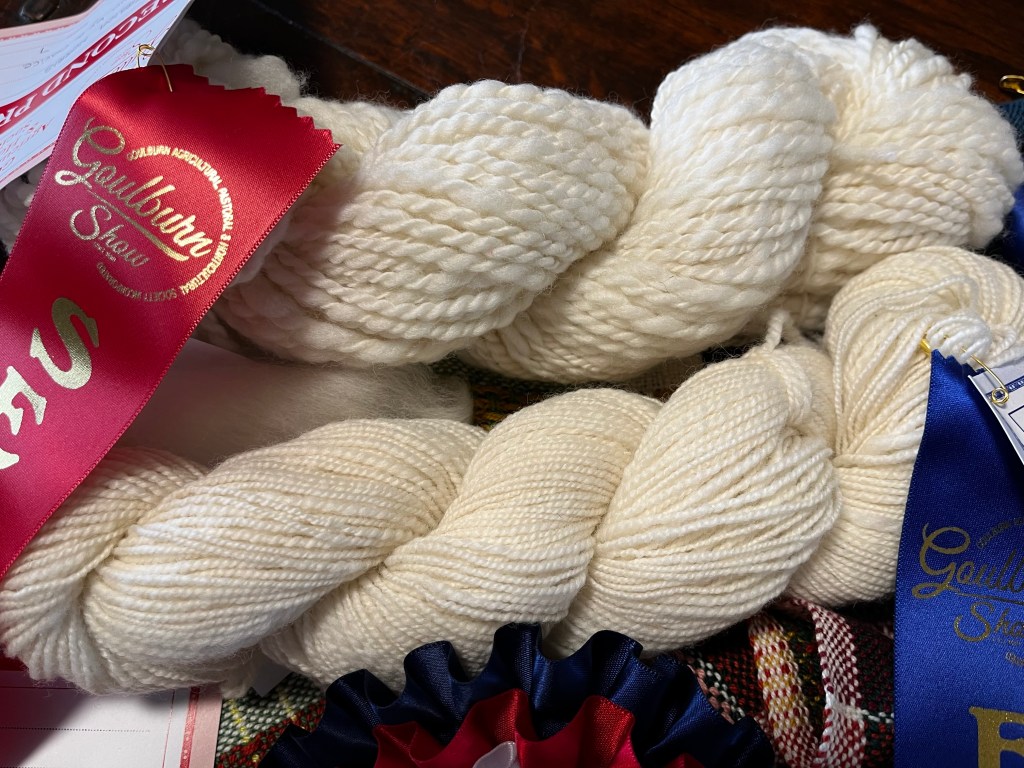
Only a week earlier I had great success at the Goulburn Show, after I entered my spinning and weaving into the Novice categories.
I must admit that I was the only entrant in the spinning section, but I’m still blown away by my two hanks of hand spun, and the ribbons I won. Squeeeeee!
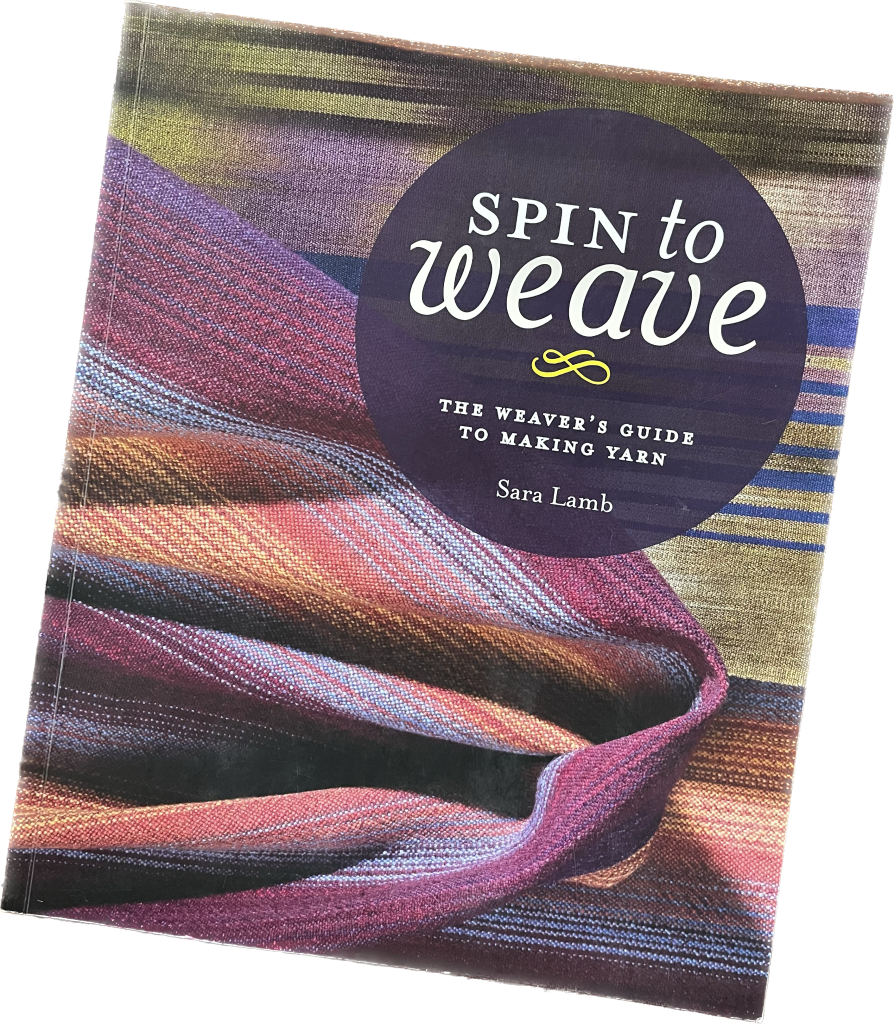
After a couple of visits to the spinners and weavers group I found this gem of a book in the library: Spin to Weave, by Sara Lamb.
What an inspiring book! If you are a spinner and interested in using your yarn for weaving, this book will surely help you get started.
After my success at the Show, I figured I could work towards spinning yarn for weaving, but I was intimidated by the amount of spinning required, and the apparent skill I would need to get the right twist and evenness in the yarn.
It turns out just weaving it is the best way for me to judge and improve my spun yarn!
I could spin two whole bobbins of singles, then ply them together, wash the yarn in a hank and then wind onto quills for weaving. But that requires a lot more patience than I have right now!
So, why not try weaving with the small quill of unwashed singles yarn I’ve already spun? I had a linen warp sitting there just for sampling, after all.
What could go wrong?
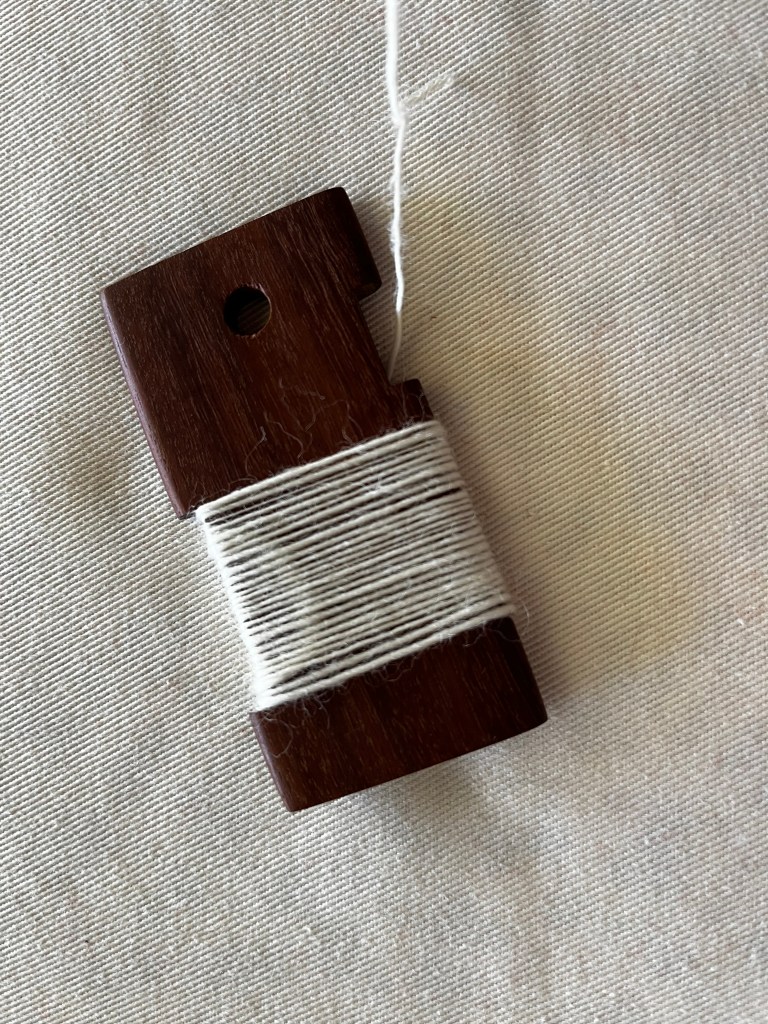
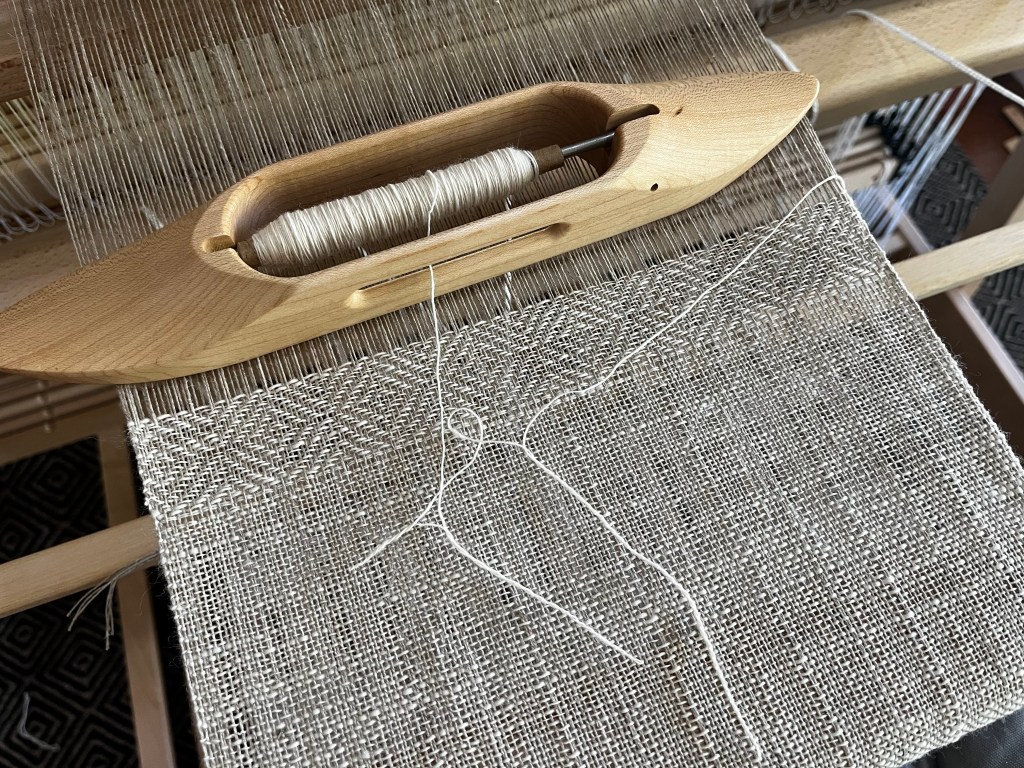
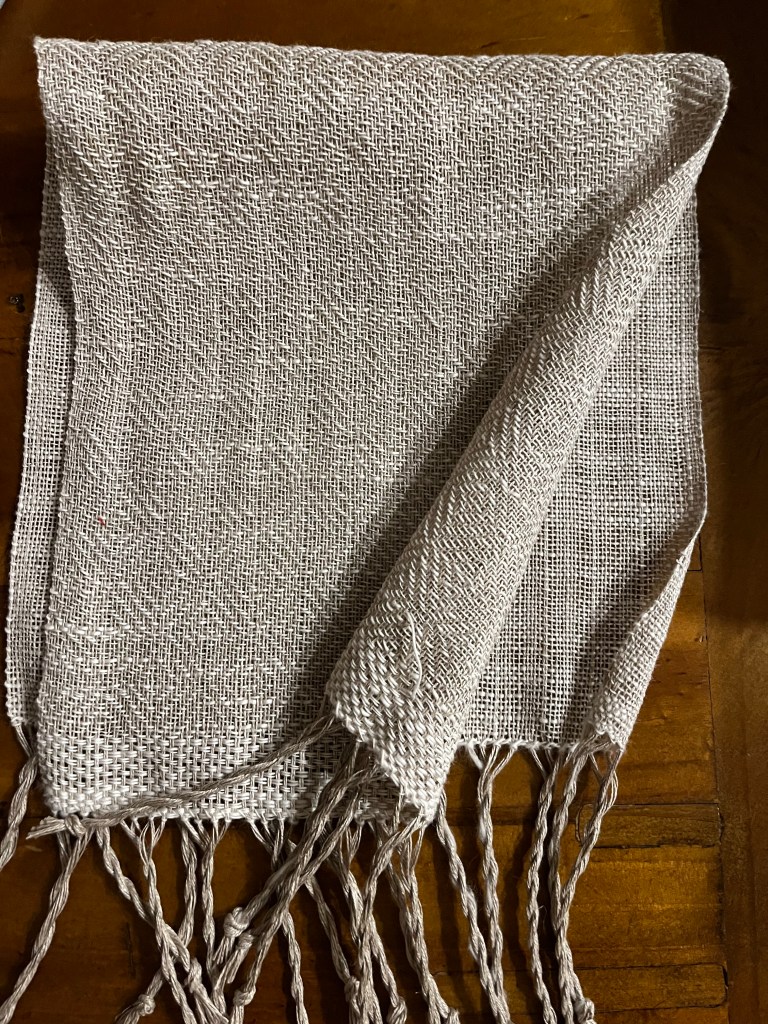
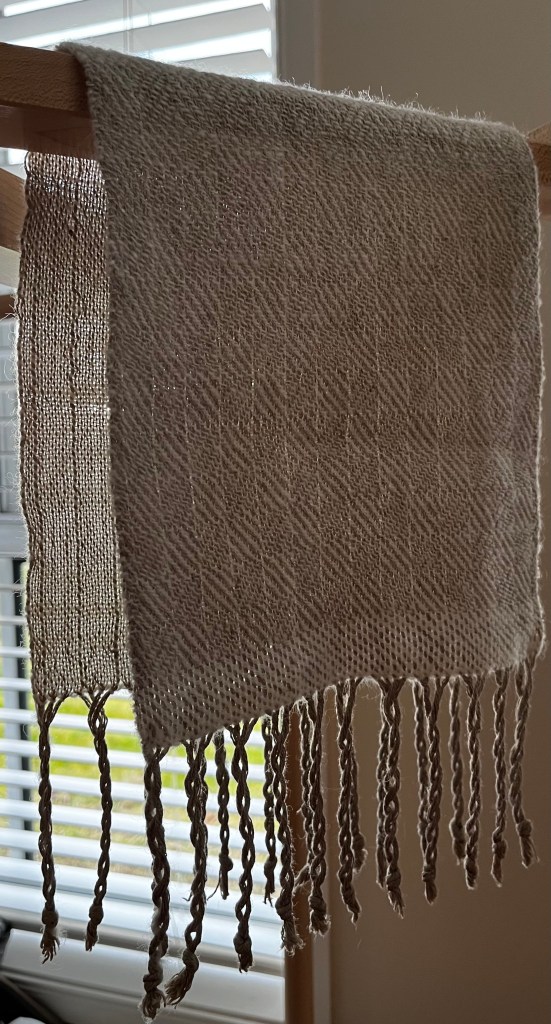
It turns out I totally can weave with hand spun yarn: I just have to have enough patience to spin more than one quill of yarn before I use it!
Okay, so how about two quills? This first one I spun woollen-style (soft, lumpy and with less twist).
I thought I would need two strands of yarn for every overshot pattern pick, because the yarn was so fine at times.
The sample ended up rather fuzzy and was bulky in the hand.
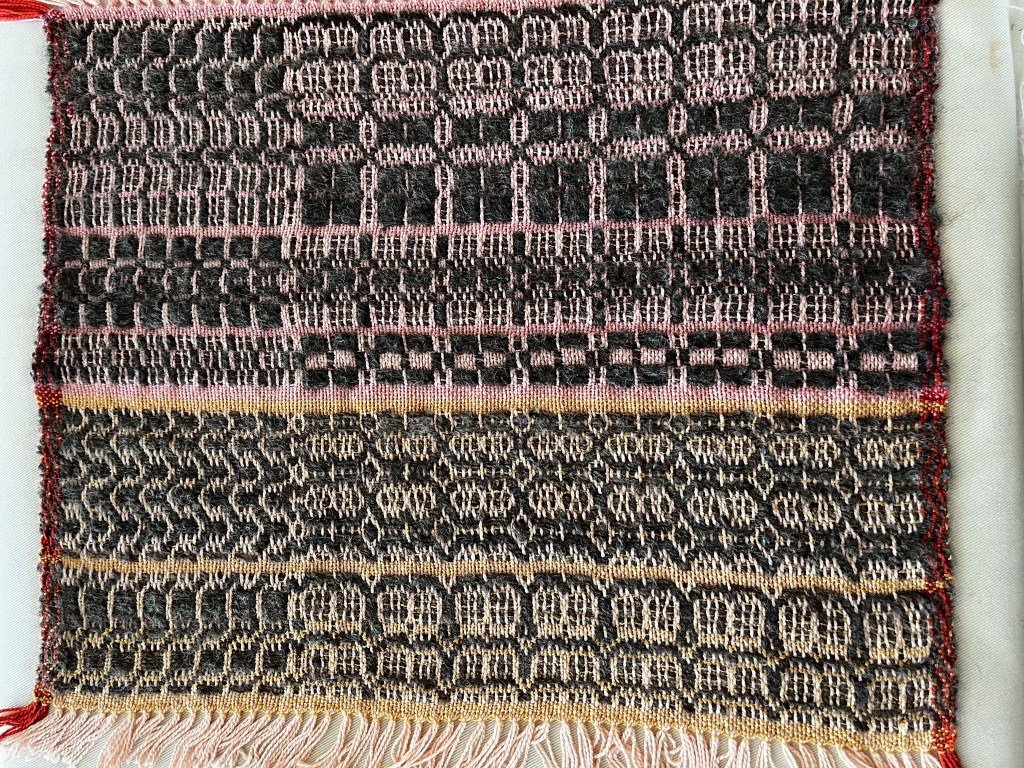
Super fun to weave!
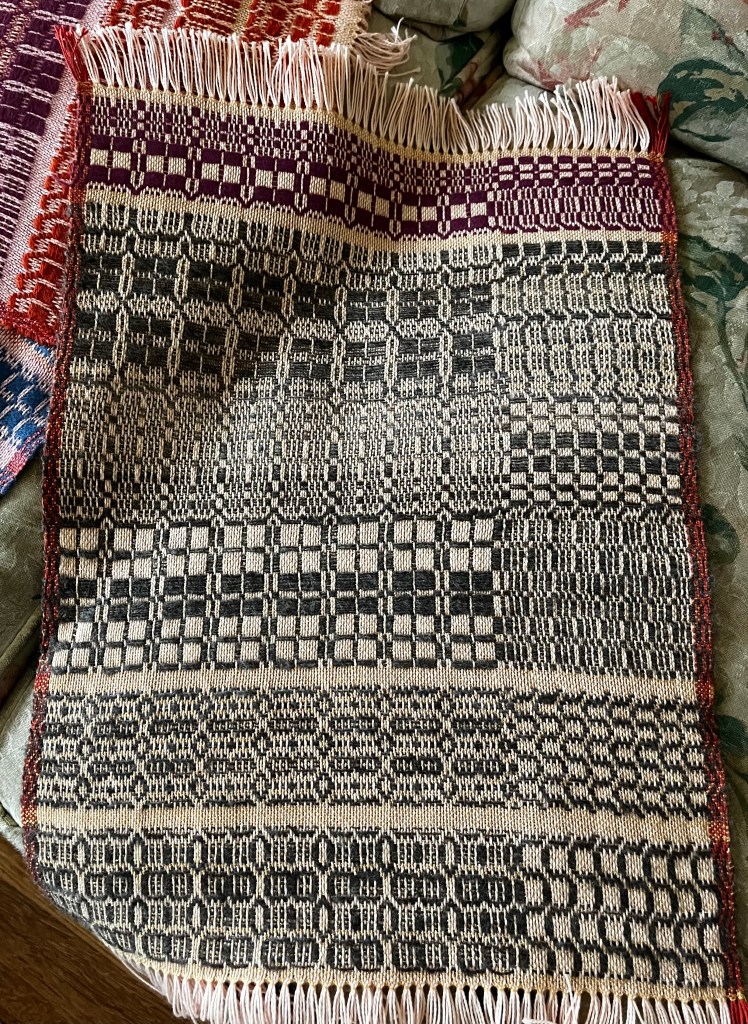
The second quill lasted a bit longer because I only used one strand for each pattern pick.
This one is spun worsted-style (more twist, short forward draw, making a firmer yarn).
This sample is more successful, I think. It has nicer drape and the pattern is much more distinct.
The colour gradation is due to a couple of things:
- Some of the Corriedale fleece locks I used were paler grey than others
- The colour is also pale where the yarn was really thin.
I think I need to try to spin even more than two quills so I can make something that is not just a sample!
My current spinning project is to make a fractal yarn using some hand-dyed (not by me!) Merino top. This will be a 2-ply yarn, so I’ll be forced to spin the whole lot before I weave it.
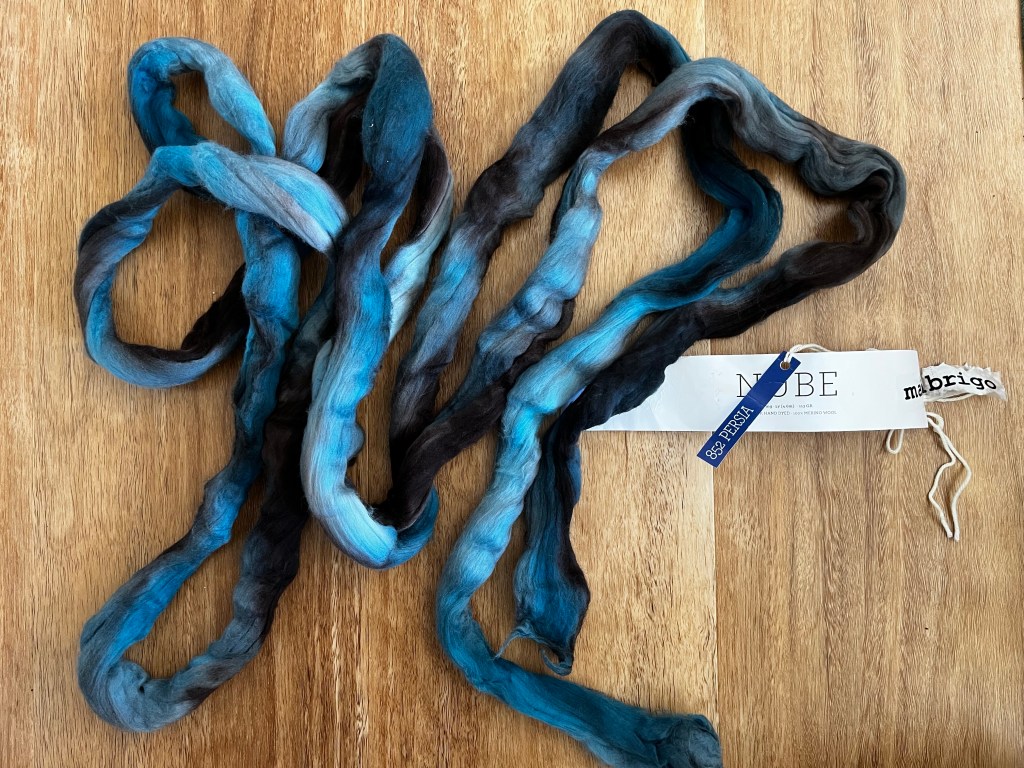
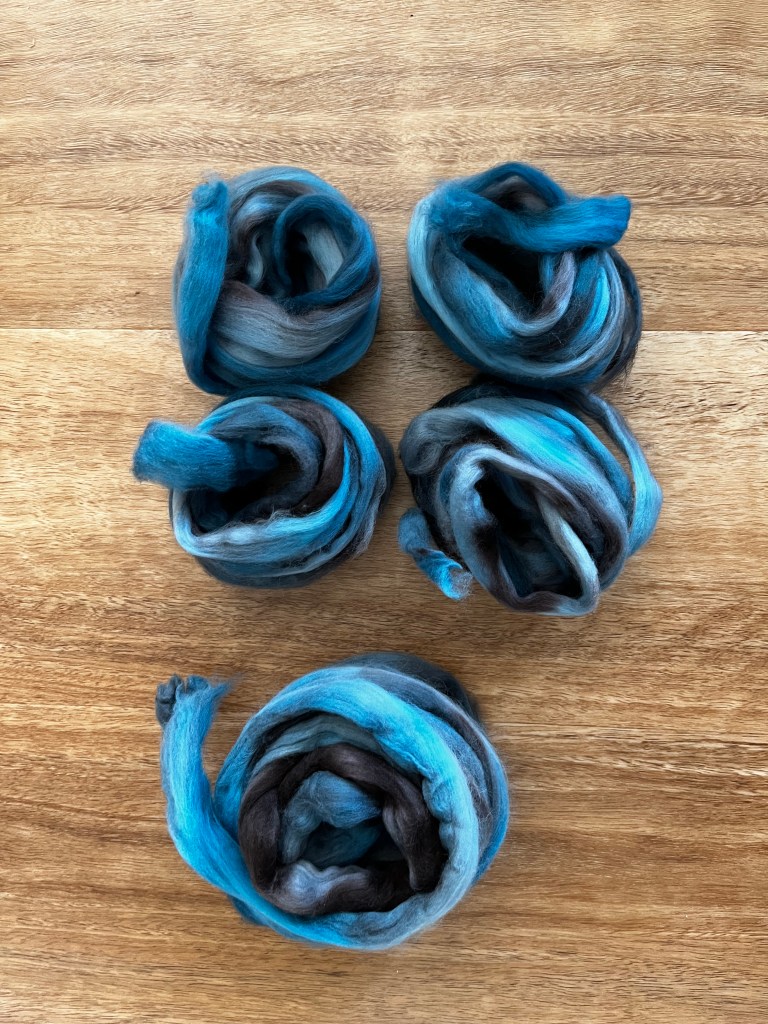
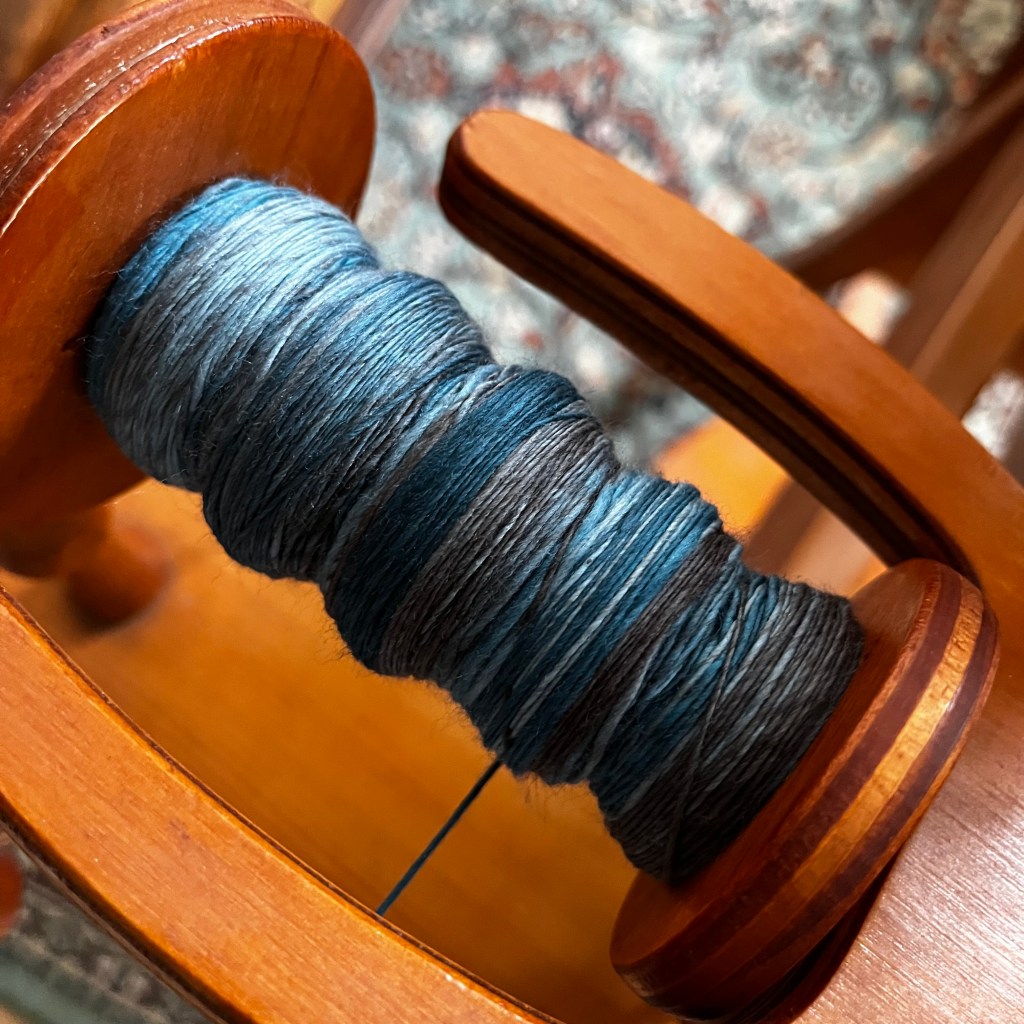
I’m looking forward to seeing what this becomes!
 Simple Crafty Life